
An injury on someone else’s property does not automatically establish that the owner or occupier was legally responsible. A premises liability claim usually requires evidence showing that a dangerous condition existed, that the responsible party knew or reasonably should have known about it, and that reasonable steps were not taken to reduce the risk.
An Austin premises liability lawyer may therefore investigate far more than the accident itself. Texas courts generally require an invitee to establish actual or constructive knowledge of an unreasonably dangerous condition, a failure to exercise reasonable care, and a causal connection between that failure and the injury. Building that proof can require records showing who controlled the property, how long the hazard existed, and what inspections or repairs occurred before the incident.
Identifying Who Controlled the Area
Ownership records are useful, but ownership alone may not answer who had responsibility for the location where the injury occurred.
A shopping center, apartment complex, office building, or construction site can involve property owners, tenants, management companies, contractors, and maintenance providers. Agreements between those parties may show who controlled cleaning, inspections, lighting, repairs, landscaping, or particular common areas.
Determining control can help identify whose conduct needs to be investigated. A business leasing one portion of a building may have different responsibilities from the landlord responsible for sidewalks, parking lots, or common entrances.
Texas law also contains specialized rules for certain injuries involving contractors working on commercial property. Chapter 95 of the Texas Civil Practice and Remedies Code can apply when a contractor or subcontractor is injured while constructing, repairing, renovating, or modifying an improvement to real property.
Documenting the Condition Before It Changes
Unsafe conditions can disappear quickly. Liquid may be cleaned up, broken flooring may be repaired, merchandise may be moved, lighting may be replaced, or weather conditions may change.
Photographs taken shortly after an injury can therefore provide valuable information about the condition that existed at the time. Measurements may also matter when the alleged hazard involves steps, elevation changes, gaps, ramps, or walking surfaces.
Other useful evidence can include:
- Photographs and video of the accident location
- The injured person’s clothing or footwear when relevant
- Measurements of stairs, curbs, holes, or elevation changes
- Weather information for outdoor incidents
- Store or building surveillance footage
- Witness names and contact information
- Incident reports created by employees
Preserving the original condition can make it easier to evaluate the hazard later instead of relying exclusively on recollections.
Determining Whether the Property Operator Knew About the Hazard
Knowledge is often one of the most contested issues in a premises liability case.
Texas courts recognize both actual and constructive knowledge. Actual knowledge may be supported by evidence that an employee saw the hazard, received a complaint, created the condition, or previously attempted to address it.
Constructive knowledge concerns whether the condition existed long enough that a reasonable inspection would have discovered it. Texas courts have explained that it is not enough to establish merely that a condition could have been present long enough. Evidence needs to support an inference that it more likely than not existed long enough to give the property operator a reasonable opportunity to discover it.
That distinction makes timing evidence especially important in spills and similar temporary-hazard cases.
Reviewing Inspection and Maintenance Practices
Inspection records can help determine what steps a business used to identify unsafe conditions.
A lawyer may request cleaning schedules, inspection logs, repair requests, work orders, maintenance contracts, or employee checklists. The investigation can compare what the records say was done with what employees and witnesses remember.
For example, a written inspection policy may describe regular checks, but the more important question may be whether those inspections actually occurred around the time of the injury.
Maintenance histories can also reveal whether the problem was recurring. Previous work orders concerning loose flooring, leaking refrigeration equipment, malfunctioning lighting, or damaged stairs may provide context for what the property operator knew before the accident.
Looking for Earlier Complaints and Incidents
A prior accident is not automatically proof that another injury was foreseeable. Still, previous reports involving the same condition may provide useful information about notice.
An investigation may examine incident reports, customer complaints, tenant communications, emails, repair requests, or service calls. Repeated complaints about the same leaking pipe, damaged handrail, or defective door can raise different questions than a hazard that appeared for the first time minutes before the accident.
The details matter. Earlier incidents are most informative when they involve the same or a sufficiently similar condition rather than unrelated accidents elsewhere on the property.
Examining Surveillance and Electronic Records
Video can answer questions that witness accounts cannot.
Surveillance footage may show when a spill appeared, whether employees walked past it, how customers moved through the area, whether warning signs were present, and what occurred immediately before the injury.
Time-stamped electronic records can also help. Cleaning applications, employee task systems, maintenance tickets, text messages, or digital work orders may show when a problem was reported and when someone responded.
Because businesses do not necessarily preserve these materials indefinitely, requesting preservation can become an early investigative priority.
Evaluating Whether the Condition Was Actually Unreasonably Dangerous
Not every irregular surface or ordinary feature creates premises liability. Texas courts distinguish between conditions presenting unreasonable risks and common or innocuous conditions that do not meet that standard.
The Texas Supreme Court has held that even when an incident occurs, the mere fact that a condition caused an injury does not automatically make that condition unreasonably dangerous. Courts may consider the nature of the condition, its ordinary use, surrounding circumstances, and the degree of risk it presented.
An investigation may therefore include measurements, photographs, engineering information, maintenance standards, or testimony about how the condition differed from an ordinary feature of the property.
Considering Warnings and the Visibility of the Hazard
The investigation also examines whether the danger was visible and whether the property operator provided an adequate warning.
Texas law can limit premises liability where a condition is open and obvious or actually known to the injured person, although the analysis depends on the circumstances and exceptions recognized by Texas law.
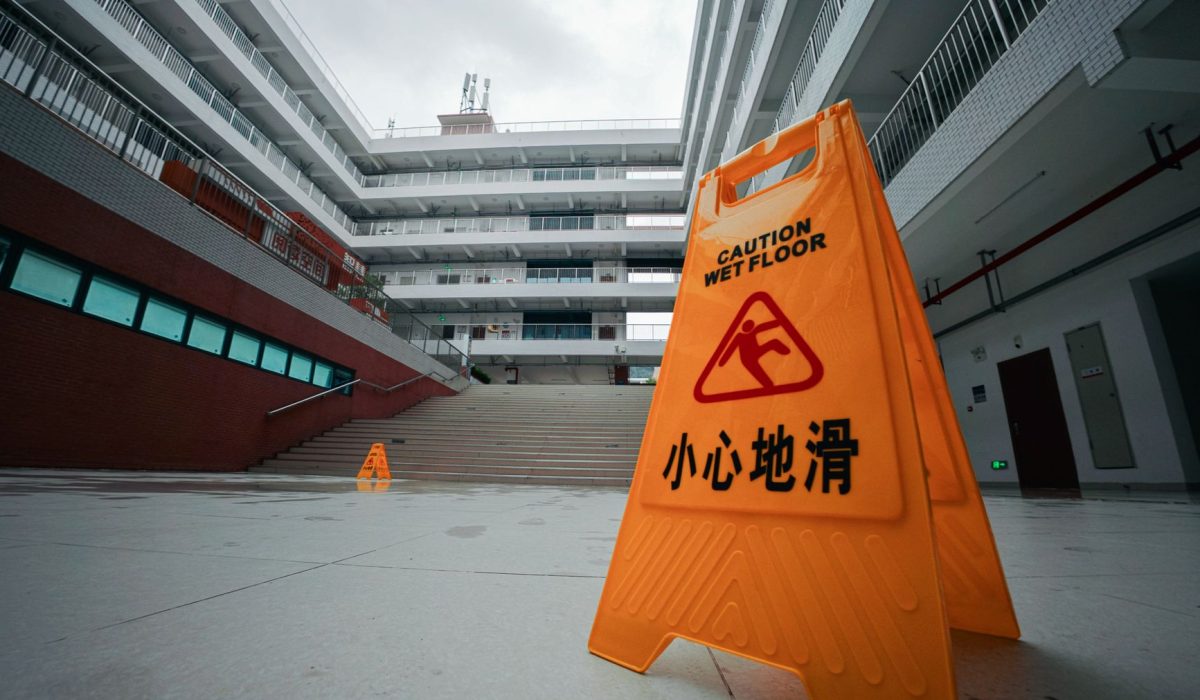
Evidence may include warning cones, signs, barriers, lighting conditions, sight lines, photographs, and testimony about what could reasonably be seen from the injured person’s direction of travel.
A warning placed far from the hazard or obscured by merchandise may raise different issues from a clearly visible barrier directly surrounding the condition.
A Premises Investigation Reconstructs What the Property Operator Knew
Strong premises liability investigations go beyond documenting the injury. They reconstruct the condition of the property, identify who controlled it, determine when the hazard appeared, and examine what the responsible party knew or reasonably could have discovered.
Surveillance, maintenance records, inspection logs, prior complaints, contracts, photographs, and witness testimony can each answer a different part of that inquiry. Texas premises liability law focuses heavily on knowledge and reasonable care, making evidence about the property’s condition before the accident especially significant.
By developing that evidence early, an investigation can distinguish between an unavoidable accident and an injury connected to a dangerous property condition that was known, discoverable, or inadequately addressed.
