
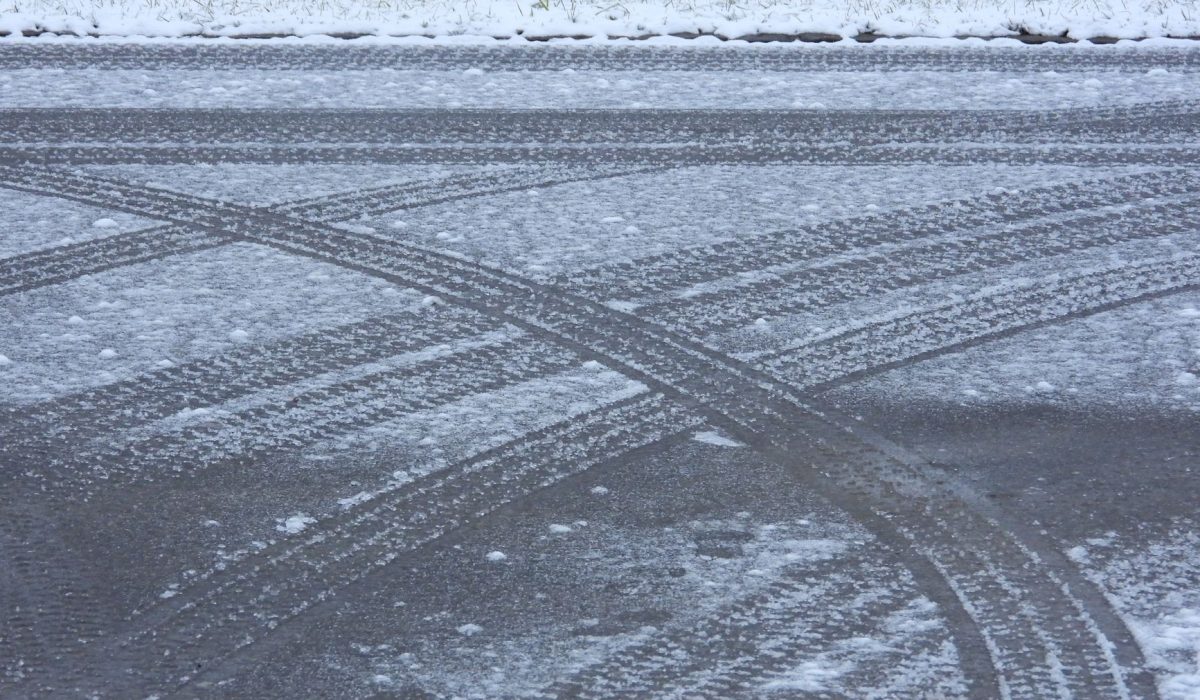
A vehicle can lose traction or become harder to steer even when the driver is traveling on a familiar road. The surface beneath the tires affects braking, cornering, and the amount of grip available when a driver needs to change direction. Water, worn pavement, deep ruts, abrupt surface defects, and uneven pavement edges can all alter how a vehicle responds.
Federal Highway Administration guidance treats pavement friction, texture, drainage, roughness, and edge condition as safety issues because they influence tire contact and vehicle stability. After a crash, roadway photographs, maintenance records, weather information, tire condition, and vehicle data can help determine whether the surface contributed to a loss of control or whether another factor was more significant.
1. Standing Water Can Reduce Tire Contact With the Pavement
Water does more than make a roadway look slick. FHWA explains that water on pavement reduces tire-pavement friction and that deeper water films can increase the possibility of hydroplaning. Hydroplaning occurs when water builds beneath a tire faster than the tread and pavement surface can disperse it, allowing the tire to lose effective contact with the road.
Drainage problems can create these conditions when water remains in a travel lane after rain. FHWA identifies shoulder buildup that causes ponding, wheel-path channelization, and other drainage problems among pavement conditions associated with wet-weather crashes.
A crash investigation may compare rainfall, drainage features, photographs, road slope, tire tread, and vehicle speed. The presence of water alone does not establish why a driver lost control, but it can materially change the amount of available traction.
2. Polished Pavement Can Reduce Friction Where Drivers Need It Most
Pavement can become smoother over time as repeated traffic wears exposed aggregate. FHWA identifies pavement friction as a key safety characteristic because it helps tires resist sliding during braking, turning, and emergency steering.
The agency’s guidance on high-friction surface treatments explains that pavement can become polished and provide less available friction. Locations that already demand more tire grip, such as curves and intersection approaches, can become more difficult to negotiate when friction deteriorates.
Georgia DOT also identifies polished aggregate as a pavement distress condition considered when evaluating pavement performance. Surface texture can therefore become relevant when evidence shows that a vehicle skidded while braking or changing direction.
3. Wheel-Path Rutting Can Collect Water
Rutting occurs when repeated traffic creates longitudinal depressions in the wheel paths. Georgia DOT identifies rutting as a recognized pavement distress, while FHWA explains that pavement ruts can retain water and create thicker water films during wet conditions.
That combination can create an uneven travel surface while also increasing the amount of water encountered by the tires. FHWA specifically associates pavement ruts with hydroplane potential because the depressions can hold water.
For someone reviewing a crash with a Duluth car accident lawyer, measurements of rut depth, photographs taken along the direction of travel, weather records, tire information, and available video may help establish whether the pavement condition influenced the vehicle’s movement.
Rutting can be particularly relevant when the crash occurred during or shortly after rain because the condition of the pavement and the presence of water can be evaluated together rather than as separate issues.
4. Potholes, Depressions, and Abrupt Bumps Can Disrupt Vehicle Control
Not every dangerous road surface involves reduced friction. Localized defects can produce abrupt movement as a tire passes through a hole, depression, fault, or raised area.
FHWA pavement guidance recognizes that excessive roughness and localized bumps, dips, faults, and holes can negatively influence vehicle control. Georgia DOT’s Pavement Evaluation Manual likewise recognizes potholes as pavement deficiencies and identifies pothole filling as a form of corrective maintenance.
A driver encountering a significant defect may brake, steer around it, or experience a direct impact to a wheel. What happens next depends on the size and shape of the defect, vehicle speed, tire and suspension condition, surrounding traffic, and the driver’s response.
Evidence may include photographs with measurements, wheel or tire damage, maintenance records, dash-camera footage, and images showing whether the defect was visible from the driver’s approach.
5. Pavement-Edge Drop-Offs Can Make Reentry Difficult
A driver who drifts partly onto a shoulder may try to return to the paved travel lane. That maneuver can become more difficult when there is a significant vertical difference between the pavement surface and the adjoining shoulder.
FHWA has studied pavement-edge drop-offs because a tire can scrub against a near-vertical pavement edge while the driver attempts to steer back onto the road. That resistance can lead the driver to increase steering input. When the tire finally climbs the pavement edge, the vehicle can suddenly move farther across the roadway than intended.
FHWA promotes the Safety Edge treatment to create a more gradual transition between the roadway and shoulder. The agency also recognizes that potholes, ruts, and edge drop-offs in shoulder areas can make recovery from a roadway departure more difficult.
A roadway-departure crash may therefore require examination of the pavement edge, shoulder elevation, tire marks, steering path, and location where the vehicle attempted to reenter the lane.
Road Surface Evidence Can Change Quickly
Road conditions are not always preserved after a collision. Standing water drains away, potholes may be patched, shoulder material can be regraded, and resurfacing can remove the condition entirely.
Useful documentation can include:
- Photographs showing the road surface from several directions
- Measurements of ruts, potholes, or pavement-edge height
- Weather and rainfall information
- Maintenance, resurfacing, and repair records
- Dash-camera or nearby surveillance footage
- Photographs of tire, wheel, or suspension damage
- Vehicle electronic data when available
Georgia DOT evaluates pavement using factors that include roughness, surface distress, structural condition, and skid resistance. Preserving information about the roadway close to the time of the crash can therefore make later analysis more complete.
A Surface Defect Does Not Automatically Establish Fault
A rough or wet roadway can contribute to a collision without being its only cause. Driver speed, tire condition, braking, distraction, visibility, weather, and the actions of other motorists may also affect whether control was lost.
A thorough investigation compares the roadway with vehicle and driver evidence. Standing water can reduce friction, polished pavement can provide less grip, rutting can retain water, localized defects can affect vehicle control, and edge drop-offs can complicate recovery after a roadway departure. Identifying which condition actually contributed requires evidence connecting the road surface to the vehicle’s movement rather than assuming that every visible pavement defect caused the crash.
