

Printed materials are easy to ignore. They sit still, waiting for someone to take notice. Lenticular printing changes that dynamic completely. Instead of remaining still, the image shifts, flips, or shows depth. That subtle motion or 3Dness sparks surprise — and that makes people stop.
A design that evolves as you move will naturally spark interest in ways regular print cannot – it’s like an interactive experience without the screen-time.
And for designers or brands looking to communicate visually in new and riveting ways, lenticular printing is one of the few mediums that can supply this level of creative intrigue and physical allure, shifting the familiar into fascinating, layer-by-layer, bite-sized portions.
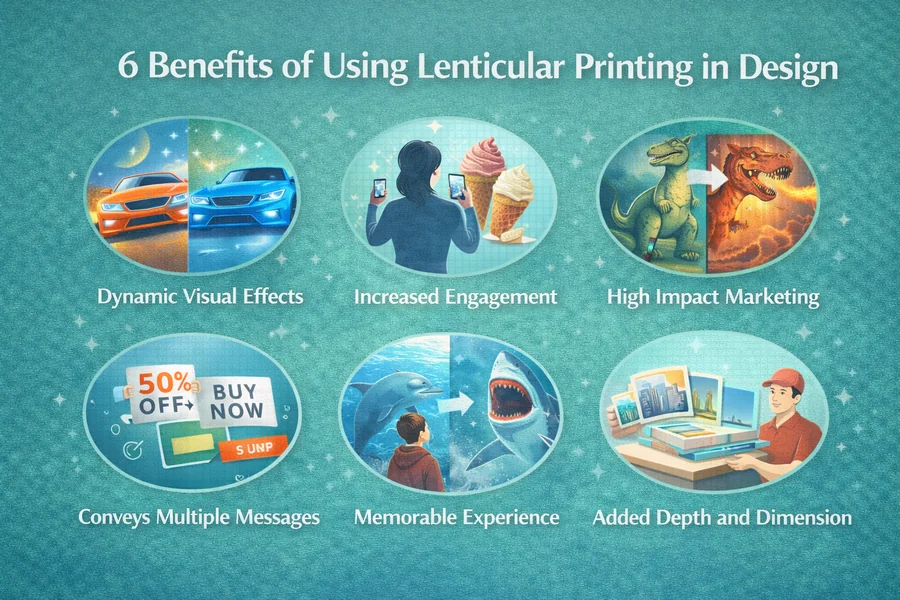
Here are 6 benefits of using lenticular printing in design
1. Grabs Immediate Attention
The first benefit of lenticular printing is that it can easily grab attention. People aren’t used to things popping out at them. When an image moves or another is exposed in the process of moving past, they notice, because movement means new.
Flipping between two images pauses thought processes stimulated by passive consuming and can invoke mild curiosity on repeated glances. Creating an illusion of 3D adds perceptible depth when there is otherwise none to provide pause for potential consumers in visually busy areas.
Rather than getting lost in the clutter, lenticular designs make a statement, and that statement makes your message easy to notice and remember.
2. Encourages Interaction
Print is a passive medium; lenticular print is not. When a person holds a lenticular card or stands in front of a display, they move, tilt the piece, and in some cases reposition themselves. They see how the image changes. That basic interaction changes the dynamic of viewing.
The act of physically moving to see what happens next creates involvement. The design is seen longer because viewers are motivated to know what comes next. This additional exposure heightens retention.
With this in mind, the interaction feels intuitive and playful. You do not need any instructions to interact with it, as the visual effect leads you to explore.
3. Increases Message Retention
Memorability often hinges on contrast. If something feels surprising, it’s more likely to stick in the memory. Lenticular printing does that. It’s easier to remember a design that flips between two different visuals, or one that reveals motion. This novelty works in the design’s favor by reinforcing the message rather than taking away from it.
Typically, when people remember the movement or depth effect, they’ll also remember the brand or message that went along with it, because in their mind, those 2 things are connected.
In marketing and communication, stronger ad recall impacts future decisions. It’s highly likely that a memory from today draws a decision tomorrow, and so lenticular printing helps make that connection between design and memory stronger.
4. Expands Creative Expression
Designers are always looking for innovative ways to express themselves when delivering complex messages. With lenticular printing, you can take visual storytelling to the next level.
For example, 3D effects in lenticular prints add layers that guide the viewer’s eye, while motion effects can reveal contrasts or comparisons in a clear way. Two images don’t need to physically sit next to each other; one image simply transitions into another.
This opens up whole new creative ways of thinking, as it allows you to play with perspective, sequencing, and visual narrative in your work. The lenticular print is used as a part of the concept itself as opposed to being just a way of printing it.
5. Works Across Different Formats
Lenticular printing comes with the added advantage of versatility, making it perfect for small and large items. Compact formats like business cards, postcards, or packaging inserts can contain detailed flip or motion effects, which create something that feels interactive and distinctive to hold. They tend to leave more of an impression than a regular print.
Larger scale and lenticular panels can be used for a significant visual impact in public spaces. Having a wall display that changes as you walk past creates something that changes at a distance and gets even more interesting the closer you get.
This range of formats allows consistent visual storytelling across materials. From handheld right through to large scale, the dynamic approach helps reinforce a consistent message.
6. Offers Durability and Visual Depth
In addition to its wow factor, lenticular printing also has some structural advantages. Those cool effects are achieved through a layering process that includes a lens surface on top of the image being printed, offering added protection.
This also helps to keep your print looking crisp over time. And a display that is regularly viewed doesn’t lose the depth effect easily. The actual thickness of the lens also adds to the feeling of dimension. It’s not just a trick of the mind created by color; it feels tangible on top.
Durability supports long-term use, while the visual depth enhances impact. Together, they create prints that feel substantial and thoughtfully crafted.
Conclusion
Lenticular printing changes what people expect from print. It adds motion, depth, and transformation to a medium that people assume is still. That change captures attention, encourages engagement, and improves recall.
And when formats and substrates produce design, which demands interaction, you have something even more special. Design that makes you look twice, lures the viewer in, and encourages them to engage with it on another level. Layered designs often tend to intrigue and pique interest much better than flat imagery or graphics ever can.
