

You search for a new pair of running shoes once, and suddenly, they’re everywhere. They’re wedged between Instagram posts, following you across websites, appearing before videos, and turning up in your inbox.
Welcome to modern advertising, where algorithms have become remarkably good at predicting what consumers might want and reminding them about it. After years of retargeting, personalized recommendations, sponsored content, and meticulously optimized feeds, many consumers are experiencing a serious case of algorithm fatigue.
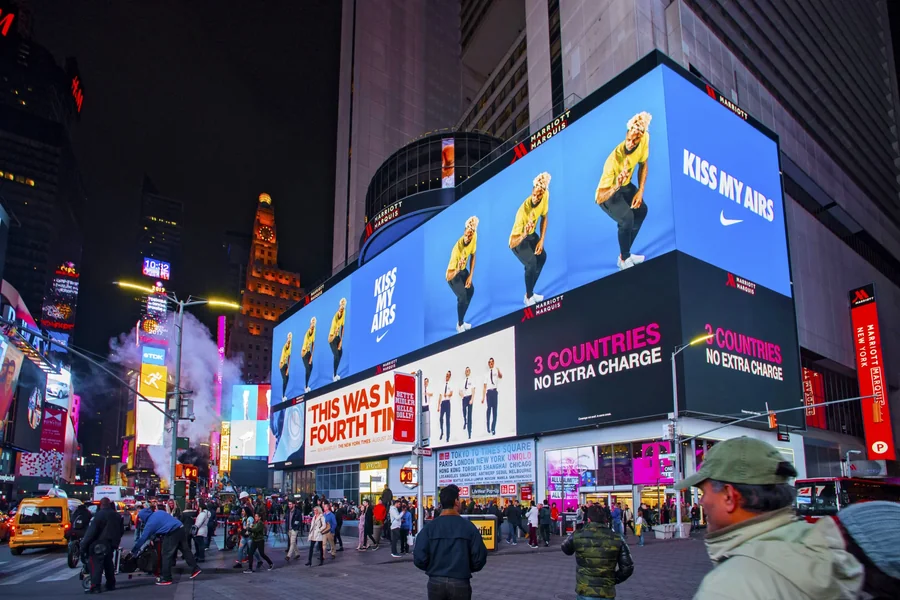
When seemingly every digital interaction has been customized, tracked, and targeted, advertising encountered out in the real world can feel surprisingly refreshing. And that’s helping give one of marketing’s oldest formats a distinctly modern moment: outdoor advertising.
Billboards Never Needed Your Cookies
A billboard doesn’t know what you searched for last night. It hasn’t analyzed your shopping cart, watched which videos you finished, or noticed that you spent 20 minutes comparing hotels in Miami. It simply exists in the physical world, waiting to catch your attention. That simplicity has become a strength.
Brands working with a billboard advertising agency like AdQuick can strategically select locations and create campaigns tailored to their surroundings without targeting individual consumers based on their digital behavior. A clever message beside a packed freeway, outside a stadium, or near a busy shopping district can feel relevant because of where you see it.
In an era when personalization can occasionally cross the line from useful to uncanny, that distinction matters. Outdoor ads offer mass reach without making every member of the audience feel like they’re being tracked.
Digital Fatigue Is Making the Physical World More Valuable
Consider how much of the average day now happens on-screen. Users work on laptops, shop on phones, stream entertainment on TVs, message friends through apps, and scroll through social feeds whenever there’s a spare minute. Naturally, advertisers followed users there.
The problem is that digital space has become incredibly crowded. Consumers have learned to swipe past sponsored posts, close pop-ups almost instinctively, skip video ads, and mentally filter out banners competing for attention.
Outdoor advertising plays by different rules. You can’t install an ad blocker on the side of a building, and there’s no “skip ad” button hovering over a bus shelter.
More importantly, outdoor advertising occupies the same physical environment as its audience. A bold visual or perfectly timed joke can become part of someone’s commute, lunch break, or night out. Rather than fighting for another fraction of someone’s screen, brands get the chance to show up somewhere algorithms can’t completely control: real life.
The Billboard Got a 21st-Century Upgrade
Outdoor advertising may be one of marketing’s oldest formats, but today’s billboards have considerably more tricks up their sleeves. Digital displays have transformed what was once a static medium into something far more flexible.
Creative can change throughout the day, respond to local events, or reflect conditions like weather and traffic. A coffee brand might emphasize iced drinks during a heat wave, while an entertainment company can promote a big release right when commuters are deciding what to watch that evening.
Behind the scenes, outdoor advertising has become smarter, too. Modern planning and measurement tools can help brands understand audience movement, identify valuable locations, and evaluate campaign performance more effectively.
Outdoor Advertising Creates Moments People Want To Share
The best outdoor campaigns don’t necessarily stay outdoors. Give people a billboard with a genuinely funny line, an enormous visual, an unexpected installation, or a clever interaction with its surroundings, and phones inevitably come out. Someone takes a picture. Someone else posts it.
Before long, an ad designed for one physical location is traveling through social feeds far beyond it. That gives outdoor advertising an unusual role in a modern campaign. Rather than competing with digital marketing, it can actually feed it.
It’s also a different kind of online exposure. Rather than a brand paying to insert another sponsored post into someone’s feed, people voluntarily share something because it surprised or entertained them. The physical ad becomes the content.
For marketers accustomed to chasing engagement metrics, there’s something satisfyingly straightforward about that equation. Make something interesting enough in the real world, and the internet may do some of the distribution for you.
The Future of Advertising Might Be Outside
None of this means brands should delete their social accounts, abandon search ads, or declare war on algorithms. Digital marketing remains essential. However, outdoor advertising offers a compelling counterbalance.
As consumers grow accustomed to hyper-personalized feeds and automated recommendations, physical advertising provides scale, context, and a welcome element of unpredictability. It can reach thousands of people without needing to know what each person clicked yesterday.
After spending years finding increasingly sophisticated ways to get inside consumers’ screens, marketers are rediscovering the value of meeting people somewhere much simpler, such as on the street, during the commute, or around the corner. Sometimes, the next big marketing opportunity is already outside.
