
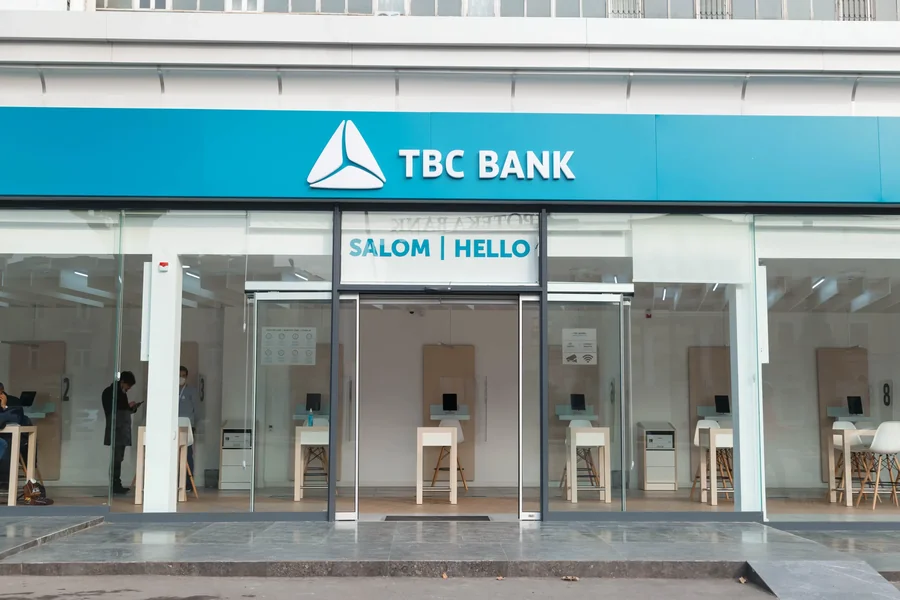

TBC Uzbekistan has completed one of the most comprehensive artificial intelligence transformation programmes undertaken by a financial institution in Central Asia. Spanning January through November 2025 and totalling 45,000 man-hours of development work, the initiative established an independent AI platform across the bank’s core operations the first of its kind built entirely within an Uzbek bank.
The project, led by programme manager Andrey Malygin, was designed not as a single product launch but as a structural transformation of how the organisation operates, how it serves customers, and how it builds internal capability. The outcomes achieved — across cost reduction, product deployment, and organisational culture suggest that TBC Uzbekistan has moved from AI experimentation to AI infrastructure in a single, coordinated programme.
The Scale of the Transformation
The most immediate and quantifiable result of the AI transformation is the reduction in interaction costs. Prior to the initiative, each customer interaction processed through conventional channels cost approximately $0.35. Following the deployment of AI-powered voice and chat systems, that cost fell to $0.03 a reduction of more than 90%. At the volumes TBC Uzbekistan operates over 1.6 million calls and 690,000 chats processed through AI systems during the programme the financial implications are substantial.
Verified savings generated by the programme reached $2.3 million, with projections pointing toward $3.7 million by year-end. These are not theoretical efficiency gains they are documented reductions in operating expenditure that have been measured against pre-programme baselines. For a financial institution operating in an emerging market, where cost discipline is often a critical determinant of competitive positioning, this level of verifiable savings represents a meaningful operational advantage.
The programme delivered two production AI products a Sales Assistant and a Collections Assistant in addition to the customer-facing AI assistant that handles voice and chat interactions. Each of these products represents a distinct deployment context, requiring separate training approaches, different integration points within the bank’s existing systems, and tailored performance metrics. Delivering all three within a single eleven-month programme reflects a high level of execution discipline.
From Cost Centre to Competitive Advantage
What distinguishes TBC Uzbekistan’s AI initiative from many comparable programmes in the industry is the decision to build the underlying platform entirely in-house. The technical stack incorporating PyTorch, TensorFlow, LangChain, open-source large language models, Airflow, Spark, and Kubernetes was assembled and configured by an internal team, with governance frameworks and monitoring infrastructure developed alongside the production systems.
Central to the programme’s ambition was the development of Uzbekistan’s first Uzbek-language large language model, complete with speech recognition and synthesis capabilities. This is a technically complex undertaking even in resource-rich environments. In a market where local AI expertise was limited at the outset cited as one of the programme’s primary challenges building this capability from scratch required both technical investment and a sustained commitment to talent development.
To address the expertise gap, TBC Uzbekistan established an ML Competence Center and ran an internal AI-isation programme designed to educate employees across the organisation to become active AI users rather than passive recipients of new technology. This cultural dimension of the transformation is often underestimated in technology-led change programmes, but it is frequently the difference between a successful deployment and one that delivers tools that go unused. TBC Uzbekistan appears to have taken it seriously.
Currency Access and the Broader Digital Finance Shift
The AI transformation at TBC Uzbekistan does not exist in isolation it is part of a broader shift in how financial services are delivered and consumed across Uzbekistan’s rapidly evolving market. As the country’s economy has opened and its population has become increasingly connected through mobile devices, the range of financial needs being expressed digitally has expanded significantly.
Among the clearest indicators of this shift is the growing demand for real-time financial data of all kinds. The rising search interest in terms such as “курс евро в узбекистане” and “yevro kursi uzbekistan” reflects a population that is actively tracking exchange rates, planning cross-border transactions, and seeking digital tools that allow them to make informed financial decisions in real time. This behaviour consumers going directly to digital platforms for financial information is precisely the kind of engagement that AI-enhanced banking platforms are well positioned to serve.
When a user arrives at a banking platform seeking currency information, the quality of that interaction its speed, accuracy, and relevance shapes their broader perception of the platform’s reliability. AI-powered systems that can respond to these queries instantly and accurately, while simultaneously surfacing relevant products or services, represent a significant step forward from the static information pages that previously characterised digital banking.
Building the Foundation for What Comes Next
TBC Uzbekistan’s AI platform was designed with extensibility in mind. The infrastructure built during the 2025 programme is intended to serve not only TBC Uzbekistan’s own operations but potentially to support other entities within the TBC holding group. This positions the bank as a potential technology provider within its own corporate ecosystem a meaningful evolution in how the institution’s capabilities are valued and deployed.
The challenges encountered during the programme limited local AI expertise, complex legacy system integration, regulatory compliance requirements, and organisational resistance to change are not unique to TBC Uzbekistan. They are the standard obstacles facing any financial institution attempting a serious AI transformation in an emerging market context. What is notable is that TBC Uzbekistan navigated them within a defined timeframe and with measurable results.
For Uzbekistan’s financial sector, the completion of this programme sets a new baseline. An institution that has built a proprietary Uzbek-language LLM, deployed three production AI systems, reduced interaction costs by 90%, and established an internal ML competence centre within eleven months has fundamentally changed what is considered achievable in this market. The broader implications for competitors, for regulators, and for the technology ecosystem that serves the financial sector will take time to fully materialise, but the direction is clear. TBC Uzbekistan has built something that will be difficult to replicate quickly, and that advantage is likely to compound as the platform matures.
