

Travel is about more than visiting new places. People also enjoy collecting souvenirs, recording memorable experiences, and finding creative ways to remember the destinations they have explored. A miniature landmark, a personalized keepsake, or a decorative model inspired by a favorite city can turn a travel memory into something tangible.
Traditional souvenirs are often mass-produced, which means travelers may struggle to find something that reflects their personal experiences. Creating a custom object can be an alternative, but designing a three-dimensional model from scratch usually requires specialized skills.
AI-powered 3D creation tools offer a more accessible starting point. Instead of manually building every shape, users can begin with a suitable image and use a 3D model maker online to generate a preliminary 3D asset for further refinement.
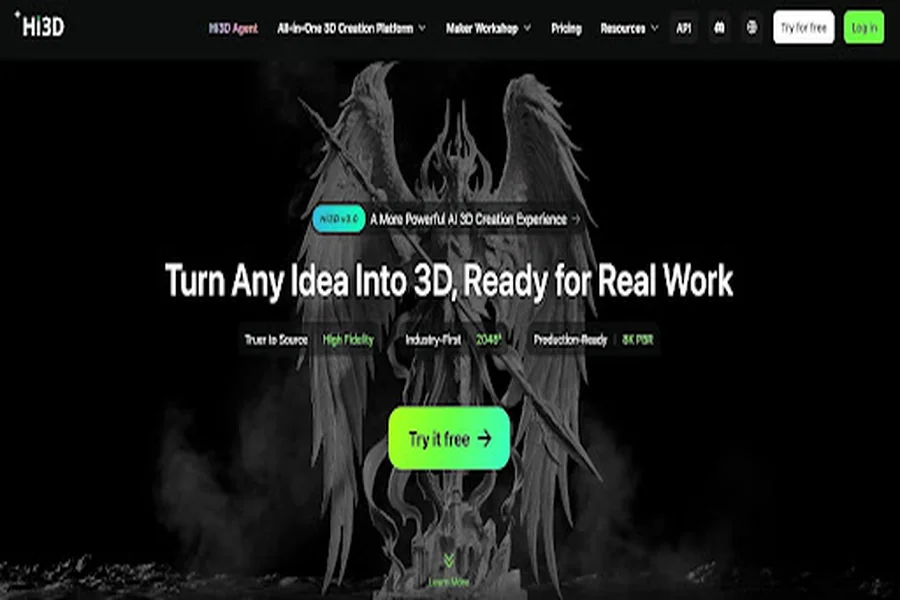
Hi3D provides image-to-3D generation and other creation features that can help users explore travel-inspired designs. From miniature landmarks to personalized display objects, these capabilities open up possibilities for travelers, travel content creators, and people who enjoy making things connected to their journeys.
Turning Travel Memories into Three-Dimensional Objects
Photographs are one of the most common ways to preserve travel memories. They capture landscapes, architecture, and moments that people want to remember long after returning home. However, a photograph presents a scene from a particular viewpoint, while a three-dimensional model offers a different way to explore its shape.
For example, a traveler might have a photograph of a distinctive building, a traditional monument, or an architectural feature that made a destination memorable. A suitable image can serve as a starting point for generating a preliminary 3D model with Hi3D.
The resulting asset can be viewed from different angles, making it useful for personal creative projects or as a digital keepsake. Users can also explore different visual styles before deciding whether to refine the model further.
The quality of the result depends on the reference image and the complexity of the subject. A clear image of a simple object may provide a more useful starting point than a crowded photograph containing overlapping buildings, people, and trees.
It is also important to understand that an AI-generated model is not necessarily an accurate reconstruction of the original location. Details hidden from the camera may be missing or incorrectly generated. If historical or architectural accuracy matters, the model should be checked against reliable references.
For personal projects, however, the goal may simply be to create a recognizable object inspired by a meaningful experience. In that case, AI-assisted modeling can offer a convenient way to move beyond conventional photographs.
Creating Miniature Models of Famous Landmarks
Landmarks are among the most recognizable symbols of a destination. Famous bridges, towers, temples, monuments, and historic buildings often become popular subjects for travel photography and souvenir collections.
A miniature landmark can provide a more personal alternative to a standard souvenir. Travelers may want a small model of a place they visited for the first time, while collectors may enjoy assembling a series of objects representing different cities.
Hi3D can help users explore preliminary three-dimensional models from suitable visual references. For instance, someone who has visited a distinctive tower might use a photograph to begin developing a simplified display model.
The generated shape can then be reviewed and refined in another 3D application if greater accuracy is required. This is particularly useful when the intended result needs a stable base, specific dimensions, or details that are important to the landmark’s identity.
Some landmarks are much more difficult to model than others. Buildings with simple silhouettes may be easier to represent than structures with intricate decorations, narrow supports, or complex overlapping elements.
Scale also affects the final result. Fine architectural details that are visible on a computer screen may disappear when a model is reduced to a few centimeters. Users should simplify unnecessary features and consider the limitations of their chosen production method.
For historical sites, religious buildings, and culturally significant monuments, creators should also consider whether the design is respectful and appropriate for its intended use.
Designing Personalized Travel Souvenirs
A memorable trip often includes details that cannot be captured by a generic souvenir. These might include a favorite street, a distinctive building, a meaningful destination, or a visual element associated with a particular experience.
Personalized 3D objects can help travelers express those memories in a different format. Possible projects include destination-inspired ornaments, miniature city scenes, decorative display pieces, and small objects based on recognizable architectural forms.
With Hi3D, users can start with a suitable image reference and generate a preliminary model that can be further developed into a personalized design.
For example, a traveler might want a small decorative object inspired by a coastal town’s buildings or a simplified model of a landmark visited during a family holiday. The model could become part of a personal collection or a display representing several trips.
Customization can also involve visual style. A realistic-looking model may suit a landmark collection, while a simplified or stylized version may be more appropriate for a playful souvenir.
However, generating a model does not automatically produce a finished keepsake. Users may need to adjust the dimensions, simplify fragile features, or add personalized text in another application. If a name or date must be accurate, it should be checked carefully rather than relying on automatically generated lettering.
By treating the model as a starting point, travelers can develop souvenirs that reflect their own experiences rather than relying entirely on mass-produced designs.
Exploring Cityscapes and Architectural Collections
Some travelers remember a destination through a single landmark, while others are drawn to the overall appearance of a city. Historic streets, waterfront buildings, distinctive rooftops, and contrasting architectural styles can all contribute to a city’s identity.
Three-dimensional assets can provide a way to explore these visual characteristics. A traveler might create a collection of simplified building models or develop a small display inspired by the skyline of a favorite city.
Hi3D can support early visual exploration by generating preliminary models from suitable image references. These assets can then be used as starting points for personal collections, digital displays, or other creative projects.
Creating a complete cityscape is more complicated than modeling an individual building. A skyline may contain many structures with different proportions, while street scenes involve depth, perspective, and relationships between neighboring objects.
For this reason, users may find it easier to begin with one recognizable structure before combining several assets into a larger scene. A consistent scale and visual style can help the collection look more cohesive.
Users should also be aware that image-based generation may not preserve exact architectural dimensions or the spatial relationships between buildings. A collection intended for artistic display can allow more creative freedom, whereas a model intended for geographic or architectural analysis requires more accurate source data and additional modeling work.
This distinction helps creators choose projects that match both their goals and the capabilities of their tools.
Using Three-Dimensional Assets in Travel Content
Travel content creators use photographs, videos, maps, illustrations, and animations to communicate what makes a destination interesting. Three-dimensional assets can offer another visual element for these projects.
A creator might use a landmark model in a video introduction, include a destination-inspired object in a travel-themed presentation, or build a stylized visual scene for a social media post.
Hi3D’s image-to-3D workflow can help creators explore suitable assets through a picture to 3D model process without manually constructing every object from the beginning. After generation and refinement, models can be transferred into compatible 3D applications for use in a larger visual project.
The best workflow depends on the intended output. A model for a static illustration may need only a recognizable silhouette, while an asset used in an animation may require cleaner geometry and more careful preparation.
Creators should also check how a model looks at the final display size. Small details that seem impressive in a large preview may be difficult to see on a phone screen. Clear shapes and recognizable features often matter more than excessive detail in short-form content.
Accuracy is another consideration. If a video presents a model as a faithful representation of a real landmark, important architectural features should be verified. If the asset is deliberately stylized, the creator should avoid implying that every detail is historically or geographically exact.
Three-dimensional assets work best when they support the story being told rather than distracting from the destination itself.
Planning Travel Experiences with Visual Models
Travel planning often involves comparing destinations, arranging activities, and imagining how a place might look before visiting it. Photographs and maps remain essential for these tasks, but three-dimensional visual references can provide another perspective for certain creative projects.
For example, a travel enthusiast might develop a small collection of models representing several destinations on a planned itinerary. These objects could be used in a personal presentation, a travel journal, or a visual record of places the traveler hopes to visit.
Hi3D can help users create preliminary models from suitable references, providing a starting point for destination-themed visual projects.
However, a generated 3D asset should not be confused with a navigation tool or an accurate geographical model. It does not automatically provide reliable information about distances, building locations, accessibility, opening hours, or transportation routes.
For practical travel decisions, users should continue to rely on current maps and trustworthy destination information. The role of a generated model is primarily visual: it can help communicate an idea or represent a place in a creative format.
This makes the approach especially suitable for travel journals, destination mood boards, personal collections, and presentations where visual storytelling is more important than precise geographical measurement.
Preparing Travel-Inspired Models for 3D Printing
For travelers who want a physical souvenir, 3D printing offers a way to turn selected digital assets into tangible objects. Instead of purchasing a standard miniature, users may be able to develop a customized design based on a destination or personal memory.
Hi3D supports common 3D formats, including STL, OBJ, GLB, FBX, USDZ, and 3MF for compatible workflows. Users can export an asset in a suitable format and prepare it in another application when additional adjustments are needed.
Before printing, the model should be inspected for thin structures, disconnected geometry, unsupported areas, and other potential issues. The scale must also be considered carefully because small models may lose fine details during production.
A miniature building, for example, may require thicker supports or simplified architectural features to remain stable. A decorative object with a narrow base may need a redesigned foundation to prevent it from tipping over.
The final material and printing method also affect the result. Digital textures do not automatically become physical surface details, and a model’s appearance on screen may differ from the finished printed object.
Users should make a clear distinction between decorative miniatures and models intended for professional architectural use. A travel souvenir generally allows greater freedom in proportion and detail, while an accurate architectural representation requires more careful verification and refinement.
Testing a small prototype can help identify weaknesses before printing the final version.
Refining Models and Choosing the Right Workflow
AI generation is only one stage of developing a useful three-dimensional asset. Depending on the project, users may need to adjust the model’s proportions, remove unnecessary details, improve its geometry, or prepare it for a particular application.
Hi3D provides AI-assisted creation features, viewing capabilities, and texturing options for supported workflows. These tools can help users explore an asset’s appearance and assess whether it matches the intended visual direction.
For a decorative landmark, the main priority may be recognizability. For a miniature intended for printing, structural stability and scale may matter more. For a digital travel presentation, the model’s compatibility with the target software could be the most important consideration.
No single workflow suits every project. A simple souvenir may require relatively little refinement, while a complex building or multi-object cityscape can demand considerable manual work.
Users should also consider the source images they use. Photographs may contain visual obstructions, unusual perspectives, or insufficient information about hidden surfaces. Multiple suitable reference views can sometimes provide a more useful basis for modeling, although the outcome still requires inspection.
When depicting real destinations, creators should check relevant image permissions and consider cultural sensitivity, particularly when working with protected sites or significant monuments.
A thoughtful workflow combines AI generation with human judgment, suitable references, and practical testing.
Creating More Personal Connections with Travel
Travel souvenirs do not have to be limited to objects purchased during a trip. With AI-assisted 3D modeling, travelers can explore new ways to represent the destinations, architecture, and experiences that matter to them.
Hi3D provides a starting point for turning suitable images into three-dimensional assets that can be refined for digital projects or, where appropriate, prepared for 3D printing. This can support personalized keepsakes, landmark collections, travel-themed decorations, and visual content about destinations.
The most effective projects begin with a clear goal. A souvenir needs to be recognizable and durable enough for its intended use, while a digital model may prioritize visual storytelling. Understanding the difference helps users decide what to refine and how to evaluate the result.
AI-generated models are not automatically accurate reconstructions, and complex designs may require further editing. Nevertheless, they offer an accessible way to explore ideas that might otherwise remain photographs or sketches.
For people who enjoy both travel and creative making, AI-powered 3D modeling can turn inspiration from a journey into a new kind of personal keepsake.
