
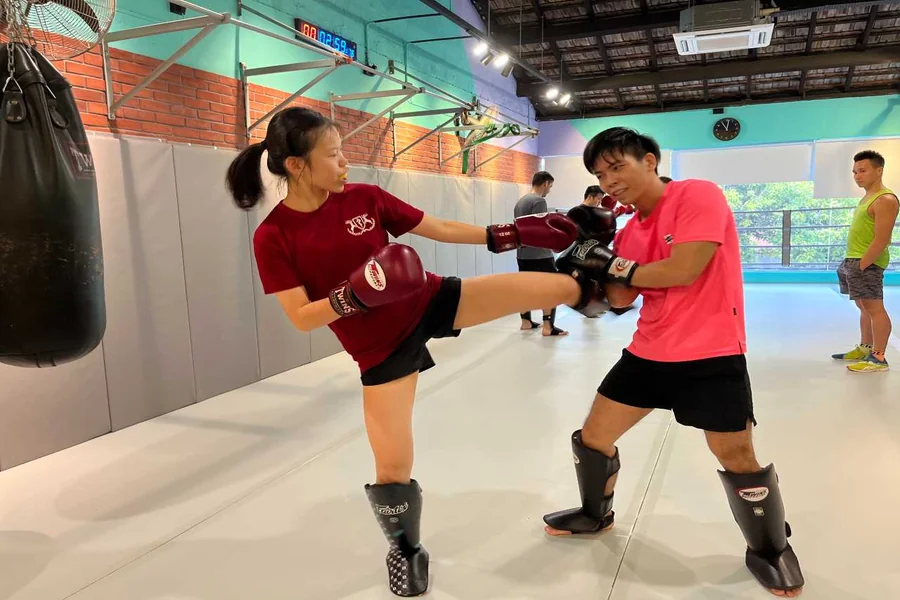

A tourist can learn much from the first few minutes inside a Muay Thai camp in Thailand. For many visitors, first-day conversations at a Muay Thai camp provide an introduction to local customs, communication styles, and the welcoming atmosphere that makes a Muay Thai camp feel less intimidating. You do not need fluent Thai to be courteous, but a greeting and a willingness to listen can make an unfamiliar room feel less distant. The Tourism Authority of Thailand notes that Thai uses five tones and Roman spellings vary. Practice slowly and listen.
1. Sawasdee: Greet the Room
Sawasdee is a common greeting. A tourist may see it written as sawasdee or sawatdee, and the sound can be difficult to capture in English letters. Say it when you arrive, then follow the room’s lead. If someone greets you first, answer warmly rather than worrying about producing a perfect accent. The familiar polite endings kha and khrap are often added to speech, with usage shaped by the speaker and context.
2. Khop Khun: Say Thank You
Khop khun means thank you. It fits after a coach adjusts your stance, a partner holds pads, or someone passes you a borrowed piece of equipment. In a Muay Thai camp, these small exchanges matter because training depends on attention and cooperation, not just on strength or speed. If you add a polite ending, let a local speaker help you choose a natural form. Different guides use slightly different Roman spellings, so do not correct a Thai speaker based on what you read online.
3. Ask for Help in Muay Thai
Mai khao jai is commonly used for I do not understand. It can be useful when an instruction comes quickly or the coach uses a word you have not heard. Pair it with a gesture toward the movement and a patient expression. The teacher may demonstrate again, show you with a partner, or find another way to explain.
4. Chai and Mai Chai: Confirm the Plan
Chai means yes, while mai chai is used for no or not so. A short answer can help when the coach checks whether you know the drill or are ready to continue. If you are not sure what you are agreeing to, pause and ask for clarification instead of answering automatically. Use the words with a small nod or a clear hand gesture.
5. Signal Clearly in Muay Thai
You may not know the right Thai word for every situation, but you can communicate discomfort with a calm, direct gesture. Put a hand up, step back, and tell the coach or partner that you need a pause. Agree on a signal before a controlled drill begins, especially if you and your partner do not share a fluent language.
Tourist Learns by Listening
Keep these expressions in your phone or on a small card, then let real conversation teach you the rest. Thailand’s regional accents and individual speech styles mean that one written guide cannot capture every voice. The point is to show respect and make communication easier, not to collect perfect pronunciation. A Muay Thai camp such as Suwitgym can become a memorable travel experience because you meet people while learning something together.
