

How can businesses make better decisions when the future is uncertain? How can project managers predict outcomes when so many variables are in flux? In finance, engineering, healthcare, or any field with high stakes, leaders constantly face choices without knowing all the answers. Traditional decision-making tools often fall short because they rely on single-point estimates or assumptions that don’t capture real-world variability. This is where Monte Carlo simulations provide a powerful solution, turning uncertainty into actionable insights and boosting decision confidence.
Understanding Monte Carlo Simulations
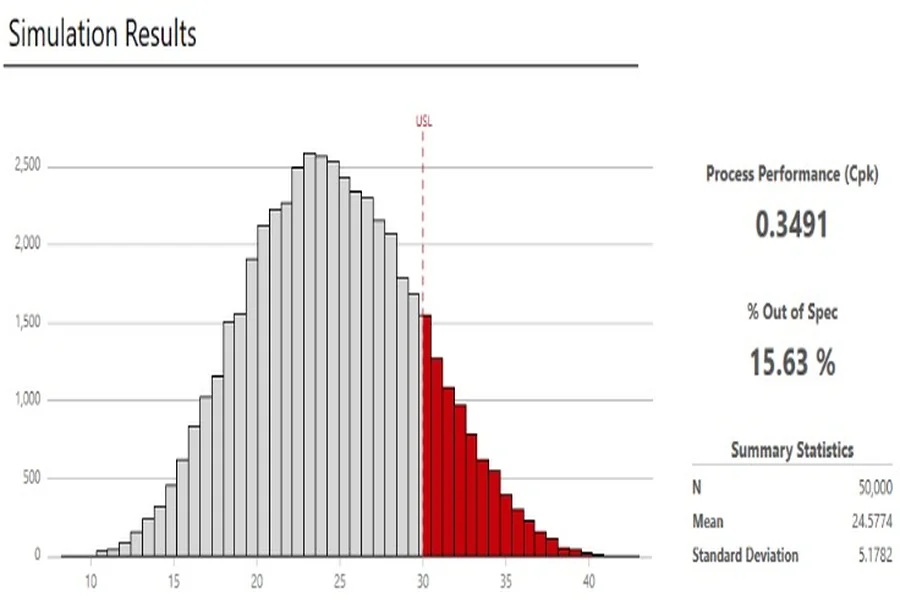
At its core, a Monte Carlo simulation is a computational technique that uses random sampling to estimate the probability of different outcomes in a process that is inherently uncertain. Instead of relying on a single input value, it considers a range of possible inputs, each with its own probability distribution, and runs thousands or even millions of simulations to see how those inputs affect outcomes. The result is not a single answer but a distribution of possible outcomes, providing a deeper understanding of risk and uncertainty.
The concept is named after the famous Monte Carlo casino in Monaco, reflecting the role of chance and probability. While the method originated in the 1940s to solve complex physics problems, it has since been adapted across industries due to its ability to handle uncertainty in real-world scenarios.
Quantifying Uncertainty
One of the main ways Monte Carlo simulations improve decision confidence is by making uncertainty visible and measurable. Traditional models often assume a fixed input—like a project cost of $1 million or an expected return of 8% on investment. However, in reality, these numbers are rarely exact. Costs can vary due to inflation, labor shortages, or unforeseen technical challenges, while investment returns fluctuate with market conditions. Monte Carlo simulations incorporate these variations by assigning a range of possible values and probabilities to each uncertain input.
For example, a company planning a new product launch can use a Monte Carlo simulation to model expected revenue. Instead of assuming a single sales figure, the simulation can account for fluctuations in customer demand, production costs, and marketing effectiveness. By running thousands of scenarios, the company can estimate the probability of achieving various revenue targets, allowing executives to make decisions with a clear understanding of potential risks and rewards.
Enhancing Risk Assessment
Another significant advantage of Monte Carlo simulations is their ability to enhance risk assessment. In traditional risk analysis, decision-makers often rely on qualitative judgments or simple “best case / worst case” scenarios. While useful, these methods provide limited insight into the likelihood of different outcomes. Monte Carlo simulations, in contrast, generate detailed probability distributions that reveal not just possible outcomes but how likely each outcome is.
For instance, in investment portfolio management, a Monte Carlo simulation can project future portfolio values by simulating thousands of potential market scenarios. Tools like Analytica make Monte Carlo simulation accessible by allowing users to define uncertain variables and automatically generate probability distributions for different outcomes. The results might show that there is a 70% chance the portfolio will exceed a target return, a 20% chance it will fall short, and a 10% chance of a significant loss. Armed with this knowledge, investors can make informed decisions, balancing potential gains against acceptable levels of risk.
Improving Strategic Planning
Monte Carlo simulations are also invaluable in strategic planning. Complex projects often involve multiple interdependent variables, making it difficult to predict timelines, budgets, and outcomes accurately. A construction company, for example, may face uncertainties in labor availability, material costs, weather delays, and regulatory approvals. By simulating these uncertainties simultaneously, a Monte Carlo model can produce a range of probable project completion dates and costs, helping managers identify potential bottlenecks and allocate resources more effectively.
This approach encourages proactive decision-making. Rather than being surprised by unexpected setbacks, planners can see which factors are most likely to derail a project and take steps to mitigate them. The result is greater confidence in planning and a higher likelihood of project success.
Supporting Data-Driven Decisions
Monte Carlo simulations promote data-driven decision-making by moving beyond intuition and guesswork. Because they rely on real data and probability distributions, the outcomes are rooted in evidence rather than subjective opinion. This is especially important in fields like healthcare, where treatment decisions can be life-changing. For example, a hospital may use Monte Carlo simulations to predict patient outcomes under different treatment strategies, considering variables like patient age, medical history, and response rates. The simulation helps clinicians identify the most effective treatment plans while understanding the range of possible results.
Moreover, decision-makers can visualize results using charts and probability curves, making complex data more accessible and actionable. This transparency builds trust among stakeholders, as decisions are justified by rigorous analysis rather than guesswork.
Increasing Confidence Through Scenario Analysis
One of the most powerful aspects of Monte Carlo simulations is the ability to conduct scenario analysis. Decision-makers can explore “what-if” questions by adjusting inputs and observing the effects on outcomes. For example, a company considering an international expansion can simulate different scenarios for exchange rates, tariffs, and demand in new markets. By comparing these scenarios, executives gain insight into which risks are manageable and which could threaten success.
This iterative process not only strengthens decision confidence but also fosters adaptive thinking, preparing organizations to respond effectively to changing circumstances.
Conclusion
In a world where uncertainty is the only certainty, Monte Carlo simulations provide a structured and reliable way to improve decision-making. By quantifying uncertainty, enhancing risk assessment, supporting data-driven strategies, and enabling scenario analysis, they empower leaders to make informed choices with greater confidence. Rather than relying on intuition or static projections, decision-makers gain a probabilistic understanding of outcomes, allowing them to anticipate risks, allocate resources efficiently, and achieve strategic objectives more effectively.
Ultimately, Monte Carlo simulations do not eliminate uncertainty—but they transform it from a source of anxiety into a tool for insight and control, enabling smarter, more confident decisions across virtually every industry.
