
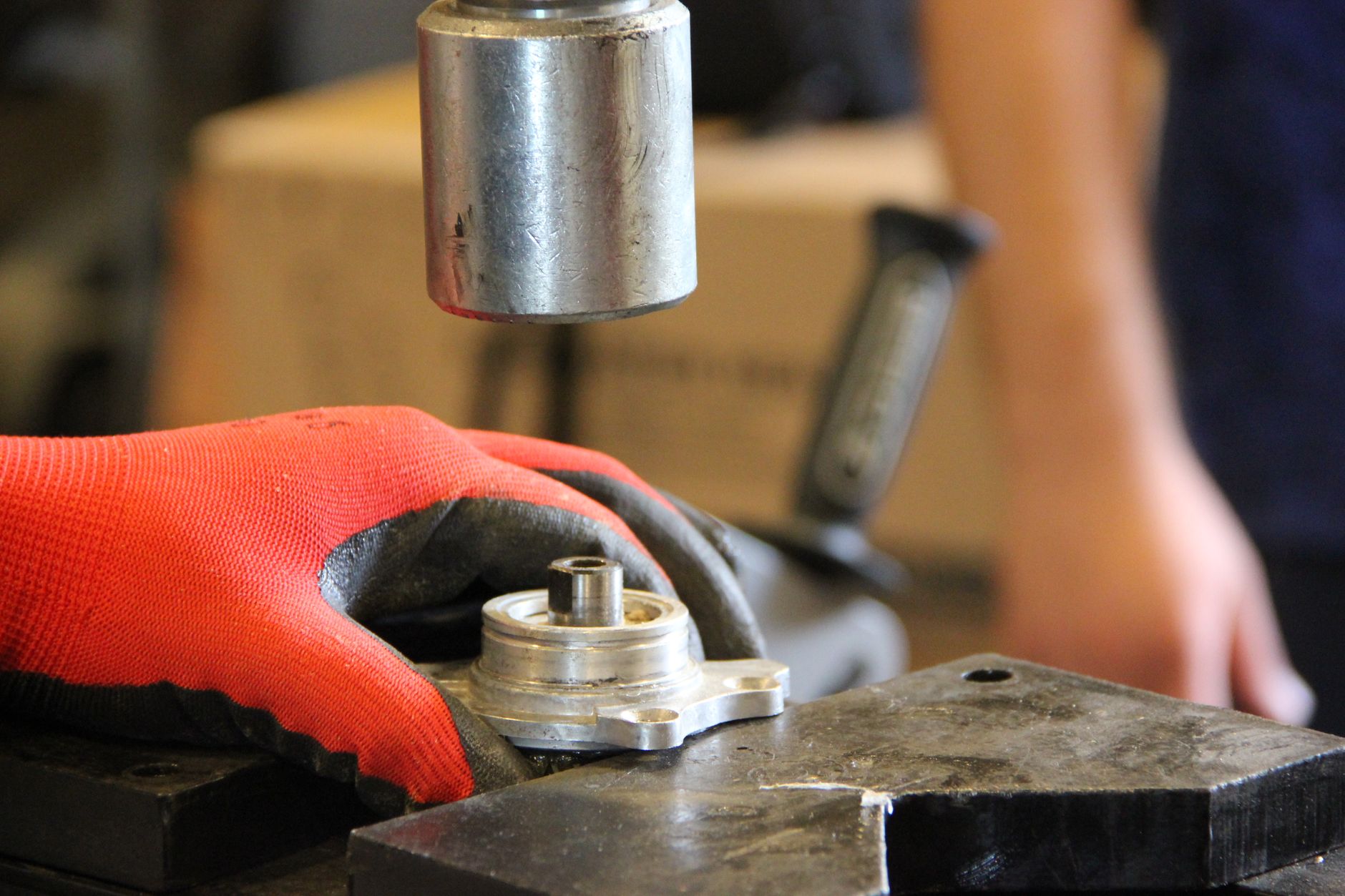

Shop buyers often compare hydraulic presses by tonnage first. That number matters, but it doesn’t describe the work envelope, frame access, controls, or how often a machine will repeat the same task. Choosing a press around peak force alone can leave operators fighting setup limits or paying for capacity they rarely use. Better decisions start with correcting several common assumptions about force, application, and machine configuration before a purchase reaches the shop floor.
First, list the press jobs: bearing installation, straightening, forming, and maintenance. The Industrial Hydraulic Press Machines page covers metal fabrication presses. Its PressPro choices span 66, 110, and 176 tons, with standard, wide, and movable configurations. Frame width and table movement affect how a part sits beneath the ram during a specific operation or repeated setup.
1. Tonnage Solves Every Job
Rated tonnage states the press’s maximum force, not the force every job requires. A bearing seated in a housing, a bent component straightened, and sheet metal formed each load the frame differently. The correct rating depends on material, contact area, and the operation’s resistance, so a shop should define representative jobs before choosing capacity.
Buying above that requirement does not fix poor access or an unsuitable setup. It also leaves the team evaluating cost against capacity that may sit unused. A useful estimate starts with the hardest recurring operation, then checks whether occasional jobs justify added force.
Capacity selection should allow room for the toughest routine job while keeping work within the press’s intended limits. If the job list includes rare high-force tasks, separate those from daily work and price the capacity increase against frequency, setup time, and floor space.
2. A Higher Rating Means a Larger Work Area
Tonnage and work envelope answer different questions. Capacity describes force; frame width, throat clearance, and table position determine whether a part fits and where the ram can reach. A part that exceeds opening clearance remains impractical, even when the press has ample force.
Before ordering, measure the largest workpiece and note where pressure must land. Include fixtures, dies, and the operator’s loading path in that check. Hydraulic shop press lines list standard, wide, and movable-frame options, so compare each configuration with the parts on the schedule.
3. Frame Style Is a Minor Detail
Standard, wide, and movable-table frames address different access needs. A wide frame provides more room across the work area, while a movable table changes how operators reach the work. Those distinctions matter when a shop handles bulky assemblies or positions irregular pieces beneath the ram.
Buyers should sketch how each recurring part enters, rests, and leaves the press. Check whether the table must move for loading and whether the frame width supports the part’s footprint. A tonnage chart alone cannot answer those layout questions.
4. The Rating Guarantees Controlled Results
Force control matters after you select capacity. Some operations require an operator to stop at a defined pressure rather than apply maximum force. A pressure gauge gives a direct view of applied force, but the operator still needs a process target.
Frame stiffness also affects alignment under load. Scotchman’s page describes welded steel frames that resist deflection and a hydraulic system sized to each capacity. Those features address stability and pressure delivery, but they do not replace proper tooling or workpiece support.
5. One Setup Handles Every Operation
A press’s application list should match actual production. Presses handle bearing installation, straightening, fabrication, maintenance, bending, and forming, but those jobs do not share identical setups. Each operation needs the right support points and suitable tooling for the workpiece.
Review the most frequent tasks first, then identify occasional jobs that need different access or force. Record part dimensions, material, contact location, and cycle frequency before comparing models. This gives a supplier a clear basis for discussing capacity and frame type without relying on a single headline number.
Ask operators to review those measurements before a purchase. Their handling sequence can expose access issues that drawings miss when fixtures need clearance.
Conclusion
Before selecting a press, write down the hardest recurring job, the largest part, and the access needed around it. Compare those requirements with rated capacity and frame configuration, then check pressure visibility and workpiece support. This quick review helps a shop reject machines that meet the numbers but not the tasks. The right choice is the press that meets operating demands without turning unused force into a factor.
