

Have you ever noticed how many commercial buildings, warehouses, and public spaces depend on metal structures?
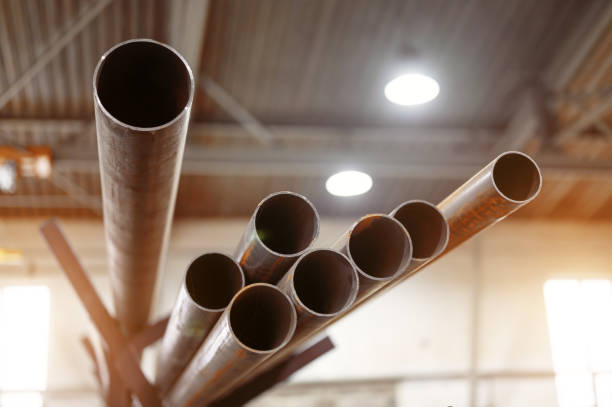
From supporting heavy equipment to creating attractive interiors, steel tubing plays an important role in commercial construction.
Businesses often choose steel tubing because it offers strength, durability, and flexibility in design. Its hollow shape also helps reduce material weight compared to solid steel sections of similar dimensions.
But how can businesses use it effectively? Here are seven practical applications that can improve commercial projects while helping companies make better material choices.
1. Build Strong Structural Frameworks
Steel tubing is commonly used to create supporting frameworks for commercial buildings, warehouses, and industrial facilities. Its strength and range of available shapes make it suitable for different structural applications.
Square and rectangular tubes are particularly useful for columns, bracing, and building frames.
For example, a warehouse may use structural steel tubing to support selected framing elements without relying entirely on solid steel sections.
Before choosing tubing for structural work, businesses should consider:
- The weight the structure must support
- Tube dimensions and wall thickness
- Required material grades
- Local construction and safety standards
A qualified structural engineer should confirm that the selected tubing meets the project's load requirements.
2. Create Durable Commercial Furniture
Commercial furniture experiences frequent use, especially in restaurants, offices, schools, and waiting areas. Steel tubing provides a practical material for furniture frames that need to remain stable.
Businesses can use it to manufacture tables, chairs, shelving units, and workstations.
For instance, a restaurant may choose tubular steel table frames because they can support regular use while maintaining a clean, modern appearance.
When selecting steel tubing for furniture projects, businesses should compare round, square, and rectangular profiles. Round tubing works well for curved designs, while square tubing provides flat surfaces that can simplify certain connections.
A protective finish can also help reduce corrosion and surface damage.
3. Install Safety Railings and Barriers
Safety is a major consideration in commercial environments. Steel tubing can be used to construct railings, protective barriers, and pedestrian guidance systems.
These structures are particularly useful around staircases, elevated platforms, loading areas, and machinery.
For example, a distribution facility may install tubular steel barriers to separate walking areas from equipment operating zones.
However, businesses should avoid choosing tubing based on appearance alone. Railings and barriers must meet applicable height, strength, spacing, and installation requirements.
Outdoor installations may also require galvanized steel or another suitable corrosion-resistant finish.
4. Develop Industrial Equipment Supports
Manufacturing facilities often need custom structures to support machinery, tools, and production equipment. Steel tubing is useful for building equipment stands, worktables, and supporting frames.
Its hollow construction can provide a suitable balance between strength and weight when properly specified.
A manufacturing company, for example, might use rectangular steel tubing to create a custom workstation that accommodates specific equipment dimensions.
Before fabrication, businesses should check the equipment's weight, operating vibrations, and attachment points.
Proper welding and secure connections are equally important because poorly constructed supports can affect equipment stability.
5. Design Attractive Retail Displays
Retail stores need displays that are practical, easy to maintain, and visually appealing. Steel tubing can provide strong frames for clothing racks, product stands, and display structures.
Its clean lines make it suitable for modern commercial interiors.
Businesses can also combine tubular steel frames with other materials to create different finishes and appearances.
For example, retailers planning lightweight display panels may buy aluminum sheet metal online and combine suitable aluminum panels with steel tubing frames.
When combining different metals, designers should consider compatible fasteners, surface protection, and the possibility of galvanic corrosion, particularly in damp environments.
This approach allows businesses to choose materials according to each component's purpose.
6. Construct Outdoor Commercial Structures
Steel tubing can also support outdoor commercial projects, including covered waiting areas, signage frames, canopies, and certain fencing systems.
These installations must handle changing weather conditions and, depending on their location, wind and other environmental loads.
For example, a business may use tubular steel members in a custom entrance canopy to create a defined structure without unnecessarily bulky components.
The correct protective coating is important because untreated carbon steel can corrode when exposed to moisture.
Businesses should also account for drainage, maintenance access, and secure foundations during planning.
7. Create Custom Storage and Warehouse Systems
Efficient storage helps commercial facilities organize materials and use available floor space more effectively. Steel tubing can be used to manufacture custom storage frames, carts, and equipment racks.
For example, a workshop may build tubular steel storage units for tools and frequently used materials.
Custom dimensions can help businesses accommodate unusual equipment sizes or limited storage areas.
However, the intended load must always guide the design. Heavy-duty storage structures require appropriate engineering, secure connections, and clear load ratings.
Businesses should also inspect storage frames regularly for damage, corrosion, and loose connections.
How to Choose the Right Steel Tubing for Your Project
Although steel tubing has many commercial applications, selecting the correct product depends on how it will be used.
Businesses should compare material grade, tube shape, wall thickness, fabrication requirements, and exposure conditions before purchasing.
Structural projects may require certified hollow structural sections, while decorative furniture may have different material requirements.
It is also important to distinguish structural tubing from piping intended for transporting fluids.
Getting these details right can prevent unnecessary material expenses and help reduce installation problems.
Conclusion
Steel tubing offers businesses several practical options for commercial projects, from structural frameworks and safety barriers to furniture and warehouse storage.
The key is matching the material to the intended application rather than selecting tubing based only on price or appearance.
By considering strength, dimensions, corrosion protection, and installation requirements, businesses can use steel tubing to create reliable, functional commercial structures that meet their long-term needs.
