

The world changes dramatically after sunset. Familiar streets become harder to navigate, colors lose their intensity, and ordinary objects can disappear into the shadows. Yet certain surfaces remain surprisingly visible, even under weak illumination.
This difference is not accidental. It comes from the way light interacts with materials and how human eyes respond to darkness. Specialized products, such as license plate film from Alite, also demonstrate how surface treatments interact with illumination. Understanding these processes reveals the science behind many everyday safety features.
Why Darkness Changes Our Vision
Human eyes contain two main types of light-sensitive cells: rods and cones. Cones help us distinguish colors and fine details in bright conditions. Rods become more important in darkness because they respond to lower levels of illumination.
As daylight fades, color perception becomes less reliable. Contrast, movement, and brightness become increasingly important for recognizing objects.
This explains why a dark vehicle may blend into its surroundings while a reflective road sign remains noticeable.
The Science of Reflective Surfaces
Not every material reflects light in the same way. Ordinary surfaces scatter incoming light in multiple directions. Retroreflective materials are engineered to return much of that light toward its source.
This effect is commonly achieved using microscopic glass beads or specially shaped prisms.
Reflective technology appears in many familiar places:
- Road signs that become visible in headlights.
- Bicycle reflectors that improve nighttime recognition.
- Safety clothing worn by roadside workers.
- Reflective markings on commercial vehicles.
- Registration plates designed for improved visibility.
Specialized automotive materials also attract interest because of their optical properties. Thin surface layers can influence how light interacts with different materials, including those used in vehicle identification.
However, appearance depends on illumination, viewing angles, and equipment. Vehicle modifications must also meet applicable legal requirements.
Why Cameras See Differently
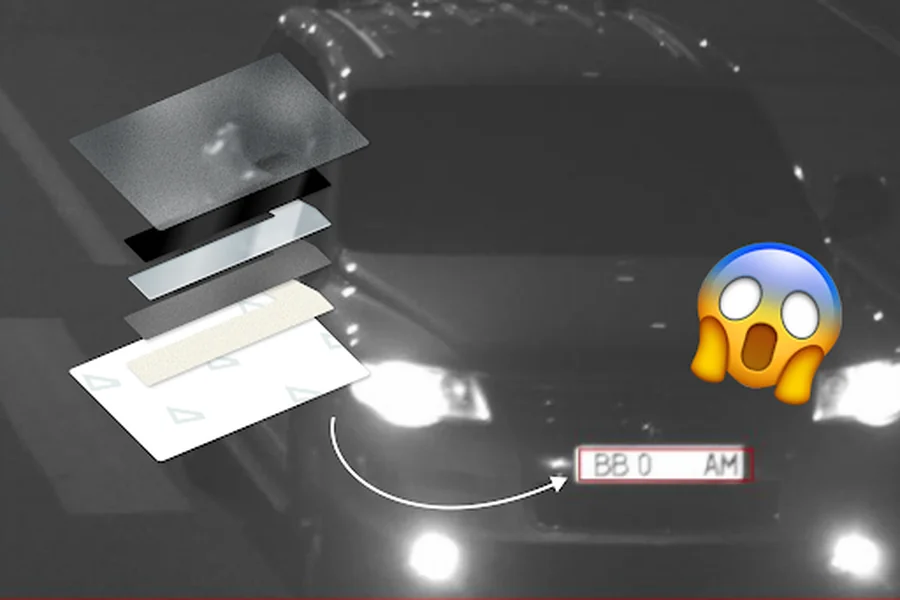
Digital cameras and human eyes process light differently. Cameras rely on electronic sensors, lenses, exposure settings, and software to produce images. Some imaging systems use infrared illumination, which can reveal details that are difficult to distinguish in ordinary visible light.
A reflective material may therefore appear bright to a person but behave differently in a photograph. The result depends on the equipment and surrounding conditions. This is why individual demonstrations cannot establish how a material performs under every lighting scenario.
Weather Adds Another Challenge
Rain, fog, and moisture can change how light travels. Water droplets scatter illumination, creating glare and reducing contrast.
Wet roads may reflect headlights toward drivers, making painted markings harder to distinguish. Dirty or damaged reflective surfaces can also lose effectiveness. Regular maintenance and appropriate material selection help preserve visibility in demanding environments.
Understanding the Nighttime World
Nighttime visibility depends on more than the presence of light. Human vision, reflective materials, weather, and digital imaging all influence what becomes recognizable.
These principles explain why small design choices can make a meaningful difference after dark. By understanding how light behaves, we can better appreciate the technologies that help people navigate unfamiliar surroundings safely.
