
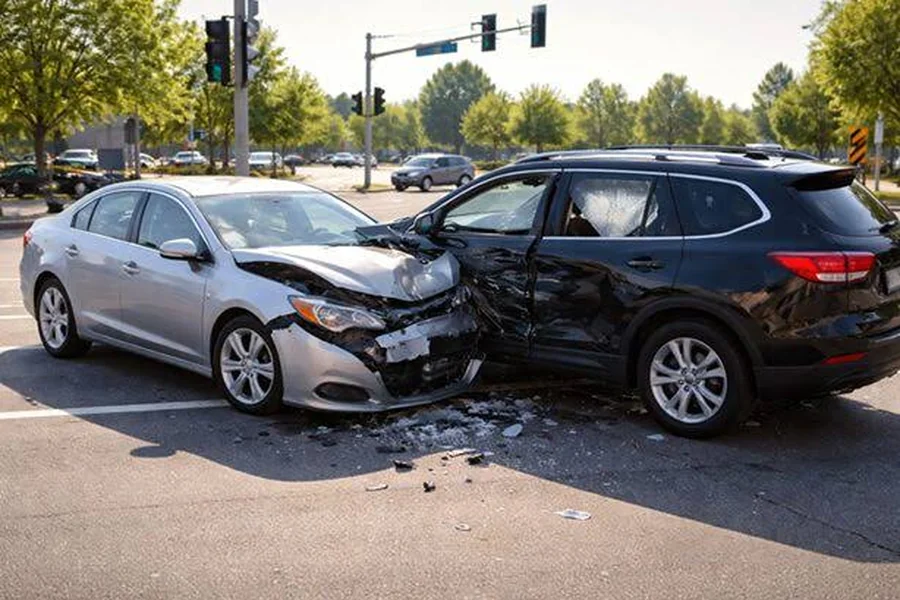

Intersection crashes can become complicated because several traffic rules may apply within a small area. One driver may be turning left while another travels straight, one vehicle may be entering from a stop sign, or the parties may disagree about which traffic signal was displayed. Determining fault can require more than looking at where the vehicles finally came to rest.
For someone consulting an auto accident attorney in Cicero, the investigation may involve traffic-control devices, vehicle positions, witness accounts, video, speed, turn signals, and right-of-way rules. Illinois law establishes specific duties for drivers entering intersections, but having the right of way does not necessarily eliminate every responsibility to use reasonable care.
Traffic Signals Do Not Eliminate Every Right-of-Way Question
A green signal generally permits a driver to proceed, but Illinois law still requires turning vehicles to yield to vehicles, bicyclists, and pedestrians lawfully within the intersection or an adjacent crosswalk. A green arrow permits the indicated movement but likewise does not authorize a driver to ignore traffic lawfully using the intersection.
Disputes can arise when each driver claims to have had the favorable signal. Traffic-camera footage, nearby surveillance, dash-camera video, signal timing records, and independent witnesses may help clarify the sequence. Vehicle damage can also help establish the direction of travel, although damage alone may not show which light was displayed.
Left-Turn Crashes Often Depend on the Approaching Vehicle’s Distance
Illinois law requires a driver turning left within an intersection to yield to an oncoming vehicle that is close enough to constitute an immediate hazard. Once the driver has yielded and a safe interval exists, the turn may proceed.
That rule can create factual disputes about how far away the oncoming vehicle was when the turn began. Speed also matters because a rapidly approaching vehicle may cover the remaining distance more quickly than expected. Investigators may examine skid marks, event data where available, video, sight distance, and witness testimony to determine whether the turning driver misjudged the gap or whether the approaching driver contributed to the collision.
Stop Signs Require More Than a Momentary Stop
At a stop-controlled intersection, Illinois law requires a driver to stop at the marked stop line, before the crosswalk if no line exists, or at the nearest point where approaching traffic can be seen. After stopping, the driver must yield to traffic already within the intersection or approaching so closely that it presents an immediate hazard.
A driver can therefore come to a complete stop and still fail to yield properly. Questions may include how long the driver waited, whether parked vehicles or other obstructions limited visibility, and whether the driver entered before a safe gap existed. Illinois law also provides that a collision or interference after passing a stop or yield sign can constitute prima facie evidence of failure to yield.
Unmarked Intersections Have Their Own Right-of-Way Rule
When two vehicles approach an uncontrolled intersection from different roadways at approximately the same time, Illinois law generally requires the driver on the left to yield to the vehicle on the right. The rule changes at through highways and other intersections governed by separate traffic-control provisions.
The Illinois pattern jury instructions also emphasize that right of way does not excuse a driver from exercising ordinary care while approaching and entering the intersection. Even a driver who technically has priority may still face questions about speed, lookout, or reaction if a collision could reasonably have been avoided.
Speed Can Change How a Right-of-Way Dispute Is Evaluated
Intersection fault is not always resolved by identifying which vehicle arrived first. A driver may appear to have had enough time to turn or cross if the other vehicle was traveling at a reasonable speed, while excessive speed can dramatically shorten that interval.
This is especially relevant when witnesses disagree about whether one vehicle “came out of nowhere.” Video, roadway measurements, vehicle damage, braking evidence, and electronic data can help estimate movement before impact. Speed can affect both whether a vehicle constituted an immediate hazard and whether another driver had a realistic opportunity to perceive and respond to it.
Obstructed Sightlines Can Affect Both Drivers
Buildings, parked trucks, landscaping, construction barriers, snow piles, or other objects can make it difficult to see traffic approaching an intersection. A driver whose view is blocked may need to move cautiously forward before gaining a clear sightline, while another driver approaching the same location may have equally limited ability to see the entering vehicle.
Sight restrictions do not automatically determine fault, but they can change what each driver reasonably could have observed. Photographs taken soon after the crash are particularly useful because parked vehicles, temporary construction, and other obstructions may disappear before a later inspection.
More Than One Driver Can Be Assigned Fault
Illinois follows modified comparative fault in negligence cases. Under 735 ILCS 5/2-1116, an injured plaintiff cannot recover if the plaintiff’s contributory fault is more than 50% of the proximate cause of the injury. When the plaintiff’s share is 50% or less, damages are reduced in proportion to that percentage.
That rule can be significant after an intersection crash. A left-turning driver may have failed to yield while the approaching driver was also speeding. One vehicle may have entered from a stop sign while the other driver was distracted. The investigation therefore needs to consider the conduct of everyone involved rather than assuming that one traffic violation automatically resolves the entire fault analysis.
Intersection Fault Often Depends on Reconstructing the Full Sequence
Intersection collisions can happen in only a few seconds, but assigning responsibility may require reconstructing several decisions made before impact. Traffic signals, stop signs, turn movements, vehicle speed, sightlines, and right-of-way rules can all overlap.
A complete investigation may combine police documentation, photographs, witness accounts, surveillance footage, dash-camera recordings, signal information, vehicle damage, and electronic data where available. Looking at that full sequence can help determine not only which driver had priority, but whether either driver failed to use reasonable care as the vehicles approached and entered the intersection.
