
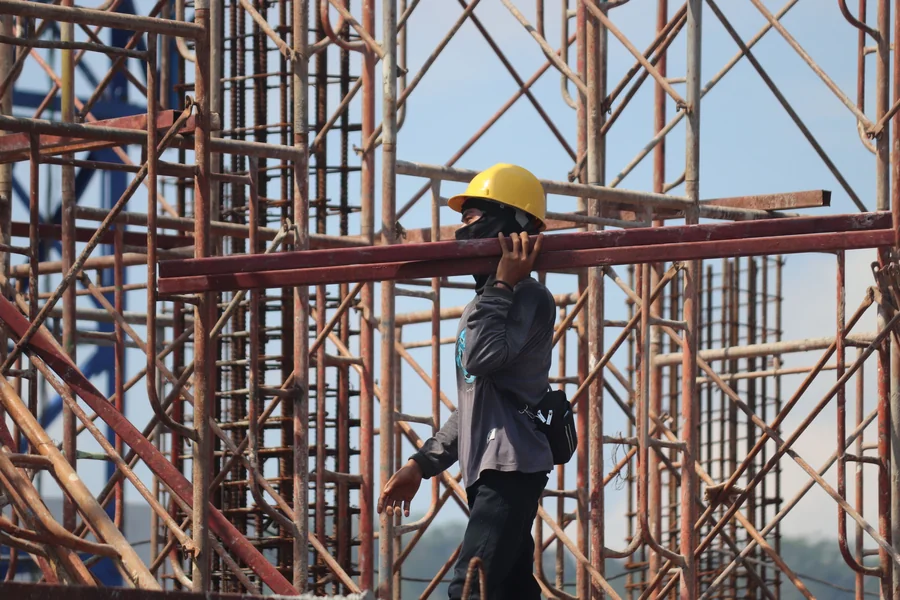
Whether you operate as a solo trade professional or manage a large commercial crew, construction is inherently unpredictable. Jobsite hazards, equipment mishaps, and project delays are ongoing risks, making proper risk management essential for keeping projects on track.
The scale of the industry highlights why protection is important. According to Data USA, the U.S. construction sector employs nearly 9.8 million workers across hundreds of thousands of businesses. Construction professionals, including managers, carpenters, and laborers, work across a wide range of projects every day.
With so many people, vehicles, tools, and materials involved, an unexpected accident or mistake can lead to costly repairs, property damage, or liability claims. Contractor insurance can provide financial protection when these situations arise.
This article explains the major risks contractors face, the coverage that can address them, and why protection matters no matter how big or small your business is.
Construction Work Comes With Multiple Risks
Construction is inherently physical, fast-moving, and unpredictable. Worksite injuries, property damage, equipment theft, vehicle accidents, and subcontractor mistakes can happen at any time. Even completed projects can trigger claims years down the road.
On top of that, a passerby, client, or visitor could be injured at your jobsite, leading to significant legal defense fees and potential settlement costs. This is where contractor insurance can help. Depending on the policy, it may help cover claims involving third-party injuries or property damage caused by your work, as well as related legal defense costs.
Managing these risks requires coverage that reflects how a construction business operates. Moody Insurance Worldwide explains that contractors can access a portfolio of flexible, tailored insurance products designed around their operations and project needs. The right combination of coverage can help businesses address the specific risks they face.
Workers Need Protection on the Job
Construction sites present significant physical hazards, from heavy machinery and elevated work areas to unpredictable working conditions. According to the U.S. Bureau of Labor Statistics, slips, falls, and trips caused 389 fatal injuries in private-sector construction in 2024, with 95.9% involving falls to a lower level.
Nonfatal falls to a lower level that resulted in days away from work occurred at a rate of 13.9 per 10,000 full-time construction workers. This was more than three times the rate for all private industries.
Given these risks, protecting workers is a top priority. Workers’ compensation insurance can help cover medical expenses and a portion of lost wages for covered work-related injuries or illnesses.
Workers’ compensation requirements vary by state and may depend on factors such as the number of employees and the structure of the business. Contractors should understand the requirements that apply to their operations and make sure they have appropriate coverage in place.
Construction Equipment and Tools Represent a Major Investment
Construction businesses often rely on expensive tools, machinery, and equipment to complete projects efficiently. From power tools and generators to heavy machinery, these assets can represent a significant investment for a contractor. Theft, accidental damage, fire, vandalism, or other unexpected events can leave a business facing substantial replacement or repair costs and may even delay a project.
The right contractor insurance can help businesses protect these valuable assets against covered losses. Depending on the type of equipment, where it is stored, and how it is transported or used, different types of coverage may apply. Property insurance can help protect business property, while equipment or inland marine coverage may be relevant for tools and equipment that move between jobsites.
Contractors should keep an up-to-date inventory of their equipment and consider where and how each asset is used. Reviewing these details can help ensure their coverage reflects their actual operations.
Vehicles Create Another Layer of Risk
Vehicles are an essential part of many construction businesses. Contractors may rely on trucks, vans, trailers, and other vehicles to transport workers, tools, equipment, and materials between jobsites. This puts businesses at risk of accidents, property damage, theft, and injuries involving other drivers or pedestrians.
The risk is not limited to the vehicle itself. Dr. Christine Branche, Board Member and Programs Committee Chair at the Job-Site Safety Institute, noted that “Motor vehicle crashes are the leading cause of work-related deaths in the United States, with speeding and distracted driving being the primary reasons crashes occur.”
Commercial auto insurance can help protect business-owned vehicles against covered losses and liability arising from accidents and other incidents. Personal auto policies may not provide the coverage a business needs when vehicles are regularly used for work.
Insurance May Be Required to Secure Construction Projects
Carrying appropriate contractor insurance can be important when bidding for construction projects. General contractors and property owners may require proof of coverage before allowing a contractor or crew to begin work. Contracts may also specify particular coverage types, liability limits, and other insurance requirements.
Beyond traditional liability and safety concerns, construction businesses also face growing digital risks. According to the World Construction Network, construction projects increasingly depend on interconnected procurement platforms, digital blueprints, and shared supply networks.
Disruptions to these systems can create operational bottlenecks, delay decisions, disrupt schedules, and increase costs. This makes cybersecurity and resilience an increasingly important consideration for construction businesses and their project partners.
Depending on the business and project requirements, contractor insurance may include general liability and other specialized coverage, including cyber insurance.
Insurance Needs Vary by Business Size
The need for insurance does not disappear when a construction business is small. Instead, the type and amount of coverage may change as the business grows, takes on larger projects, hires more employees, and adds equipment or vehicles.
1.Small contractors: They typically have fewer employees, smaller projects, limited equipment, and perhaps one or two vehicles. Their coverage may focus on liability, tools, equipment, and commercial vehicles.
2. Medium-sized contractors: They may manage larger crews, multiple projects, more equipment and vehicles, and a greater number of subcontractors. As operations expand, their coverage needs may increase in both scope and limits.
3. Large contractors: They may take on large or multi-site projects, manage significant payroll and equipment, work with numerous subcontractors, and face higher potential liability. They may also have more complex contractual insurance requirements and need carefully structured coverage programs.
Subcontractors Can Introduce Additional Risks
Hiring specialty trades for part of a project is common in construction, and the scale can be significant. Research on subcontractor risk management found that subcontracting can account for around 40% of the effort in a typical building project. As a result, problems with subcontractors can quickly affect the wider project.
The study also found that quality failures were among the most significant subcontractor-related problems, potentially increasing costs and extending project timelines. It noted that subcontractors can be responsible for more than 30% of project tasks.
A subcontractor’s mistakes or actions can also create liability or property risks for others involved in the project. Contractors should understand their contractual responsibilities and verify appropriate insurance documentation, such as certificates of insurance, when required.
Contracts should clearly define who is responsible for specific risks and obligations, reducing confusion if a claim arises. Reviewing insurance coverage alongside contractual agreements can help contractors better manage the financial risks associated with subcontracted work.
Frequently Asked Questions
Do small contractors really need contractor insurance?
Yes. Smaller businesses can face the same kinds of claims as larger ones, and they often have fewer financial reserves to absorb a loss. The coverage types and limits may differ, but the need remains.
What is a certificate of insurance, and why might I need one?
A certificate of insurance is a document showing the coverage you carry. General contractors and project owners often request one before work begins to confirm you meet their contract requirements.
Am I responsible for my subcontractors’ insurance?
It depends on your contracts and applicable rules. Many contractors request proof of insurance from subcontractors and define risk responsibilities in writing. An insurance professional or attorney can help you understand your obligations.
Statistics and Insights at a Glance
| 9.79 million | People in the U.S. construction industry workforce in 2024. |
| 389 fatal injuries | Fatal injuries from slips, falls, and trips among private-sector construction workers in 2024. |
| 95.9% | Share of those fatal construction injuries involving falls to a lower level. |
| 13.9 per 10,000 | Rate of nonfatal falls to a lower level resulting in days away from work among full-time construction workers. |
| Around 40% | Share of total effort that subcontracting can represent in a typical building construction project, according to a 2024 study. |
| More than 30% | Share of project tasks subcontractors can be responsible for, according to the same study. |
Contractor insurance plays an important role in protecting construction businesses of every size. Whether you operate with a small crew or manage hundreds of employees, risks such as jobsite injuries, property damage, theft, vehicle accidents, and subcontractor issues can affect your business.
Start by identifying the risks your business is most likely to face and consider coverage that addresses those exposures. Review your contracts to understand any insurance requirements, and update your coverage as your projects, workforce, equipment, and operations change.
An insurance professional with construction industry experience can also help you evaluate your risks and determine whether your current coverage meets your business needs.
