
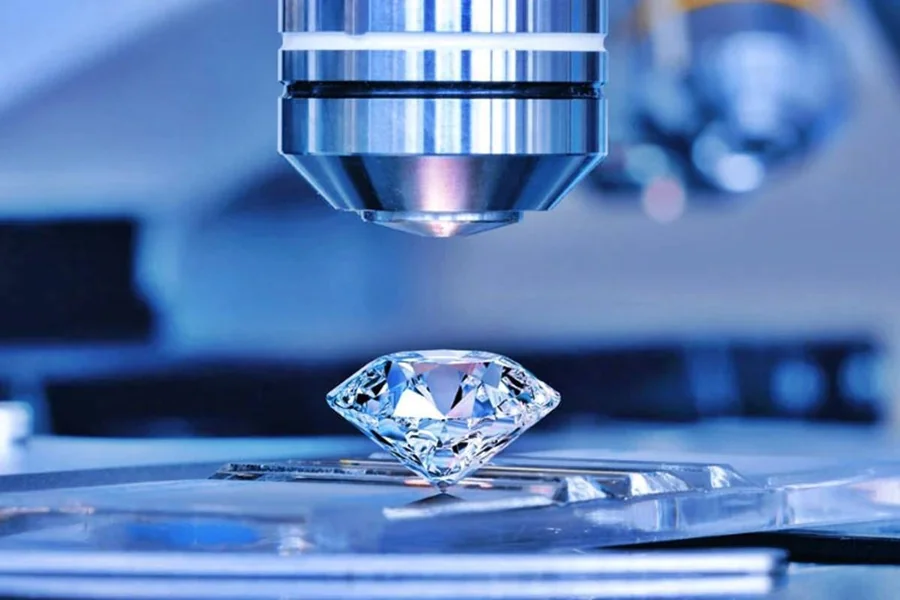

When Rihanna stepped onto the red carpet last month wearing a stunning diamond necklace that sparkled just as brilliantly as any mined stone, few observers realized they were witnessing a quiet revolution. The diamonds adorning the global icon weren’t pulled from the earth after centuries of geological pressure—they were grown in a laboratory in a matter of weeks. This moment crystallized what industry insiders have been whispering about for years: the luxury market is experiencing its most significant transformation since Coco Chanel liberated women from corsets.
The shift isn’t just about aesthetics or economics—it’s about redefining what luxury means in an age where consciousness carries as much currency as carats. Today’s discerning consumers, particularly millennials and Generation Z, are demanding more than just beautiful objects; they want beautiful stories, ethical origins, and sustainable practices woven into every facet of their purchases.
The Old Guard: When Rarity Ruled Supreme
For over a century, the diamond industry operated on a simple premise: scarcity equals value. De Beers’ legendary “A Diamond is Forever” campaign didn’t just sell stones—it sold the mythology of eternal love through geological rarity. The narrative was intoxicating: these crystals, formed billions of years ago under unimaginable pressure, were the ultimate symbol of commitment and status.
This framework made perfect sense in a world where luxury was defined by exclusivity and the ability to possess what others couldn’t. Diamonds became shorthand for success, their brilliance reflecting not just light but social standing. The more difficult they were to obtain, the more desirable they became—a perfect storm of marketing genius and human psychology.
But like all powerful narratives, this one was built on foundations that time would eventually erode. The internet democratized information, revealing uncomfortable truths about mining practices, conflict diamonds, and environmental devastation. Suddenly, the romance of geological rarity was complicated by ethical reality.
The Paradigm Shift: Consciousness Meets Luxury
The transformation didn’t happen overnight. It began with a generation that grew up watching “Blood Diamond” and reading exposés about working conditions in African mines. These consumers—now the primary luxury demographic—approach purchases with a different set of values. They’ve witnessed climate change firsthand, lived through economic uncertainty, and developed a sophisticated understanding of global supply chains.
For them, true luxury isn’t about owning something rare; it’s about owning something that aligns with their values while still delivering the aesthetic and emotional satisfaction they seek. This philosophical shift has created space for innovations that would have been dismissed as “fake” or “inferior” just a decade ago.
The numbers tell the story. According to recent market research, lab-grown diamond sales have increased by over 200% in the past three years, with millennials driving 70% of that growth. These aren’t budget-conscious consumers settling for second-best—they’re affluent buyers actively choosing laboratory-created stones over mined alternatives.
The Science of Sustainable Sparkle
What makes laboratory-grown diamonds genuinely sustainable extends far beyond their reduced environmental footprint—though that alone is compelling. Traditional diamond mining displaces approximately 250 tons of earth for every carat extracted, while lab-grown alternatives require minimal physical disruption and produce 85% fewer carbon emissions.
But sustainability in luxury encompasses more than environmental metrics. It includes supply chain transparency, fair labor practices, and economic accessibility. Laboratory-grown diamonds excel in all these areas, offering complete traceability from creation to consumer—something virtually impossible with mined stones.
The lab-grown diamond benefits extend beyond environmental considerations to include consistent quality and ethical sourcing. Unlike their mined counterparts, these stones come with guarantees about their origins, working conditions, and environmental impact—luxury with a clear conscience.
Modern consumers aren’t just buying diamonds; they’re buying into a value system. They want to know their purchase supports innovation rather than exploitation, progress rather than tradition for tradition’s sake. Laboratory-grown diamonds deliver this narrative authenticity alongside visual perfection.
Investment Perspective: Value Beyond Valuation
The financial landscape for luxury goods is evolving as rapidly as consumer preferences. While traditional investment wisdom suggested that only mined diamonds held long-term value, this perspective is being challenged by changing market dynamics and consumer behavior.
Laboratory-grown diamonds offer a compelling value proposition: identical physical, chemical, and optical properties to mined stones at 30-40% lower prices. This price differential doesn’t represent inferior quality—it reflects the absence of mining infrastructure, geopolitical risk, and artificial scarcity premiums.
For luxury brands, this shift represents opportunity rather than threat. Companies like Pandora, which announced it would stop using mined diamonds entirely, aren’t abandoning luxury—they’re redefining it. The brand’s focus shifted from geological rarity to design innovation, storytelling, and ethical positioning.
The technology driving this transformation continues advancing at breakneck speed. What once required weeks of laboratory cultivation now takes days, with quality improvements that make differentiation between lab-grown and mined diamonds impossible without specialized equipment.
The Future Crystallizes
The diamond industry’s transformation reflects a broader evolution in luxury consumption. Today’s affluent consumers are more interested in authenticity than tradition, more concerned with impact than image, and more drawn to innovation than inheritance.
This shift doesn’t diminish the beauty or emotional significance of diamonds—it enhances both by removing ethical complications that once clouded their brilliance. A laboratory-grown diamond carries the same visual impact, the same symbolic weight, and the same capacity to mark life’s most meaningful moments as any stone pulled from the earth.
The revolution Rihanna represented on that red carpet wasn’t about choosing cheaper alternatives—it was about choosing better ones. In an industry built on the premise that newer isn’t necessarily better, laboratory-grown diamonds prove that sometimes, it absolutely is.
The future of luxury lies not in what we can extract from the earth, but in what we can create with our ingenuity, guided by our values, and perfected through our technology. In this new paradigm, the most precious stones aren’t those that took billions of years to form—they’re those that took human innovation to perfect.
As the industry continues evolving, one thing remains constant: true luxury has always been about more than the object itself. It’s about the story, the values, and the future we choose to create. Laboratory-grown diamonds don’t just sparkle—they illuminate a path toward a more conscious, sustainable, and ultimately more luxurious tomorrow.
