
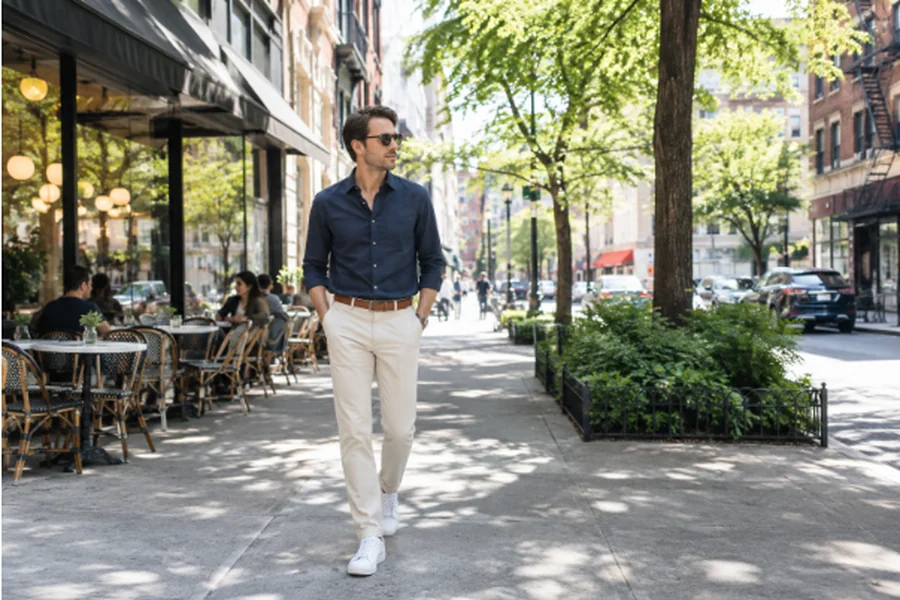

Creating more outfits does not always require buying more clothing. Often, it starts with choosing dependable basics that can move between work, travel, casual plans, and evenings out. Everyday trousers are especially useful because they can look cleaner than jeans without feeling as formal as traditional dress pants.
For an example of a trouser built around long-term versatility, original twill khakis from Bills Khakis come in relaxed, classic, and straight fits, with pleated options in the collection as well. Bills Khakis focuses on U.S.-made, military officer khaki-inspired trousers and 2-ply twill fabric, making the collection a useful reference for U.S. shoppers who value durable cotton construction and traditional menswear styling.
Why Everyday Trousers Deserve More Attention
Trousers often anchor a smart-casual outfit because they establish the overall level of polish. Jeans are practical, but their denim texture usually makes an outfit feel more casual. Shorts serve warm-weather downtime, while formal wool dress pants can feel too refined for errands or low-key social plans. A well-fitting cotton trouser sits in the middle, offering structure without looking overly dressed up.
The goal is not to make every outfit formal. It is to own trousers that can adapt. A pair in khaki, navy, charcoal, olive, brown, or stone can support a simple T-shirt and sneakers one day, then an Oxford shirt and loafers the next.
Start With the Right Fit
Before considering color or accessories, focus on fit. The best shape is one that feels comfortable when sitting, walking, and standing, while still looking intentional from a distance.
- Relaxed fit: Offers extra room through the seat and leg, making it useful for casual outfits and easy movement.
- Straight fit: Creates a balanced line and works with many types of shoes.
- Classic fit: Provides a clean middle ground for office days, dinners, and social events.
- Pleated styles: Add room through the upper leg and can be a comfortable choice for people who prefer a less restrictive fit.
Use a mirror check before leaving home. The waistband should sit comfortably without pulling. The seat should not sag or strain. The leg should drape cleanly, and the hem should rest neatly on the shoe instead of bunching heavily around the ankle.
Choose a Color That Works Hard
Neutral shades reduce guesswork because they pair with more of what is already in a wardrobe. Light khaki works naturally with navy, white, denim, olive, and brown. Navy pairs well with gray, cream, soft blue, and tan. Charcoal can make a casual shirt look sharper, especially with dark leather shoes. Olive brings some depth while remaining easy to wear with white, cream, navy, and faded blue.
When buying a first pair, choose the color that connects with your existing shoes and outerwear. A person who wears brown boots often may get more use from khaki or olive, while someone with black footwear may prefer charcoal or navy.
Build Around a Simple Outfit Formula
A repeatable formula makes getting dressed faster without making every outfit look identical:
- Choose the trousers first.
- Add a base layer, such as a T-shirt, polo, button-down, or fine-gauge knit.
- Include one structured layer, such as an overshirt, cardigan, chore jacket, or unstructured blazer.
- Select shoes that fit the setting.
- Finish with one useful accessory, such as a belt, watch, scarf, or simple bag.
An Oxford cloth shirt is particularly useful in this formula because it can read as casual with rolled sleeves or more polished when tucked in. The important point is that changing one or two elements, rather than everything at once, can give the same trousers a distinctly different purpose.
Use Fabric to Set the Tone
Fabric affects how formal or relaxed trousers appear. Smooth cotton twill tends to look neat and structured. Brushed cotton, corduroy, linen, and visibly textured weaves create a more casual impression. A heavier fabric also tends to pair better with substantial footwear, while lighter cotton and linen work naturally with low-profile sneakers and loafers.
Use texture to create contrast without relying on loud color. Smooth trousers with a chunky knit can look considered. Corduroy trousers with a crisp cotton shirt can balance casual texture with a cleaner upper half.
Create Three Outfit Levels
Relaxed Weekend Look
- Pair trousers with a plain T-shirt or casual henley.
- Add canvas sneakers or suede chukka boots.
- Use a denim jacket, chore coat, or overshirt for an easy outer layer.
Polished Everyday Look
- Choose an Oxford shirt, knit polo, or lightweight sweater.
- Wear leather loafers, derbies, or clean low-profile sneakers.
- Add a cardigan or unstructured jacket when an extra layer is useful.
Dressier Evening Look
- Start with a dark knit, textured button-down, or fine-gauge sweater.
- Choose brown or black leather shoes that coordinate with the belt.
- Finish with a simple blazer or tailored outer layer.
Match Shoes to the Trouser Shape
Footwear should balance the shape of the trousers. Streamlined shoes often suit a straighter, cleaner leg. Relaxed or pleated trousers can handle loafers, derbies, chukka boots, and fuller sneakers because those shoes provide more visual weight.
- White sneakers: Best for casual outfits with clean lines.
- Loafers: An easy way to make cotton trousers appear sharper.
- Derbies: Useful for business-casual settings and dinners.
- Chukka boots: A practical cooler-weather option.
- Work boots: Best with heavier fabrics and relaxed silhouettes.
Layer Without Making the Outfit Busy
For spring, use lightweight shirts, cardigans, and overshirts. In summer, breathable cotton and linen layers are usually enough. Fall is ideal for textured knits and chore jackets, while winter calls for heavier outerwear such as wool coats or insulated jackets. Keep the palette simple, then add interest through fabric weight and texture.
Avoid Common Styling Mistakes
- Trousers that are too long: A simple hem adjustment can improve the entire outfit.
- Overly formal shoes with casual tops: Swap stiff dress shoes for loafers, derbies, or clean sneakers.
- Too many competing colors: Limit the outfit to a small group of coordinated shades.
- Buying only for a trend: Prioritize comfort, proportion, and regular use.
- Ignoring details: Clean shoes, a suitable belt, and a tidy hem make a noticeable difference.
Build a Small Wardrobe Rotation
A practical starter rotation can include one light neutral trouser, one dark trouser, an Oxford shirt, a casual button-down, a knit polo or sweater, an overshirt or casual jacket, clean sneakers, and leather shoes or boots. These pieces can cover office days, travel, casual meals, and weekend errands without requiring a packed closet.
Common Questions About Smart-Casual Trousers
Can Khaki Trousers Look Dressy?
Yes. A clean fit, pressed fabric, leather shoes, and a structured shirt can make khaki trousers look polished without becoming formal.
Are Pleated Trousers Still Useful in 2026?
Yes. Pleats can provide comfort and shape, particularly with relaxed and classic fits. Keep the rest of the outfit balanced and uncluttered.
How Many Pairs of Trousers Does a Person Need?
Two or three pairs are enough for many people to start: one light neutral pair, one dark neutral pair, and one seasonal or textured option.
Final Checklist Before Leaving Home
- Make sure the waistband feels comfortable.
- Check that the trouser length works with the chosen shoes.
- Keep the color palette focused.
- Add a layer if the outfit feels flat.
- Make sure shoes and belt feel intentional together.
- Remove one item if the outfit looks too busy.
A smart-casual wardrobe does not need to be large. One well-fitting pair of everyday trousers can support many outfits when the color, fabric, footwear, and layers work together. The result is not a uniform. It is a more useful set of clothes that makes daily dressing simpler and more comfortable.
