
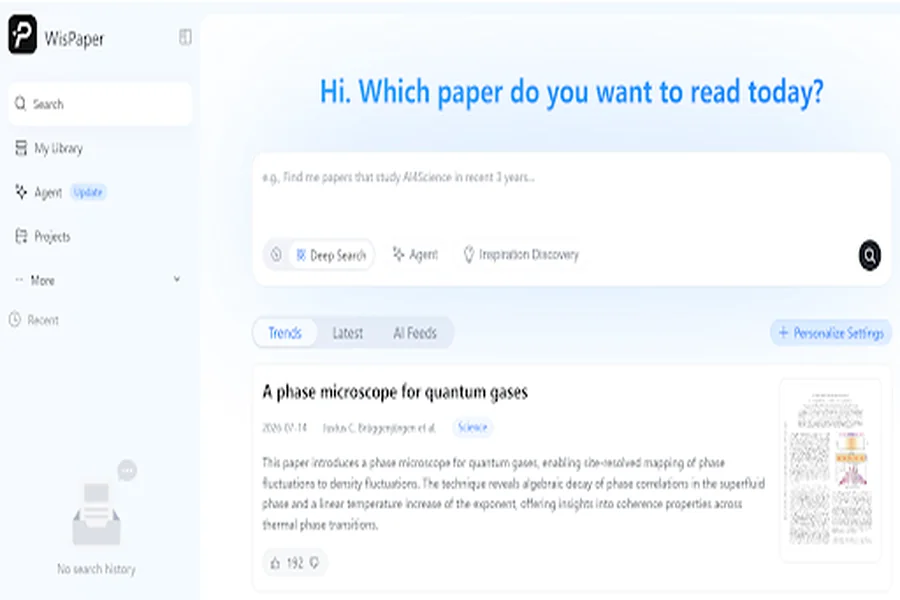

A product manager walks in before the roadmap meeting and asks whether a competitor’s method is backed by anything peer-reviewed, and you have 40 minutes. Most teams answer with a shrug or a white paper. WisPaper, an AI academic agent, gets named in these rooms now. The test is whether you can surface the real paper before the meeting starts.
The Competitor Question With a Forty-Minute Clock
The competitor’s page cites a study, but the citation is thin: a conference name, a year, an author you half-recognize. The product manager wants to know if the method has been replicated or quietly retracted. WisPaper turns the question into a search with conditions: include the technique, exclude vendor blogs, require peer-reviewed metadata.
Searching Like a Scientist, Not a Vendor
The default is a general web search, which returns the competitor’s content and whatever SEO has ranked. A scientist’s search builds around the method’s actual mechanism and the constraints a real study must meet. Vendor material is filtered out at the start, not sifted through afterward.
The Journal Your Industry Never Opens
The paper that changes a product decision is often published in a journal your industry never checks, using terminology your team wouldn’t search. It might sit in a medical informatics venue when your product is a scheduling tool, or a robotics journal when you build logistics software. The finding transfers, but the vocabulary doesn’t. A search that only knows your industry’s words misses it.
Pulling the Paragraph That Changes the Roadmap
Once the paper surfaces, the job shifts from finding it to extracting the one claim that matters. That means checking whether the competitor’s number comes from a robust evaluation or a cherry-picked pilot. WisPaper can parse the uploaded PDF into its actual experimental steps, so the useful paragraph isn’t lost in section 4.2. A radar view of the field shows whether it’s an outlier.
Turning a Paper Into a Decision Memo
The output isn’t a bibliography; it’s a short note on what was tested and how strong the evidence is. The product manager walks in with a real citation instead of a hunch. That’s the deliverable.
Roadmaps change for reasons that have nothing to do with the literature, but evidence-based changes are easier to defend. Teams that can pull the right paper in the time it takes to make a decision keep making better calls.
