
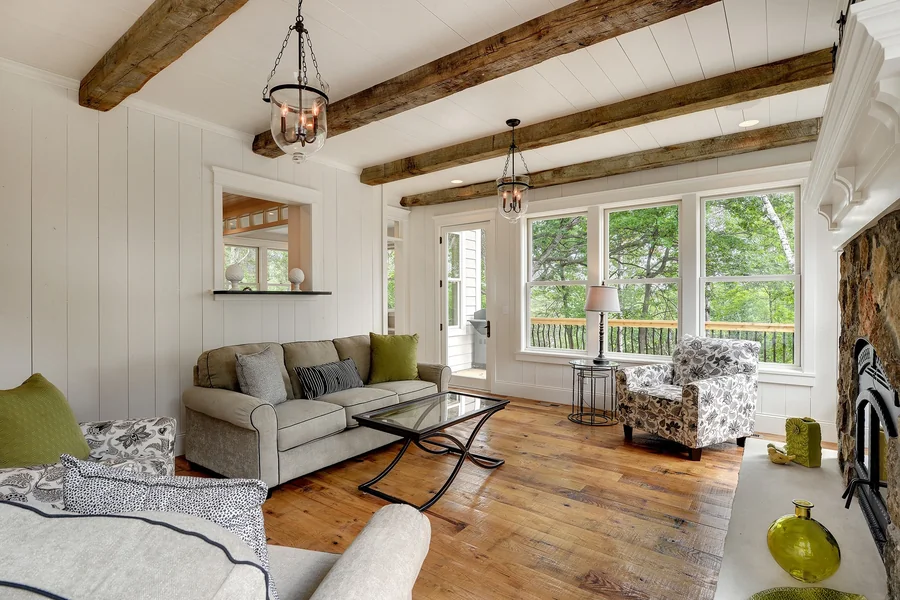
If you scroll through social media long enough and you are going to see thousands of beautifully decorated rooms. Designer furniture and carefully selected colors tend to dominate the conversation around home design. Yet the homes that truly stand out often have something less obvious working in their favor. These homes have proportion and flow.
These foundational design principles influence how a home feels every day by shaping the movement, comfort, functionality, and balance before you start on your home decor.
Great Design Starts Before Decoration
Walking into a room with stunning furniture but awkward dimensions can throw the whole feel of a room off balance. These spaces tend to feel cramped in one area and feel empty in another. When your walking paths cut through seating arrangements, the room can look impressive in photos but feel uncomfortable in real life.
When you have a simple room with balanced dimensions and natural traffic areas, these rooms start to feel more cohesive as a whole. That is the difference that highlights the importance of proportion.
Proportion is the relationship between all the elements in a room. Things like your ceiling heights, window placement, room dimensions, and architectural features all work together to create a visual that all works together. When these elements are balanced, the home feels comfortable without needing intense decorating.
The Invisible Feature Everyone Notices
THe flow of a home doesn’t really show up on a list of home features, but it is something that affects nearly every experience inside of your house. People will notice the flow instinctively and they will definitely recognize it when a home feels easy to navigate and when the movement feels more restricted.
A well-designed layout by Idaho Falls custom home builder allows residents and guests to move naturally from one space to another in the houses that are built. When your rooms are connected logically and your hallways serve a purpose, your gathering areas encourage more social interaction while balancing that sense of openness.
Common Signs of Strong Flow
- Clear pathways between major living areas
- Logical connections between kitchens, dining spaces, and living rooms
- Comfortable transitions between public and private areas
- Efficient access to storage and utility spaces
- Room layouts that support furniture placement
The Relationship Between Space and Comfort
The comfort in home goes well beyond just the furniture or the temperature. The dimensions of a room play a significant role in how people experience a space. Many pitfalls can be that oversized rooms can feel disconnected but small rooms can feel restrictive. When the rooms are scaled the right way, these spaces support both how you live everyday as well as special occasions.
Architects and builders often spend a lot of time evaluating room sizes because if you make small adjustments, it can dramatically improve the overall experience of a home.
Looking Beyond the Surface-Level Design
When evaluating a home, many people focus first on visible features. The countertops and the flooring, along with specific paint colors, are going to naturally draw attention. The most successful homes earn their value through thoughtful planning beneath the surface.
Questions worth considering include:
- How does the home function throughout the day?
- Does movement feel natural between rooms?
- Are the spaces appropriately sized for their intended use?
- Does the layout support the homeowner’s lifestyle?
The answers often reveal more about the quality of a home’s design than its decorative choices.
Building With the Bigger Picture in Mind
Creating a home with excellent proportion and flow requires careful planning from the earliest stages of design. Every room influences the next, and small decisions affect the overall experience of the home. Builders with extensive custom home experience understand how these elements work together.
Decor adds personality to a home, but the proportion and the flow create the foundation that supports everything else. These features will influence not only the comfort and functionality of home, but will help with the visual balance in ways that will stay around long after trends have changed. A well-designed home feels right because its spaces work together naturally.
