
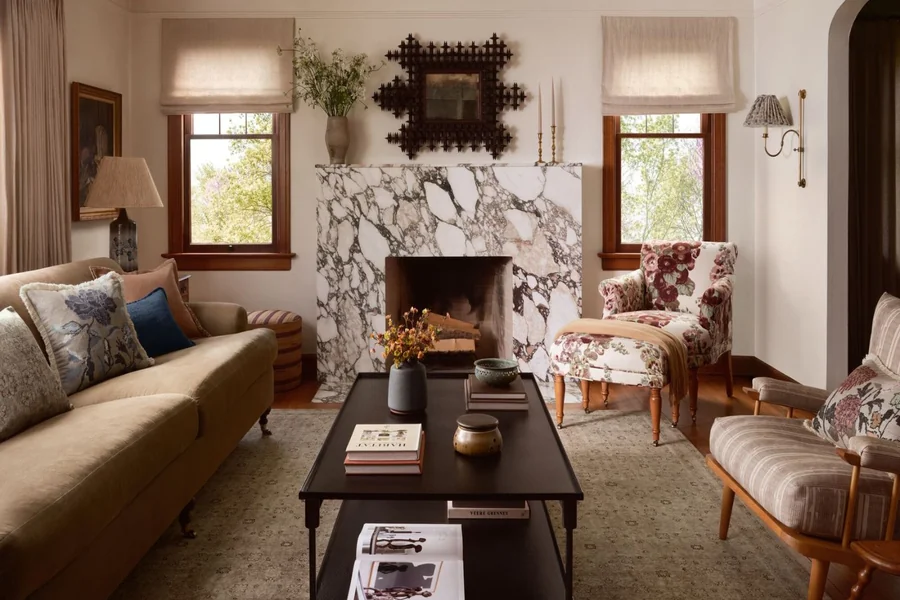
A warmer visual energy does more than make a room feel cosy. It shapes how a space is experienced through colour, texture, lighting, scale, and visual rhythm. When those elements are handled well, an interior feels more welcoming, grounded, and comfortable without becoming dark, heavy, or overstyled.
Use Colour To Shape Warmth
Colour is usually the clearest way to shift the emotional tone of a room. Interiors with warmer visual energy often rely on earthy neutrals, warm whites, clay tones, soft browns, terracotta, sand, and layered timber shades. These colours help a space feel settled and approachable rather than sharp or clinical.
The key is balance. Too many strong warm tones can feel dense, while too many pale shades can feel flat. A better approach is to build contrast within a related palette, using deeper colours to anchor the room and lighter ones to keep it open. That creates warmth with control rather than excess.
Let Artwork Carry Visual Heat
Artwork can change the emotional temperature of a room quickly because it brings in colour, movement, and subject matter at once. Pieces with warmer tones, organic forms, and natural references can soften hard architectural surfaces and make a space feel more alive. This is especially useful in interiors with glass, stone, concrete, or crisp painted finishes.
In spaces aiming for warmer visual energy, a framed tropical wall art can introduce that sense of warmth without disrupting the overall scheme. Lush forms, layered greens, and sunlit tones bring vitality into the room, while the frame keeps the look structured. The result is a space that feels richer without losing visual order.
Layer Texture To Avoid Coldness
A room can have the right colours and still feel cold if every surface looks and feels the same. Texture adds depth and variation, which helps the space feel more natural and lived in. Linen, timber grain, woven fibres, matte ceramics, stone, boucle, and aged metals all help create a warmer atmosphere.
This matters because the eye often reads texture as warmth before you even touch it. In design terms, this relates to materiality, or the way materials influence the character of a space. When textures are layered with intention, a room feels less sterile and more settled.
Soften The Light In The Space
Lighting has a direct effect on warmth. Even a well-designed room can feel hard under harsh overhead lighting or cool-toned bulbs. As noted in a study on light and thermal perception, redder light is generally experienced as warmer than bluer light, which helps explain why warmer lighting can make a space feel softer and more inviting.
This softer effect also changes how the room is perceived overall. Colours tend to appear fuller, surfaces less severe, and the atmosphere more settled, particularly in the evening when the mood of a space becomes more noticeable.
Balance Structure With Organic Form
Warm interiors do not need to lose structure. In fact, they often work best when clean lines are balanced with softer shapes. Curved furniture, rounded mirrors, relaxed textiles, and irregular ceramics help interrupt rigid geometry and stop a room from feeling too formal.
This creates stronger visual harmony, where the space feels composed but not severe. Straight lines bring order, while organic forms add movement and softness. That balance is often what gives a room warmth without making it feel loose or cluttered.
When Warmth Feels Intentional
Designing interiors with a warmer visual energy is about more than adding earthy colours or softer lighting. It is about making deliberate choices that affect how the room feels as a whole. When colour, texture, lighting, and form work together, the space becomes more inviting, more human, and easier to spend time in. Warmth is most effective when it feels considered rather than decorative.
