
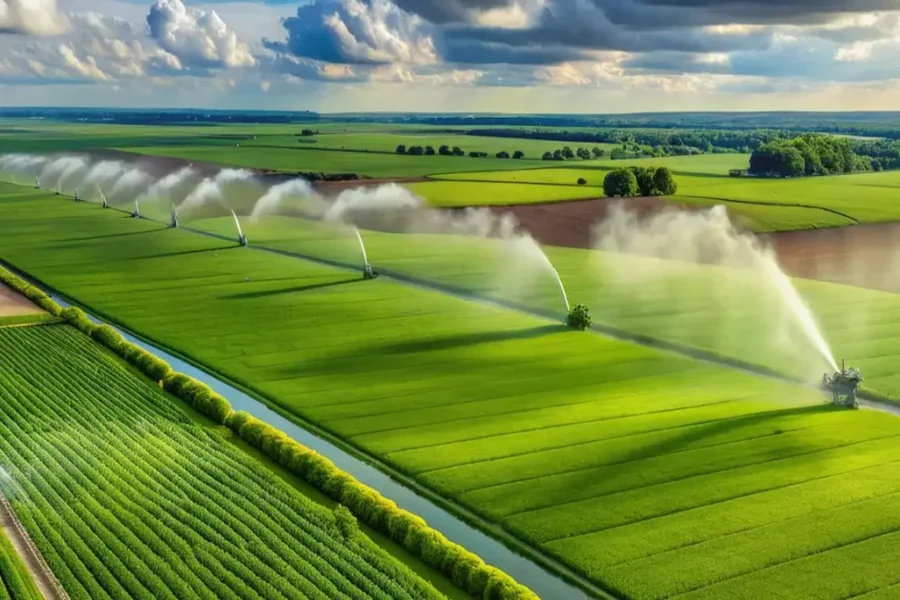

In today’s rapidly evolving agricultural landscape, maximizing productivity while minimizing resource use is more important than ever. Water scarcity, unpredictable weather patterns, and the growing global population have put increasing pressure on farmers to produce more with fewer resources. One of the most crucial factors in achieving this balance is efficient water management, and irrigation booster pumps are central to optimizing irrigation systems. These pumps are integral to improving irrigation efficiency, enhancing water pressure, and supporting sustainable agricultural practices.
What Are Irrigation Booster Pumps?
Irrigation booster pumps are devices used to increase the water pressure in irrigation systems. These pumps help deliver water more efficiently, especially when the water supply is distant or when the pressure from the source is insufficient. By boosting water pressure, irrigation booster pumps ensure that water reaches all areas of a farm or field evenly, which is crucial for optimal crop growth.
There are several types of irrigation system pumps available, including centrifugal, submersible, and turbine pumps, among others. Each type serves a specific purpose based on the water source, the distance water needs to travel, and the size of the irrigation system. Regardless of the type, the function remains the same: to ensure the water is delivered at the right pressure and volume to the crops that need it.
Key Benefits of Irrigation Booster Pumps
1. Boosting Irrigation Efficiency
One of the primary reasons for using irrigation booster pumps is to improve irrigation efficiency. With the right water pressure, water can be distributed more evenly across fields, reducing the chances of overwatering or underwatering. These pumps help ensure that each area of a farm receives the appropriate amount of water, preventing both wastage and crop stress, while tools like harvest management software ensure the benefits carry through to improved yield and timing.
In addition to uniform distribution, irrigation booster pumps allow farmers to irrigate larger areas with the same amount of water. By increasing pressure, these pumps enable water to travel farther and reach more remote sections of a farm, improving the overall efficiency of the irrigation system.
2. Improving Irrigation Pump Performance
Irrigation booster pumps play a key role in improving irrigation pump performance. A well-maintained pump boosts the water pressure to optimal levels, ensuring that water reaches crops quickly and effectively. With proper pressure, water is distributed throughout the irrigation system without issues like clogging or uneven flow, which can often occur with low-pressure systems.
By optimizing pump performance, irrigation booster pumps help extend the life of the system and reduce maintenance costs. When pumps operate efficiently, they reduce the strain on other components of the irrigation system, which can result in fewer repairs and longer operational lifespans for equipment.
3. Reducing Water Waste
Water is a precious resource in agriculture, and its efficient use is critical for sustainability. Water conservation in agriculture is becoming more important as climate change, population growth, and environmental concerns create additional pressures on water resources. Irrigation booster pumps help reduce water wastage by ensuring that water is delivered only where and when it is needed.
With consistent water pressure, farmers can better manage how much water their crops receive, preventing runoff and evaporation. The result is a more sustainable farming operation with less water waste and a lower environmental footprint.
4. Enhancing Water Distribution
Irrigation systems often struggle to provide consistent coverage across large areas, especially when water must travel significant distances. Without proper water pressure, areas farther from the water source may receive less water, while areas closer to the source may receive too much. This can lead to uneven crop growth and wasted resources.
Irrigation booster pumps solve this problem by ensuring that water pressure remains constant throughout the system. The even distribution of water across all areas of the farm promotes healthier crops and reduces the need for additional watering efforts.
How Irrigation Booster Pumps Enhance Agricultural Water Management
Effective agricultural water management is a cornerstone of sustainable farming. As the global population continues to grow, the demand for food increases, putting pressure on farmers to maximize yields with limited resources. Efficient water management helps farmers achieve this goal, allowing them to irrigate crops more effectively while conserving water.The benefits of consistent water management extend beyond the field; they also support grain conditioning system that help maintain grain quality during storage.
Irrigation booster pumps play an essential role in this process. By boosting water pressure, they help farmers ensure that their irrigation systems are functioning optimally, delivering water evenly and efficiently across their fields. This is particularly important for regions that face challenges such as irregular rainfall or limited access to water sources.
In addition to improving water delivery, irrigation booster pumps also allow farmers to integrate more advanced irrigation technologies. Systems such as drip irrigation, which delivers water directly to the roots of plants, require consistent water pressure to work effectively. By pairing these technologies with irrigation booster pumps, farmers can achieve greater control over how water is applied to their crops, leading to better results and reduced resource consumption.
Impact on Modern Farming Techniques
Modern farming techniques have shifted toward precision agriculture, which uses data-driven approaches to optimize every aspect of farming. These techniques rely heavily on technology to monitor soil conditions, weather patterns, and crop health. One of the key components of precision agriculture is efficient irrigation, and irrigation booster pumps are critical for ensuring that irrigation systems are functioning at their best.
With the rise of automated irrigation systems and sensors that track soil moisture levels, irrigation booster pumps are an essential part of the equation. These pumps provide the pressure necessary for irrigation systems to operate effectively and respond to real-time data. For example, when a sensor detects that a field is dry, the irrigation system can automatically turn on, with the pump providing the right amount of water to restore balance to the soil.
The combination of modern farming techniques and irrigation booster pumps allows farmers to apply water more efficiently and precisely, which leads to higher crop yields, reduced input costs, and more sustainable farming practices.
Sustainable Agriculture and Water Conservation
In the face of climate change and a growing global population, sustainable agriculture solutions are more important than ever. Farming practices that focus on water conservation, energy efficiency, and soil health are critical for ensuring that agriculture can continue to meet the world’s food needs while minimizing its environmental impact.
Irrigation booster pumps are an integral part of these sustainable practices. By improving water distribution and reducing waste, these pumps help farmers conserve water and reduce the environmental footprint of their operations. Whether through optimizing water pressure or integrating with other irrigation technologies, irrigation booster pumps are a key tool in achieving long-term sustainability in agriculture.
Additionally, irrigation booster pumps help farmers adapt to the challenges posed by climate change. As weather patterns become more unpredictable and water resources become scarcer, farmers need to adopt technologies that allow them to make the most of the water they have. Booster pumps provide the flexibility to adjust water distribution based on changing conditions, ensuring that crops receive the optimal amount of water at all times.
Conclusion
As agriculture continues to evolve in response to global challenges, efficient water management is becoming an increasingly important factor in achieving productivity and sustainability. Irrigation booster pumps are essential tools in this effort, helping farmers optimize water pressure, boost irrigation efficiency, and conserve valuable resources. By integrating these pumps into their irrigation systems, farmers can improve crop yields, reduce water waste, and contribute to more sustainable agricultural practices.
The future of farming will depend on adopting innovative technologies that not only increase productivity but also protect the environment for generations to come. Irrigation booster pumps are an indispensable part of this technological shift, powering productivity and enabling farmers to meet the growing demands of agriculture while safeguarding water resources for the future.
