
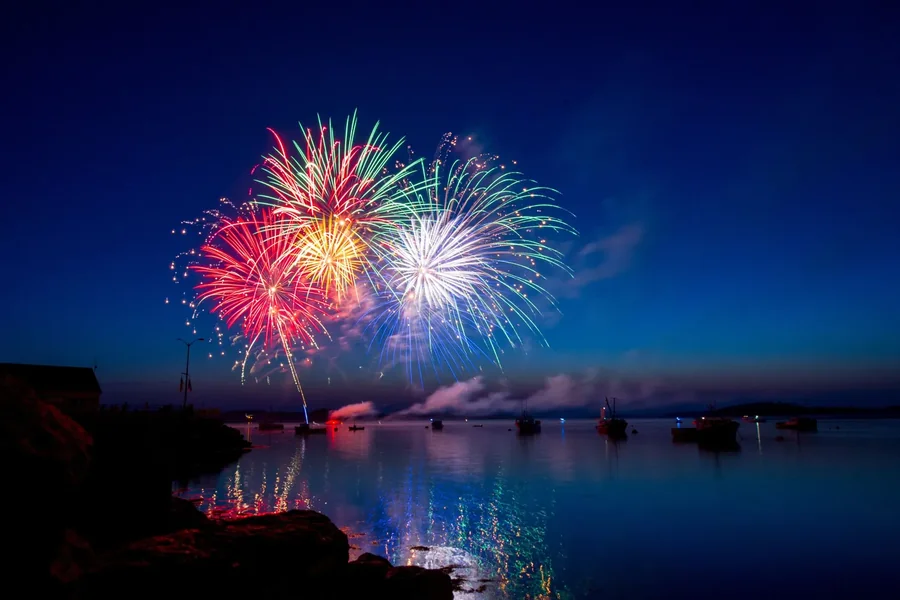

A firework display can be the memorable centrepiece of a wedding, bonfire night, community celebration, or milestone birthday. Done well, it creates a shared moment that feels genuinely special. Done poorly, it can lead to injuries, property damage, distressed neighbours, or an event that ends earlier than planned.
The key is recognising that fireworks are not simply another party decoration. They are regulated pyrotechnic products, affected by weather, location, crowd behaviour, and the experience of the people handling them. Before anyone begins setting up, a few careful checks can make the difference between a spectacular event and an avoidable problem.
Start With the Venue, Not the Fireworks
It is tempting to choose fireworks first and work out the logistics afterwards. In practice, the venue should drive almost every decision.
Consider the available open space, nearby homes, roads, overhead cables, trees, livestock, parked vehicles, and public footpaths. A field may look spacious during the day but still be unsuitable if it backs onto housing, has dry vegetation, or offers no safe separation between the launch area and spectators.
You should also confirm that the landowner has explicitly agreed to a display. If the event is taking place at a hired venue, do not assume that permission to host a party automatically includes permission to use fireworks. Many venues have their own restrictions because of insurance requirements, neighbouring properties, or local licensing conditions.
Check Local Rules and Event Permissions
Rules vary depending on where you are, the scale of the event, and whether it is private or open to the public. Noise restrictions, permitted times of use, licensing requirements, and rules around public land can all affect your plans.
For larger gatherings, it may be sensible to speak with the local authority, venue management, and emergency services where appropriate. At a minimum, organisers should understand the relevant rules before advertising the event or buying products that cannot be used legally at the chosen location.
Assess Who and What Could Be Affected
A safe display is not only about the people watching it. It is also about everyone and everything nearby.
Neighbours deserve advance notice, particularly households with young children, elderly residents, pets, or people who may find sudden noise distressing. Nearby farms, stables, kennels, and wildlife areas need special consideration too. Horses and livestock can react unpredictably to loud bangs, while pets may panic even when kept indoors.
Weather should be checked close to the event, not just a few days beforehand. Wind direction and strength can change quickly, affecting where smoke and debris travel. Heavy rain can also compromise equipment and make ground conditions slippery. If the forecast creates doubt, postponing or cancelling is often the most responsible call.
When planning the scale and style of the display, it helps to research suitable products from reputable suppliers. A range of fireworks for special occasions may suit different events, but the selection should always match the available space, audience, and local conditions rather than simply aiming for the loudest or largest effect.
Plan the Display Area Carefully
The display site should have clearly defined zones: one for spectators, one for the people responsible for the display, and one for the fireworks themselves. These areas should be kept separate throughout the event.
Spectators need a clear viewing area that is easy to access and leave, especially if children, older guests, or large groups are involved. Avoid positioning crowds near bottlenecks, uneven ground, or routes used by vehicles. Think about lighting, signage, and how people will find their way safely after the display ends.
The firing area should be controlled by responsible adults only. It is not a place for guests to wander through, take photographs, or “help out” after a few drinks. If the event is busy, appoint someone specifically to keep people out of restricted areas.
A basic pre-event checklist should include:
- A clear, unobstructed display and viewing area
- Suitable weather conditions and a backup plan
- Permission from the landowner or venue
- Advance notice for neighbours and nearby animal owners
- Responsible, sober adults assigned to specific roles
- Fire safety equipment and a method for contacting emergency services
Choose Responsible People to Run the Display
Confidence is not the same as competence. The person responsible for fireworks should be sober, calm, able to follow product instructions, and prepared to stop the display if conditions become unsafe.
For a substantial display, a professional fireworks operator may be the best option. Professionals bring experience in site assessment, risk management, product selection, and contingency planning. This is particularly valuable for weddings, public events, venues with complicated layouts, or displays close to homes and businesses.
If the event is smaller and privately organised, make sure responsibilities are agreed in advance. One person should oversee the display, while others can help manage the audience, monitor boundaries, and deal with practical issues such as lighting or vehicle access.
Avoid last-minute improvisation. Fireworks are not something to reorganise in the dark while guests are waiting.
Think Beyond the Final Burst
The event is not finished when the last firework goes off. The area should remain restricted until it is safe to inspect, and any unused or spent items should be handled in line with the manufacturer’s guidance.
It is also worth considering the wider impact of the evening. Keep noise and disruption proportionate to the occasion, clear litter promptly, and check the site thoroughly the following day in daylight. This is especially important in gardens, fields, or shared outdoor spaces where remnants may otherwise be missed.
A well-run firework display is not defined by how many fireworks are used. It is defined by thoughtful planning, respect for the surroundings, and a willingness to put safety ahead of spectacle. When those checks are done properly, everyone can focus on the part that matters: enjoying the occasion together.
