
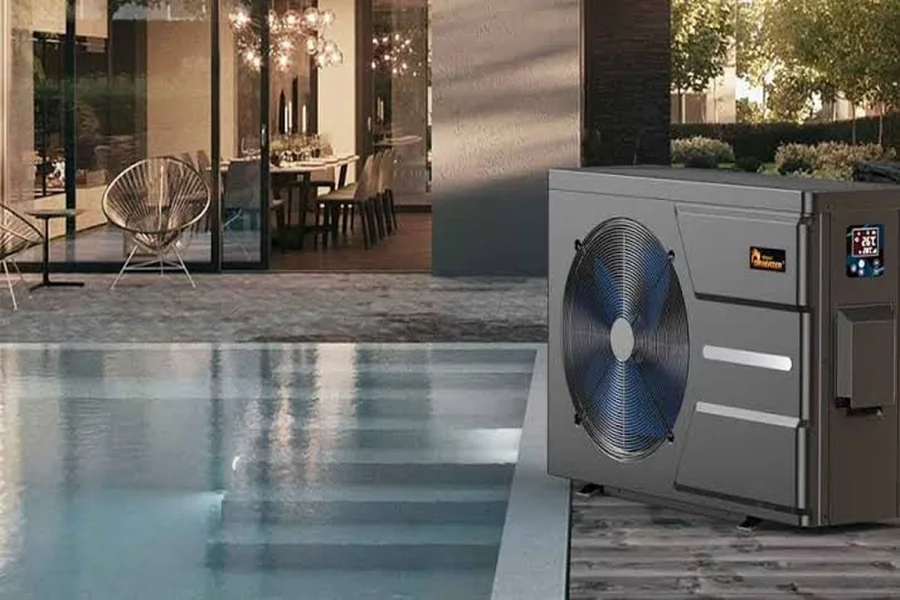

Heating a swimming pool can make a significant difference to how often it gets used. A comfortable water temperature encourages early-morning swims, evening relaxation, and longer swimming seasons.
However, heating a large volume of water also requires energy.
For homeowners concerned about electricity consumption and long-term operating costs, choosing the right pool heating technology is an important decision.
Electric heat pumps have become a popular option because they transfer heat from the surrounding air into the pool water rather than generating all the required heat through electrical resistance.
Under favorable conditions, this can make them an efficient choice for maintaining swimming temperatures.
But not all pool heat pumps are identical.
Heating capacity, compressor technology, climate suitability, controls, and installation requirements can affect both performance and operating costs.
Here are five pool heating brands worth considering for energy-conscious homeowners.
1. AquaCal
Best for: Dedicated pool heating and cooling technology
AquaCal takes our first position for its extensive focus on swimming pool heat pumps.
The brand offers several product families intended for different residential pool sizes and heating requirements.
This specialization is valuable for homeowners who want to compare different heat pump configurations rather than choosing from a small selection of general-purpose heaters.
AquaCal’s HeatWave range is particularly relevant for energy-conscious buyers.
Depending on the model, homeowners can find systems designed for heating alone or for both heating and cooling.
The ability to cool pool water can be useful in particularly warm climates, where maintaining a comfortable temperature sometimes means removing excess heat rather than adding it.
Why AquaCal Leads
AquaCal’s dedicated focus on pool temperature management makes it a strong option for homeowners seeking a professionally sized heat pump.
The brand offers a range of capacities and configurations that can accommodate different swimming habits and climates.
For larger residential pools, that flexibility is particularly valuable.
Potential drawback: Choosing and installing the right system may require professional assistance, and some models may be unnecessarily large for compact backyard pools.
2. FibroPool
Best for: Efficient residential heating with accessible sizing options
FibroPool takes second place because its heat pump lineup combines useful residential heating capacities with fixed-speed and full-inverter options.
For homeowners who want to avoid buying an oversized system, this is an important advantage.
The brand offers models for pools ranging from approximately 5,000 gallons to 17,500 gallons, depending on the selected heater and the conditions in which it operates.
Understanding FibroPool’s Efficiency Ratings
FibroPool publishes coefficient of performance figures for its heat pumps.
COP describes the relationship between heat delivered to the water and the electrical energy consumed under defined operating conditions.
For example, the FH255 has a manufacturer-published COP of 5.92 under its specified rating conditions.
This means that, at those conditions, the heat pump delivers approximately 5.92 units of heat for each unit of electrical energy consumed.
It does not mean that homeowners will achieve the same efficiency in every climate or throughout the entire swimming season.
Outdoor temperature, humidity, water temperature, and operating conditions all affect real-world performance.
Still, publishing these specifications helps homeowners understand the technology they are considering.
Inverter Options
FibroPool’s FH235-i and FH285-i models use full-inverter technology.
Rather than operating continuously at one compressor speed, inverter systems can adjust their output to match changing heating demand.
That is particularly useful when the pool has already reached its target temperature and only needs enough additional heat to compensate for ongoing losses.
The FH285-i provides 62,000 BTU of heating output and is rated for pools up to approximately 17,500 gallons.
It also includes app-based control features.
Multiple Capacities
Not every homeowner needs the FH285-i.
FibroPool’s FH135 delivers 35,000 BTU for pools up to 7,500 gallons.
The FH255 provides 55,000 BTU for pools up to 10,000 gallons.
The FH270 offers 70,000 BTU for pools up to 15,000 gallons.
This range allows buyers to compare models according to their actual pool size.
Why FibroPool Earns Second Place
FibroPool offers a compelling balance of practical sizing, published specifications, and inverter technology.
It is particularly attractive for homeowners with small and medium residential pools who want an electric heating solution without moving immediately to much larger equipment.
Potential drawback: The most suitable model depends heavily on climate and usage. In colder weather, a larger heater or different heating strategy may be necessary.
3. Hayward
Best for: Energy-conscious upgrades within an established equipment system
Hayward offers pool heat pumps through its HeatPro product family.
The brand is well known for its wider range of swimming pool equipment, including circulation pumps, filtration products, and automation systems.
For homeowners planning several upgrades at once, this broader equipment ecosystem can be useful.
Efficient pool heating is not just about the heater itself.
Water circulation, filtration schedules, and temperature controls can all influence how the pool operates.
Hayward’s equipment range allows homeowners and installers to consider these components together.
Its heat pumps are particularly relevant for medium and larger residential pools.
Potential drawback: Some models may require substantial electrical infrastructure and professional installation.
4. Pentair
Best for: Integrated pool equipment planning
Pentair’s UltraTemp heat pump range is another option for homeowners focused on electric pool heating.
The company also offers circulation, filtration, and automation equipment.
This makes Pentair worth considering when replacing an older heating system as part of a broader pool renovation.
For example, a homeowner upgrading a heater may also want to review the efficiency and operating schedule of the pool’s circulation pump.
Coordinating these decisions can be more effective than evaluating every piece of equipment separately.
Pentair’s established product range is particularly relevant for professionally installed residential pools.
Potential drawback: A full equipment upgrade can involve significant upfront expense, even when the goal is to improve long-term efficiency.
5. Gulfstream
Best for: Dedicated heat pump options for residential pools
Gulfstream manufactures swimming pool heat pumps and offers equipment intended for different residential heating needs.
The brand is worth exploring for homeowners who prefer a manufacturer with a focused pool heating product range.
When comparing Gulfstream with other options, buyers should look closely at heating capacity, efficiency ratings, available controls, and operating conditions.
It is also important to confirm local dealer support and installation requirements.
For homeowners with established pool equipment, compatibility with the existing plumbing and electrical setup should be part of the decision.
Potential drawback: Availability and service arrangements may vary by region, making local support an important consideration.
What Actually Makes a Pool Heater Energy-Efficient?
The term energy-efficient appears frequently in product descriptions, but homeowners should understand what it means in practice.
A heat pump does not deliver the same efficiency under every condition.
Its performance changes as outdoor temperatures and heating demands change.
Understanding COP
Coefficient of performance is one of the most useful measurements for evaluating a heat pump.
A COP of 5 means the system delivers five units of heat for each unit of electrical energy consumed at the specified test conditions.
However, comparing two COP figures is only meaningful when the test conditions are comparable.
A model tested in warm, humid air may show a different result from one tested under cooler conditions.
Homeowners should therefore review the manufacturer’s detailed performance information rather than relying on a single headline number.
Choosing the Right Capacity
An undersized heater may struggle to maintain the desired temperature.
An oversized unit may introduce unnecessary purchase and installation costs.
The correct size depends on pool volume, surface area, climate, wind exposure, and desired swimming season.
FibroPool’s sizing guidance is particularly useful because it encourages homeowners to consider more than gallons alone.
A pool cover and the intended operating temperature also influence the result.
The Role of Pool Covers
Evaporation is a major source of swimming pool heat loss.
A cover can reduce the amount of heat escaping from the water surface, particularly overnight.
That means the heater may need to replace less lost heat.
For many homeowners, investing in a suitable pool cover is one of the most practical ways to improve the overall efficiency of a heated pool.
Fixed-Speed vs. Inverter Heat Pumps
A fixed-speed heat pump typically runs at a set compressor speed while heating.
An inverter heat pump can adjust its output.
That flexibility can be beneficial when maintaining a temperature over longer periods.
However, the actual energy savings depend on the equipment, climate, and usage pattern.
An inverter model is not automatically the most economical option for every household.
Initial purchase price should also be considered.
Electricity Rates Matter
Even an efficient heater can be expensive to operate when local electricity prices are high.
Homeowners should estimate expected energy consumption using realistic operating conditions.
The number of heating hours, desired water temperature, and seasonal weather all influence the final cost.
A comparison based only on advertised BTU output may therefore be misleading.
Should You Choose a Heat Pump or a Gas Heater?
Both technologies have advantages.
Electric heat pumps are often attractive for maintaining pool temperatures efficiently during mild or warm weather.
Gas heaters can raise water temperature more rapidly and may be better suited to certain occasional-use or cold-weather situations.
The right choice depends on how the pool is used.
A household that swims frequently throughout a long season may value the operating characteristics of a heat pump.
Someone who wants to heat a spa quickly for occasional use may have different priorities.
How to Improve Pool Heating Efficiency Without Replacing Everything
A new heater is not the only way to improve the performance of a pool heating setup.
Homeowners should also inspect the pool cover, circulation system, and equipment schedule.
A poorly maintained circulation system can interfere with normal heater operation.
Incorrect flow rates may also cause performance problems.
Regular maintenance and proper installation are essential.
Pool owners should follow manufacturer recommendations and consult qualified professionals when electrical or plumbing changes are required.
Final Verdict
Energy-efficient pool heating requires more than choosing a recognizable brand.
The best results come from matching the heater to the pool and minimizing unnecessary heat loss.
AquaCal takes our first position for its specialized pool heat pump range and extensive heating and cooling options.
FibroPool earns second place for its clearly sized residential models, published efficiency information, and full-inverter choices.
Hayward and Pentair are worth considering for homeowners planning integrated pool equipment upgrades, while Gulfstream provides another dedicated heat pump option.
Whichever brand you choose, careful sizing and realistic expectations will make a greater difference than any single advertised specification.
