
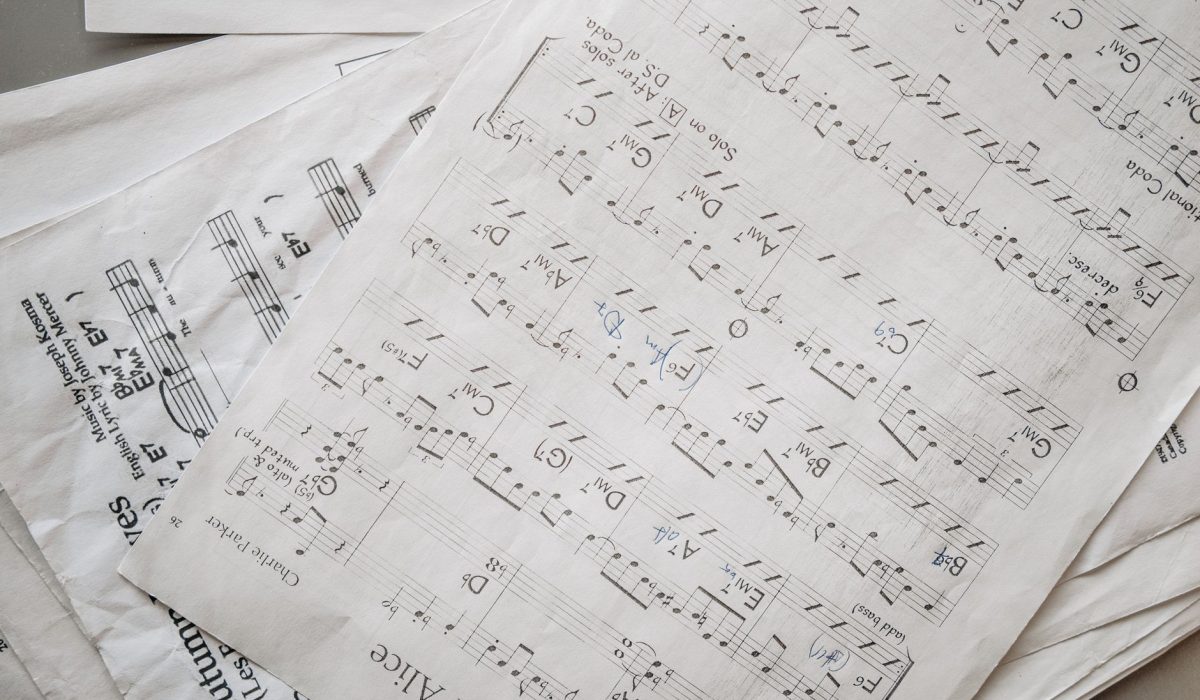
A low conversion fee can become expensive once cleanup begins. The quoted fee is only part of the price. The rest is the time spent correcting the file in Sibelius or Dorico.
1. What happens with your kind of score?
Every Optical Music Recognition engine has an accuracy ceiling, and the quality of the scan helps determine it. A clean, published score created with professional engraving software will usually convert better than a phone photo of a penciled part. Amateur notation with uneven spacing and low-resolution exports is harder to interpret than consistent engraving.
Ask how the service handles each input type. Some systems can read handwritten manuscripts, while others only accept printed notation. Check the minimum scan resolution it requires, along with how it handles skewed pages, shadows, and faded print.
Don't rely on a single accuracy percentage displayed on a sales page. Request a test using pages that resemble the material you intend to submit. If the pages contain pencil markings or handwritten notes, ask whether those elements will be recognized, ignored, or flagged.
2. Do you get real MusicXML or just MIDI?
MIDI is not a notation format. It records which notes were played and for how long, making it useful for playback in Digital Audio Workstations, but it does not fully describe how music should appear on the page.
MIDI may be sufficient when playback is the main goal. It is generally unsuitable when the goal is to produce clean, editable printed parts.
MusicXML can represent beaming, ties, dynamics, articulations, and other editable notation, allowing the file to be opened for further work. MusicXML is developed under the W3C Music Notation Community Group and is supported in different ways by Sibelius, Finale, Dorico, and MuseScore. Import and export quality can vary between programs and versions, and conversion may not preserve every marking perfectly.
Ask directly whether MusicXML is included by default. If a service supplies only MIDI, much of the score may still need to be recreated manually.
3. How does it handle dense or complex notation?
Simple lead sheets rarely reveal the limits of a converter, but piano and orchestral scores often do. Multi-staff layouts test whether the software can keep parts aligned consistently from the first bar to the last.
Focus on the details that recognition systems commonly struggle with. Ask how tuplets, grace notes, cross-staff beaming, and clef changes are read. Check whether lyrics and alternate endings remain in place, and whether key and time signature changes are tracked across pages.
Differences between older OMR tools and newer AI-based platforms often become clearer with difficult material. A platform such as StaveWave converts sheet-music PDFs and photos into editable MusicXML and flags uncertain measures for review.
Automated sheet-music reconstruction should handle the bulk of the initial conversion. Any uncertain passages should also be easy to identify before the file moves into editing or production.
4. Is there a human review step?
Autonomous sheet-music reconstruction means the software performs most of the recognition and layout work without manual note entry. Reducing that repetitive work is one of the main reasons to use a conversion service.
It does not remove the need to inspect the result. Even capable recognition software can misread a smudged accidental, crowded chord, or ambiguous symbol.
Ask whether human-in-the-loop review or quality control is included in the workflow. Find out whether proofreading is included or billed separately, how doubtful passages are flagged, and where automation gives way to manual review.
There is no single correct arrangement for every project. A quick draft without review may be adequate for personal practice, while a performance part requires closer checking before it is distributed.
5. Can it scale to long scores without delays?
A successful one-page conversion reveals relatively little. Processing a hundred pages is a more useful capacity test.
Batch processing matters when the project involves a complete method book, a large collection, or an orchestral set. Ask how turnaround times change as page counts increase. Check whether a 100-page score follows the same workflow as ten 10-page scores, or whether larger jobs require a different quotation and schedule.
Long projects can expose capacity limits that are not apparent in a short trial. That does not necessarily indicate a problem, but the service should explain how it manages large files, quality checks, and delivery deadlines.
Request a clear timeline in writing before sending the complete score.
6. Will the file open cleanly where you work?
A converted file is not useful until it opens and behaves properly in the software used for editing. Ask which versions of Sibelius, Finale, Dorico, and MuseScore the service tests.
Check whether slurs and hairpins survive import and whether parts remain linked to the full score. Testing one of your own files will usually reveal more than relying on a polished demonstration sample. A file that looks correct in a preview may still require adjustments before printing.
Allow time for a short trial using real project material. Ten minutes in the scoring program can reveal more than a broad sales claim. It also provides a practical estimate of the manual cleanup time required after conversion.
7. What happens to your uploads after conversion?
Scans can contain sensitive material. An unpublished manuscript remains intellectual property even before it has been performed or released.
Ask where uploads are stored and how long they remain there. Check whether files are deleted after delivery, who can access them inside the company, how long backups are retained, and who owns the reconstructed files.
These answers are especially important for copyrighted scores and client work. The questions do not require complicated legal language, but they do require direct and understandable answers.
A service that cannot clearly describe its storage and retention policy deserves closer scrutiny.
Choose the service that leaves the least corrective work behind. Clean notation, usable files, and a clear data policy are worth more than a small discount that leads to hours of manual repair.
