
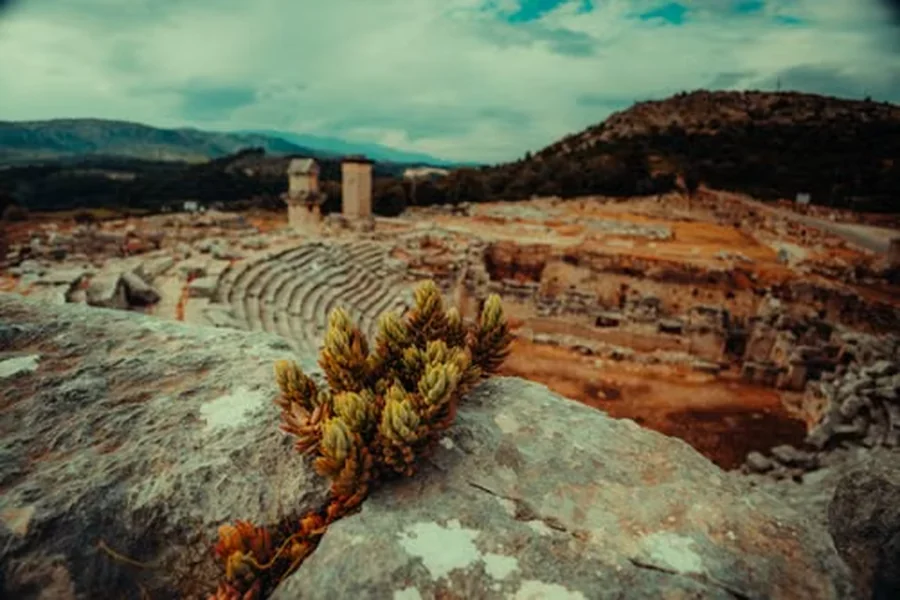
Kanna (Sceletium tortuosum) is a succulent plant native to South Africa with a documented history of use among the San and Khoikhoi peoples spanning thousands of years. Traditionally chewed, smoked, or brewed as tea, kanna was used to relieve hunger, reduce stress, and facilitate spiritual practices long before modern science took notice.
Long before the term “adaptogen” entered the wellness lexicon, the San and Khoikhoi peoples of southern Africa had already mastered the art of working with the land. Among their most treasured botanical allies was a small, unassuming succulent growing quietly in the harsh landscapes of the Karoo and the Cape: kanna.
Today, kanna is attracting global attention for its mood-supporting and stress-relieving properties. But to truly understand this plant, you have to start at the beginning—with the people who first discovered it, honored it, and passed its knowledge down through generations of oral tradition.
Who Were the San and Khoikhoi Peoples?
The San (sometimes called Bushmen) and the Khoikhoi are among the oldest indigenous cultures on Earth. Genetic evidence suggests the San are direct descendants of some of humanity’s earliest ancestors, with cultural lineages stretching back over 100,000 years.
The San were nomadic hunter-gatherers whose deep ecological knowledge allowed them to thrive across the semi-arid landscapes of present-day South Africa, Botswana, and Namibia. The Khoikhoi, often pastoralists, shared much of the same geographical territory and maintained close cultural and trade relationships with the San.
Both peoples developed sophisticated relationships with the plants around them—relationships built not on extraction, but on observation, reciprocity, and an intimate understanding of how the natural world worked.
What Is Kanna, Exactly?
Kanna, botanically known as Sceletium tortuosum, is a low-growing succulent in the Aizoaceae family. It thrives in the rocky, arid regions of South Africa’s Western and Eastern Cape provinces. The plant produces small, star-shaped flowers and contains a range of alkaloids—most notably mesembrine—that interact with serotonin receptors in the brain.
The name “kanna” itself has deep roots. In the Khoikhoi language, the word was used to describe several plants, but over time became most associated with Sceletium tortuosum. Early Dutch colonists later referred to it as “kougoed,” meaning “chewing stuff”—a nod to the most common method of consumption.
How Did Indigenous Peoples Traditionally Use Kanna?
Chewing: The Most Ancient Method
The most widely documented traditional use of kanna was chewing the fermented plant material. After harvesting, the succulent was typically crushed, allowed to ferment in its own juices for a period of days, and then dried. This fermentation process—known to increase the bioavailability of the plant’s active compounds—reflects a level of botanical sophistication that predates modern pharmacology by centuries.
San hunters would chew kanna during long, demanding tracking expeditions across scorching terrain. The plant helped suppress hunger and thirst, boost endurance, and maintain a calm mental state during physically grueling conditions.
Smoking and Insufflation
Kanna was also smoked, either alone or mixed with other herbs, and sometimes used as a form of snuff—ground into a powder and inhaled through the nose. These methods produced quicker-acting effects and were often associated with ceremonial or social contexts rather than daily use.
Brewing as Tea
Boiling kanna into a tea was another common preparation method, particularly among the Khoikhoi. This gentler form of ingestion was used to ease pain, calm anxiety, and support sleep—functions that align closely with what modern research is beginning to confirm about the plant’s pharmacological profile.
The Role of Kanna in Ritual and Spiritual Life
Kanna held a place in the spiritual lives of the San that went well beyond the physical. San shamans—called n/om-kxaosi or “medicine people”—used various plant allies to enter altered states of consciousness during healing rituals known as trance dances.
These ceremonies were central to San society. Through rhythmic chanting, hyperventilation, and sometimes plant medicine, shamans would enter a trance state believed to allow them to access the spirit world, heal the sick, and bring rain. While trance dances could occur without any plant aids, kanna is believed to have played a role in certain ritual contexts, helping facilitate the altered state required for spiritual work.
Rock art left by the San—some of it thousands of years old—depicts scenes that researchers believe represent these trance experiences, complete with visual hallucinations and out-of-body sensations. Kanna, with its psychoactive properties, may have been one of the botanical tools that helped open that door.
Early European Encounters with Kanna
The earliest written record of kanna comes from Dutch explorer Jan van Riebeeck, who documented the plant in his diary in 1662. He noted that the indigenous peoples traded kanna among themselves and consumed it in ways that produced notable changes in mood and behavior.
Later accounts from European travelers and naturalists described witnessing the effects of kanna firsthand—observers noted that people who consumed it appeared relaxed, talkative, and sometimes euphoric. By the late 1600s and early 1700s, kanna was already being traded along established routes across southern Africa, suggesting its cultural value extended well beyond any single community.
The botanist Francis Masson formally described Sceletium tortuosum in the late 18th century, and interest from European naturalists continued to grow throughout the 1800s. Yet for much of the 20th century, kanna remained relatively obscure outside of southern Africa.
From Traditional Knowledge to Modern Science
Scientific interest in kanna accelerated in the 1990s, when South African ethnobotanist Nigel Gericke and researcher Marthinus Viljoen began documenting the plant’s chemistry and traditional uses in collaboration with San communities. Their work, which emphasized the importance of indigenous knowledge systems, helped lay the groundwork for the global botanical supplement market that kanna now occupies.
Modern research has since identified mesembrine and several related alkaloids as the primary active compounds responsible for kanna’s mood-supporting effects. These alkaloids appear to inhibit serotonin reuptake and the enzyme PDE4—mechanisms that overlap with certain pharmaceutical antidepressants, though kanna operates through distinct pathways.
This convergence of ancient wisdom and modern pharmacology has sparked significant commercial interest. Today, standardized kanna extracts are sold internationally as natural supplements for stress relief, mood support, and cognitive function—a far cry from the plant’s humble origins in the Karoo.
Why the Origins of Kanna Still Matter
The story of kanna isn’t just a botanical history lesson. It raises real questions about how indigenous knowledge is used, credited, and compensated in the modern wellness industry.
South Africa has made efforts to address this through its Biodiversity Act and the Nagoya Protocol, which aim to ensure that commercial benefits derived from traditional knowledge are shared with the communities that developed them. Organizations representing San communities have negotiated benefit-sharing agreements with companies commercializing kanna, though advocates note that enforcement remains a work in progress.
Understanding where kanna comes from—and who first understood its value—is more than a matter of historical accuracy. It’s a matter of respect.
Honoring the Roots of a Remarkable Plant
Kanna’s journey from the rocky hillsides of the Cape to wellness shelves around the world is a testament to the depth of indigenous botanical knowledge. The San and Khoikhoi peoples did not need clinical trials to understand what this plant could do. They observed, experimented, and accumulated wisdom across millennia—wisdom that modern science is only now beginning to catch up with.
Whether you’re new to kanna or have been using it for years, taking a moment to acknowledge its origins enriches the relationship. This is a plant with a story, and that story belongs first to the people who told it.
Frequently Asked Questions About Kanna
What is kanna used for traditionally?
Traditionally, San and Khoikhoi peoples used kanna to suppress hunger and thirst during hunting, reduce stress, alleviate pain, and support spiritual rituals. It was consumed by chewing fermented plant material, smoking, insufflation, or brewing as tea.
How long have humans used kanna?
Archaeological and ethnographic evidence suggests kanna has been used by indigenous San peoples for thousands of years, with written European records dating back to 1662.
Is kanna the same as Sceletium tortuosum?
Yes. Kanna is the common name for Sceletium tortuosum, a succulent plant native to the Western and Eastern Cape regions of South Africa.
What active compounds give kanna its effects?
Kanna contains several alkaloids, the most studied being mesembrine. These compounds interact with serotonin receptors and the PDE4 enzyme, producing mood-lifting and stress-reducing effects.
Are there benefit-sharing agreements for commercial kanna products?
Yes. Under South Africa’s Biodiversity Act and international frameworks like the Nagoya Protocol, some companies commercializing kanna have entered benefit-sharing agreements with San communities, though implementation and enforcement vary.
