
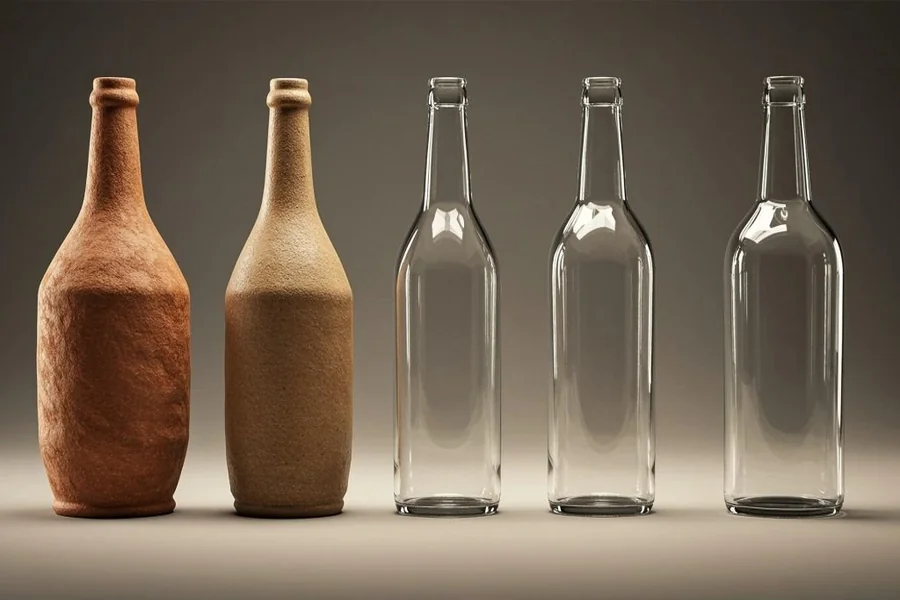

Oil bottles are an everyday item, but did you know they have a rich history and fascinating evolution? From ancient ceramic jugs to the modern glass and plastic bottles you find in the supermarket today, oil bottles have come a long way. Let’s dive into this captivating world and discover how these containers have evolved.
Antique Oil Bottles: A Glimpse into the Past
In ancient times, oil bottles were not just functional but also works of art. Think of the beautiful ceramic jugs from ancient Greece and Rome. These jugs were often decorated with intricate patterns and images that told stories. They were used to store and transport olive oil, an essential product at the time. The use of ceramics not only had aesthetic value but also ensured good preservation of the oil.
Ceramics and Glass: The First Materials
Ceramics were the material of choice due to their durability and the ability to decorate them. Later, glass became more popular, especially in the Roman Empire. Glass bottles were transparent, allowing people to see the quality of the oil. This was a significant step forward in the evolution of oil bottles, as it gave consumers more confidence in the product.
The Industrial Revolution: Mass Production and Innovation
With the industrial revolution came the ability to produce oil bottles on a large scale. This was a game-changer. Glass bottles were now machine-made, which lowered costs and increased availability. This made it possible for more people to use oil in their daily lives.
The Rise of Plastic
In the 20th century, plastic was introduced as an alternative to glass. Plastic oil bottles were lighter, less breakable, and cheaper to produce. This made them ideal for mass production and distribution. Although plastic had many advantages, it also brought environmental issues, leading us to current trends in sustainability.
Modern Oil Bottles: Sustainability and Design
Today, oil bottles are more than just a means to store oil. They are an essential part of branding and marketing. Consumers are more aware of sustainability, leading to innovations in the materials and designs of oil bottles.
Sustainable Materials
There is a growing demand for sustainable packaging, including reusable and recyclable oil bottles. Glass bottles are making a comeback due to their reusability and the fact that they don’t leak harmful chemicals. Some brands are even experimenting with biodegradable materials to reduce their ecological footprint.
Innovative Design
Innovative design plays a crucial role in modern oil bottles. Think of bottles with built-in pour spouts to prevent spills or ergonomic shapes that fit better in your hand. These designs not only improve the user experience but also contribute to brand perception.
The Future of Oil Bottles: Trends and Innovations
The future of oil bottles looks promising, with trends that continue to shape the industry. Let’s take a look at some of these trends.
Health and Wellness
Health is a hot topic, and you can see this reflected in the world of oil bottles. Consumers are looking for healthier oil options like avocado oil or flaxseed oil, and the packaging needs to reflect this. Transparent bottles that show the quality of the oil or packaging that highlights the health benefits can make a big difference.
E-commerce and Packaging
With the rise of e-commerce, it’s more important than ever that oil bottles are well-packaged for shipping. This means the packaging needs to be not only sturdy but also attractive. A well-designed package can enhance the online shopping experience and lead to positive reviews and repeat purchases.
Brand Experience
Last but not least, brand experience. Consumers are willing to pay more for a product that looks and feels luxurious. This also applies to oil bottles. Premium packaging can set your product apart from the competition and convey a sense of quality and luxury.
Want to learn more about the different types of oil bottles and how they fit within the broader context of food packaging? Be sure to check it out and discover the possibilities!
