
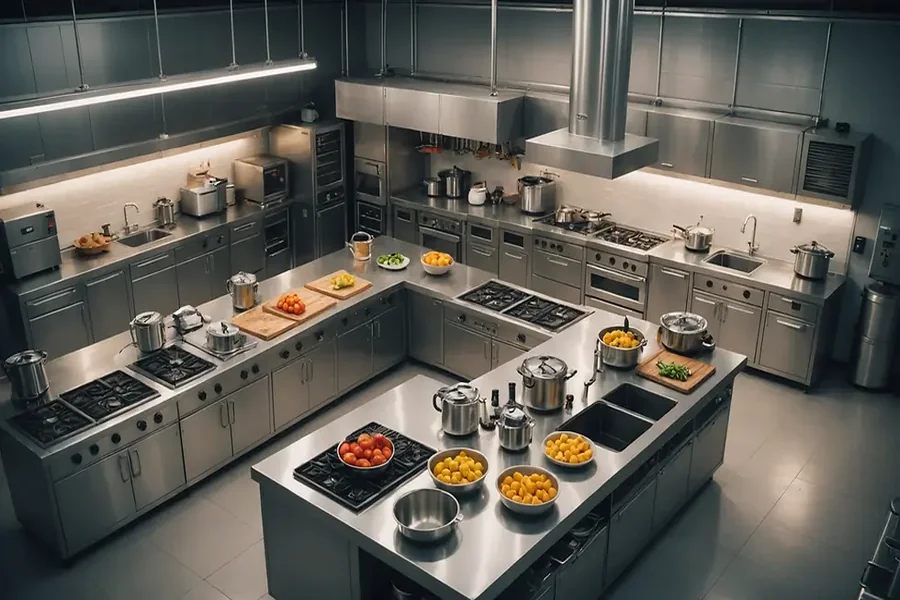

Industrial kitchens operate in demanding conditions where air quality often becomes a secondary priority until it starts affecting performance. Continuous cooking, high heat, and dense smoke create an environment where odors build rapidly and spread beyond the workspace. For modern industrial kitchens, commercial kitchen odor control is a necessary part of operational planning rather than an optional upgrade.
Odor is not just a surface-level issue. It carries grease particles, combustion residue, and fine pollutants that settle into duct systems and equipment. Over time, this leads to reduced efficiency, increased maintenance, and potential compliance challenges.
The Reality of Industrial Kitchen Emissions
Large-scale cooking environments produce a steady stream of airborne contaminants. These emissions are heavier, more concentrated, and more persistent than what standard ventilation systems are designed to handle.
Major contributors include:
- High-temperature cooking processes
- Oil vapor released during frying
- Smoke from grilling and roasting
- Accumulated grease particles in the airflow
These elements combine to create a dense air mixture that lingers unless properly treated. Simply moving air out of the space does not solve the problem.
Limitations of Conventional Ventilation Systems
Many facilities depend on exhaust systems that were never built to manage heavy pollutant loads. While they remove heat and visible smoke, they fail to address finer particles and odor-causing compounds.
Common shortcomings:
- Incomplete removal of airborne grease
- Persistent odor discharge into surrounding areas
- Internal duct contamination over time
- Increased cleaning and maintenance cycles
This gap between air movement and air purification leads to long-term operational inefficiencies.
Advanced Filtration: A Targeted Approach
Industrial air filtration systems are designed with precision. They focus on capturing and neutralizing contaminants at multiple levels than relying on basic airflow.
Core filtration stages:
- Primary separation: Captures larger grease droplets before they travel further
- Electrostatic filtration: Traps fine particles suspended in the air
- Odor treatment modules: Break down odor molecules at their source
- Final polishing stage: Ensures cleaner air output before release
Each stage is engineered to handle a specific type of pollutant, creating a comprehensive purification process.
Features That Define High-Performance Systems
Selecting the right system requires attention to design and durability. Industrial kitchens demand equipment that performs consistently without interruption.
Key features to consider:
- High-efficiency particle capture capability
- Stable airflow without pressure loss
- Durable build for continuous operation
- Easy access for maintenance and servicing
- Integrated odor neutralization technology
A system with these characteristics delivers reliable performance even during peak production hours.
Operational Advantages of Proper Filtration
When air quality is properly managed, the benefits extend across the entire operation. It is not limited to odor reduction alone.
Measurable improvements include:
- Cleaner working conditions for kitchen staff
- Reduced buildup inside duct systems
- Lower maintenance frequency and costs
- Improved compliance with environmental standards
- Better control over emissions leaving the facility
These outcomes support smoother day-to-day operations and reduce unexpected disruptions.
Long-Term Value for Industrial Facilities
Investing in advanced filtration is a strategic decision. It protects infrastructure, improves efficiency, and ensures consistent performance under pressure.
Clean air systems reduce the strain on ventilation networks and extend the lifespan of equipment. They also help maintain a professional environment, which is critical for large-scale food operations.
Conclusion
Industrial kitchens cannot rely on basic ventilation when dealing with heavy smoke and persistent emissions. A structured filtration approach is required to manage air quality effectively.
Implementing commercial kitchen odor control solutions ensures that pollutants are handled at the source, allowing facilities to operate efficiently while maintaining high environmental and operational standards.
