
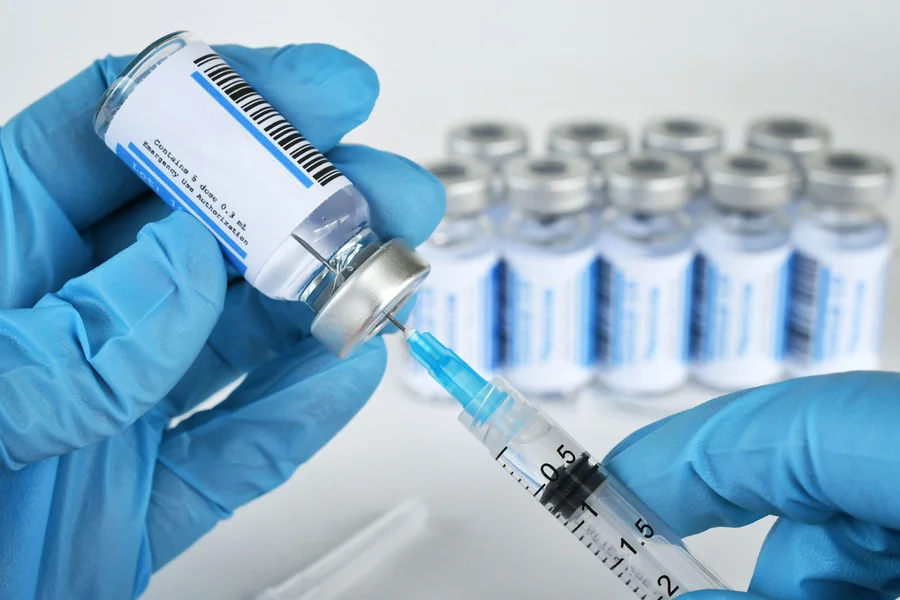

A new national analysis from Bader Law examines vaccine‑related risks, exemption trends, and the resurgence of preventable diseases. The findings reveal a complex public health landscape shaped by medical outcomes, political divides, and shifting public confidence. The data highlights how vaccine hesitancy and adverse event reporting intersect with rising measles cases and uneven vaccination coverage across the United States.
COVID‑19 Vaccine Risk Signals
The study compiles federal data and academic research to evaluate the relationship between COVID‑19 vaccination and myocarditis. The Centers for Disease Control and Prevention reports that more than 2,000 children and teenagers have died from COVID‑19 since the pandemic began, including 700 infants under one year old. At the same time, a Food and Drug Administration official has linked ten child deaths to COVID‑19 vaccination, citing myocarditis as a contributing factor.
Key findings include:
- Young males between 12 and 30 face the highest myocarditis risk after vaccination.
- 81 percent of myocarditis patients recovered within three months.
- People infected with COVID‑19 were seven times more likely to develop myocarditis than vaccinated individuals.
- 61 percent of myocarditis cases occurred in men.
- Only 1.07 percent of myocarditis cases required hospitalization.
- Fatal myocarditis cases were extremely rare at 0.015 percent.
- Moderna’s vaccine showed the highest myocarditis rate among the vaccines studied, although still far below the rate associated with COVID‑19 infection.
- Studies from the United States and Mexico reported myocarditis rates nearly three times higher than those reported in Europe.
Public Confidence in Vaccines
The study cites a KFF poll showing that Americans remain confident in long‑established vaccines but express more uncertainty about COVID‑19 vaccines.
Confidence levels:
- Measles vaccine: 83 percent somewhat or very confident
- Pneumonia vaccine: 82 percent
- Shingles and flu vaccines: 74 percent
- COVID‑19 vaccine: 56 percent
Political differences are stark:
- 87 percent of Democrats express confidence in COVID‑19 vaccines
- 55 percent of independents
- 30 percent of Republicans
This divide has influenced vaccination uptake and exemption rates.
Rising Nonmedical Exemptions
The study documents a steady rise in nonmedical vaccine exemptions among kindergarteners. During the 2024 to 2025 school year, 3.6 percent of kindergarteners received exemptions, up from 2.2 percent a decade earlier. Medical exemptions remain below 1 percent nationwide, indicating that most exemptions stem from personal or religious beliefs.
Top States for Nonmedical Exemptions (2024 to 2025)
| Rank | State | Percent of Exempt Kindergarteners
|
|---|---|---|
| 1 | Idaho | 15.1% |
| 2 | Utah | 10% |
| 3 | Oregon | 9.7% |
| 4 | Alaska | 9% |
| 5 | Arizona | 9% |
| 6 | Nevada | 6.7% |
| 7 | North Dakota | 6.7% |
| 8 | South Dakota | 6.7% |
| 9 | Michigan | 6.5% |
| 10 | Wisconsin | 6.3% |
ABC News attributes high exemption rates in rural states to limited access to medical providers and lingering concerns about COVID‑19 vaccines that have spilled into attitudes toward other vaccines.
Measles Cases Surge Nationwide
Declining vaccination rates have coincided with a sharp rise in measles cases. During the 2024 to 2025 school year, national kindergarten vaccination coverage fell to:
- 92.1 percent for DTaP
- 92.5 percent for MMR
- 92.5 percent for polio
Additional findings:
- 286,000 kindergarteners lacked documentation of completed MMR vaccination.
- Exemptions increased in 36 states and the District of Columbia.
- 138,000 kindergarteners were exempt from one or more vaccines.
By December 16, 2025, the United States recorded 1,958 measles cases, a dramatic increase from previous years.
Measles Case Breakdown (2025)
Age distribution:
- Under 5 years: 512 cases
- Ages 5 to 19: 808 cases
- Over 20: 625 cases
- Unknown: 13 cases
Vaccination status:
- Unvaccinated or unknown: 93 percent
- One MMR dose: 3 percent
- Two MMR doses: 4 percent
Hospitalizations:
- Total hospitalized: 222 people
- Under 5 years: 20 percent
- Ages 5 to 19: 6 percent
- Over 20: 11 percent
Measles Trends Over Time
| Year | Cases
|
|---|---|
| 2025 | 1,958 |
| 2024 | 285 |
| 2023 | 59 |
| 2022 | 121 |
| 2021 | 49 |
The study notes that 88 percent of 2025 cases were linked to outbreaks, compared with 69 percent in 2024.
States With the Most Measles Cases (2025)
| Rank | State | Cases
|
|---|---|---|
| 1 | Texas | 803 |
| 2 | Arizona | 182 |
| 3 | South Carolina | 142 |
| 4 | Utah | 122 |
| 5 | New Mexico | 100 |
Texas experienced the largest outbreak, originating in a Mennonite community before spreading to other under‑vaccinated regions.
States With the Fewest Cases (2025)
- Zero cases: Delaware, District of Columbia, Maine, Massachusetts, Mississippi, New Hampshire, North Carolina, West Virginia
- One case: Alabama, Connecticut
Political Correlations in Adverse Event Reporting
A cross‑sectional study of 620,456 adverse event reports found that:
- A 10 percent increase in Republican voting correlated with a 5 percent increase in reported COVID‑19 vaccine adverse events.
- Severe adverse event reporting increased 25 percent under the same conditions.
Gender Differences in Adverse Events
Among 45,843 adverse events after one vaccine dose:
- 31,018 were female
- 14,688 were male
- 137 unconfirmed
Fatalities from 2020 to 2025 totaled 7,259, including:
- 4,348 male deaths
- 2,847 female deaths
Top States for Male Deaths
| Rank | State | Deaths
|
|---|---|---|
| 1 | Kentucky | 418 |
| 2 | Texas | 294 |
| 3 | Michigan | 216 |
| 4 | Florida | 191 |
| 5 | California | 190 |
Top States for Female Deaths
| Rank | State | Deaths
|
|---|---|---|
| 1 | Kentucky | 339 |
| 2 | Texas | 209 |
| 3 | California | 130 |
| 4 | Florida | 101 |
| 5 | Michigan | 97 |
Kentucky stands out with 757 total deaths, three times higher than expected based on population.
Adverse Event Reporting by State
Highest Number of Adverse Reports (First COVID‑19 Dose)
| Rank | State | Reports
|
|---|---|---|
| 1 | California | 4,726 |
| 2 | Texas | 2,894 |
| 3 | Florida | 2,581 |
| 4 | Michigan | 2,540 |
| 5 | New York | 2,349 |
Lowest Number of Reports
| Rank | State | Reports
|
|---|---|---|
| 1 | Wyoming | 82 |
| 2 | Vermont | 119 |
| 3 | District of Columbia | 134 |
| 4 | North Dakota | 135 |
| 5 | Delaware | 137 |
A Complex National Picture
The study from Bader Law concludes that vaccine confidence, exemption trends, political identity, and disease outbreaks are deeply intertwined. While vaccines remain a critical public health tool, the data shows that uneven uptake and rising skepticism have created conditions for preventable diseases to return. The findings illustrate a public health environment shaped by competing risks, uneven reporting, and significant regional disparities.
