
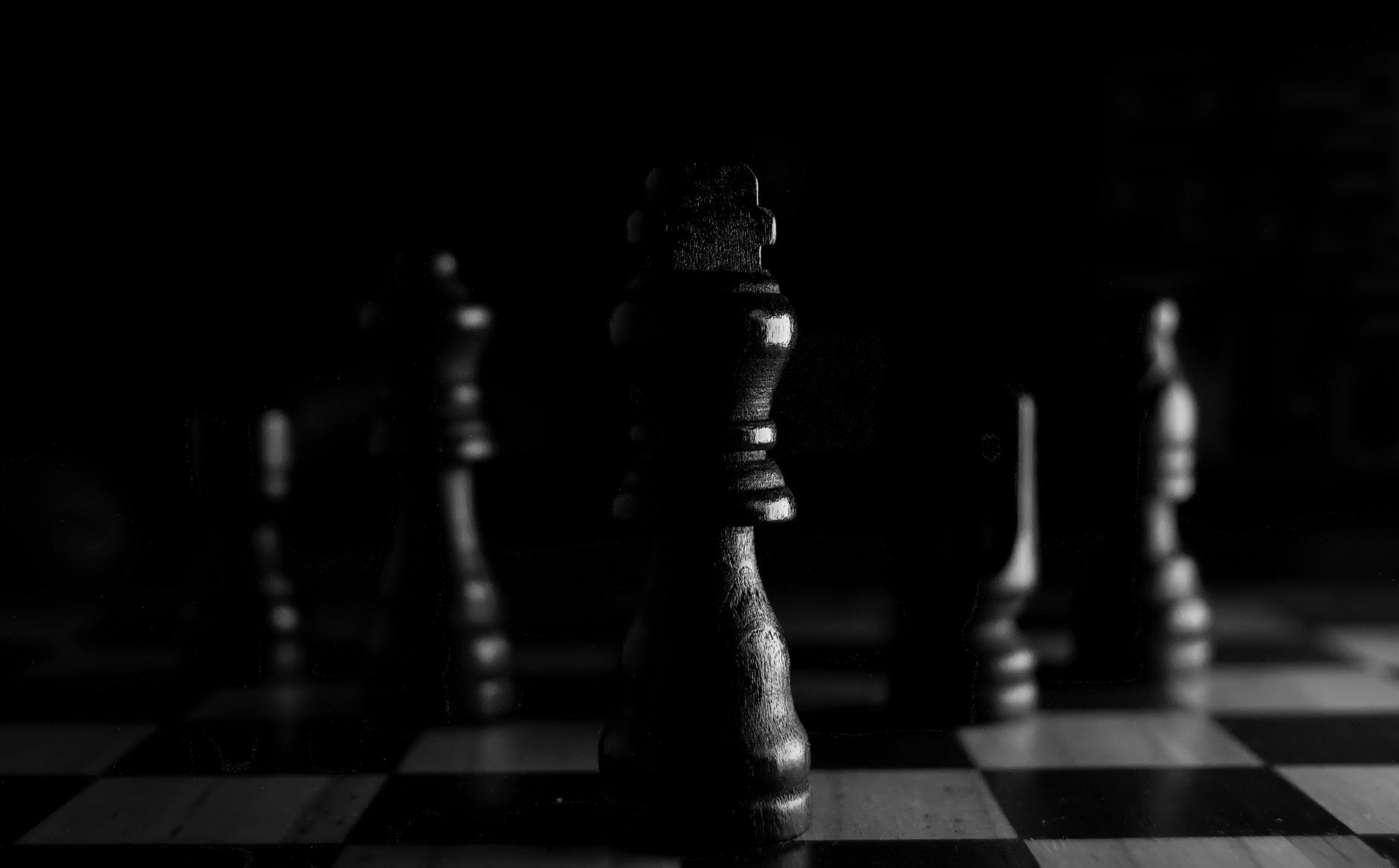

You can learn a surprising amount about a set by moving one knight. Choose a square with pawns nearby. Can you get hold of the piece without brushing everything around it? Does it land cleanly or wobble? Five seconds of handling can settle a question that a beautiful photograph leaves unanswered. Taste matters, of course. So does being able to move the pieces.
Buying the pieces and board separately introduces another uncertainty: how well will they fit together? A handsome tall king does not make crowded squares any easier to play on. The following checks concern a set intended for regular games and study. A purely decorative purchase can follow different priorities.
Start with an occupied board
An empty board makes almost any set look spacious. The starting position is a better test. Put the pieces on their home squares and look across both back ranks. Can a hand reach the bishop without knocking a pawn? Put the king and queen together for a moment. You shouldn't have to look twice to tell them apart.
There's a reason so many playing sets use Staunton-style shapes. You already know what you're looking at. With themed figures, you have to learn which character means which piece. Perhaps that's part of the fun for an occasional game. It becomes inconvenient when you are transferring a complicated position from chess websites or analysing with someone who has never seen your set.
The FIDE specifications for boards and pieces provide the independent reference for competitive equipment. Among other requirements, the cited rules specify squares between five and six centimetres. Home analysis is a different use case. A compact board can be pleasant to study on without satisfying those tournament dimensions.
Weight and balance are different questions
“Weighted” is useful information, but it is not the whole specification. Where is that weight? Down near the base, or somewhere high in a tall, narrow piece? The distinction affects how it feels in your hand. Look underneath too. A pad applied unevenly can leave an otherwise handsome piece rocking whenever you put it down.
Don't spend the whole inspection admiring the king. You're going to move those little pawns plenty of times as well. Can your fingers get a pawn in and out of a busy position? Try it. Spare queens are handy too: promotion needn't involve turning a rook upside down or borrowing from another set. A missing bishop is a different matter. Find out who can supply that exact piece before you're the owner searching for it.
Where Championship and Studio Differ
Consider the Championship Rosewood edition from World Chess. According to the listing, this is a championship design with weighted boxwood pieces and a king measuring approximately 9.5 centimetres. Now there's something to compare: material, weighting, size. The competition background helps explain why this set comes up in discussions of serious equipment. It won't tell you how the knight feels between your own fingers.
Studio takes that familiar design into a smaller setting. The listed Studio board has 45-millimetre squares and folds for storage. That can be a welcome compromise on a desk shared with a computer. It also means the compact board falls below the square-size minimum in the cited FIDE rules. Championship styling and tournament dimensions are not the same claim.
The buying question becomes less abstract if you already use a browser to play. World Chess's Play Chess Online service has play and training sections, with a route to the associated shop in its navigation. Try putting a position from an online chess game on the table afterwards. You may find yourself wanting more room between pieces. Or you may find that a small board you can leave beside the laptop would get far more use. You'd want to know that before the box arrives.
Neither edition wins every comparison. Championship is the more relevant benchmark when assessing the full-size design and its competition background. Studio answers a space problem. The best chess sets for a particular buyer are the ones that resolve the actual handling and storage problems on that buyer's table.
Examine the board under a lamp
Dark wood can look rather different in a bright product image and an ordinary room. Inspect square contrast under the light you use for reading. Put it beneath a lamp, if the seller lets you inspect it. A shiny finish can throw a bright patch across the squares. That might be tolerable on a display shelf; you'll be looking at a playing board for much longer.
Read past the wood's name. Is it a solid board, or veneer over another material? Both can be well made; you still need to look at the actual work around the edges and underneath. A folding model deserves to be opened on a table. Run your eye along the central join. A little ridge there isn't going to disappear once you start playing, even if you couldn't see it in the photograph.
The Details That Matter After Delivery
Before paying, establish a few details:
- Which pieces, extra queens, board and storage components are included?
- Will the whole board fit, border included?
- Who supplies a spare piece if one goes missing?
- What care instructions apply to its materials and finish?
- Where will the pieces go when the table is needed for something else?
A club set may be packed and unpacked several times a week. Durable plastic can be practical in that situation. A wooden set kept at home has different demands placed on it. Choosing wood does not excuse rough bases; choosing plastic does not mean accepting poor proportions.
Let one study session inform the purchase
Before replacing a cheap set, get it out for one more session. Take a position from your usual chess site and work on it for twenty minutes. What's annoying you? The small pieces? The glare? It might be as simple as a sleeve nudging the board out of place. That's hardly a reason to replace thirty-two perfectly good pieces.
With web chess, there's another mundane thing to check: where did the finished game go? Find the record on your chosen chess platform. Once you have the moves, you can leave the browser's next-game button alone and put the interesting position on the table. Virtual chess doesn't oblige you to match the screen with a luxury set. What was the nuisance in that twenty-minute session? That's the item to fix, whether it calls for a whole new set or a much smaller adjustment.
