
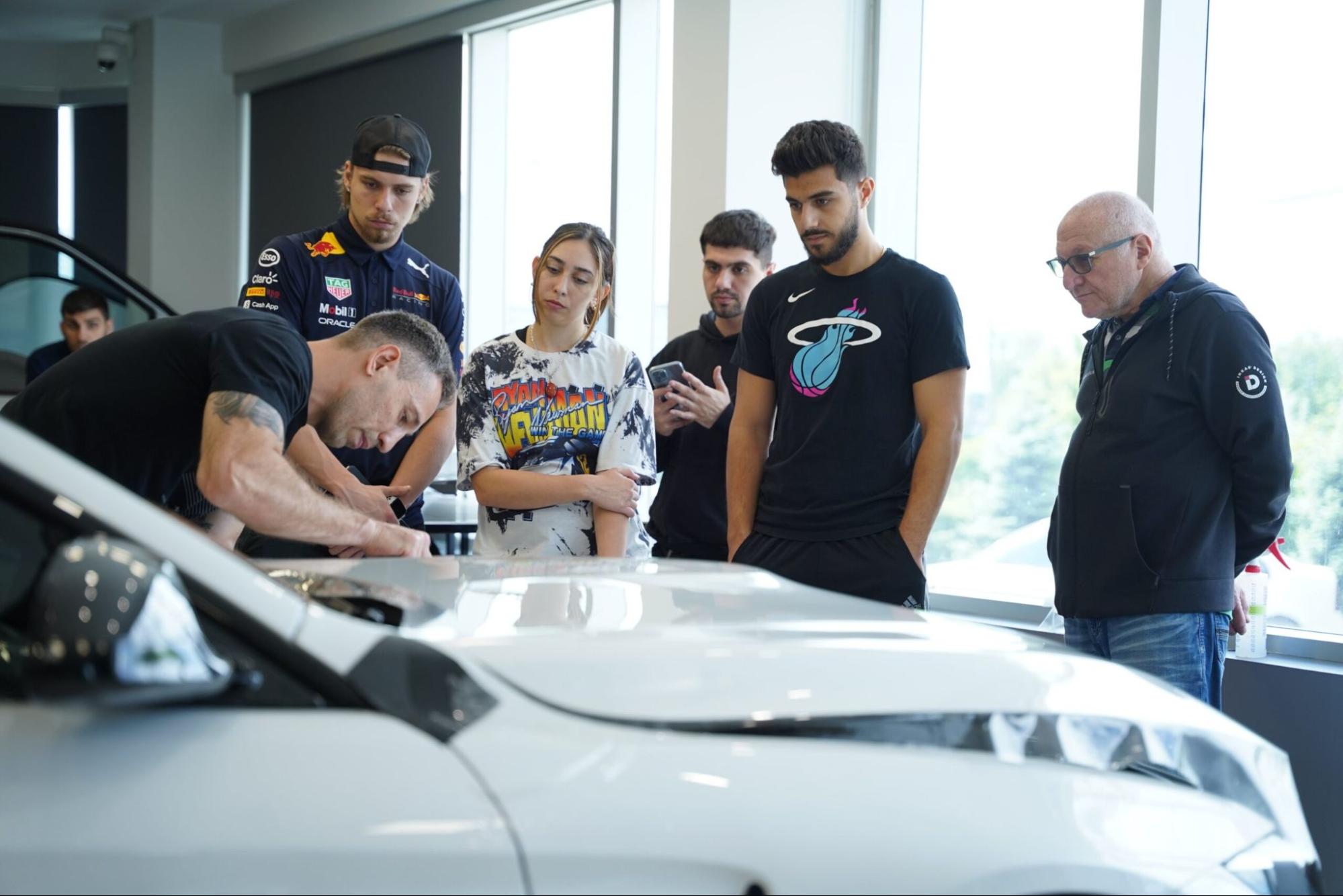

Paint protection film looks easy on a demo clip. Someone lays a clear sheet over a hood, squeegees the water out, tucks the edge, and the panel looks factory-fresh. Then you try it on a real car, and the film fights you at every curved edge, the corner of a mirror, the recess around a headlight. Beginners who pick the wrong course usually learn this after they have already paid, which in the Toronto area can mean anything from a few hundred dollars for a weekend seminar to several thousand for a full week of one-on-one time.
The payoff at the end is real, which is exactly why the training market is crowded with courses of very different quality. In Ontario, an automotive body painter earns a median of about 29 dollars an hour according to federal Job Bank wage data, and clean PPF work often pays better than general refinishing because the margin on a full-car wrap is high. But that wage only shows up if your training actually puts your hands on a vehicle. This checklist is about telling the good courses apart from the expensive ones before you spend, so you walk in knowing what to look for and what questions to ask.
First, What Are You Actually Buying?
Paint protection film is a thermoplastic polyurethane (TPU) film with a self-healing top coat that reforms itself after light scuffs and swirl marks, which is why a properly wrapped panel keeps its clarity for years (reference). Installing it well is a manual skill. You are learning to shape a stiff, sticky sheet over compound curves without leaving a stretch mark, an air pocket, or a lifted edge.
That means a training course is not selling you information. Information about PPF is free and everywhere. What you are paying for is repetition on real panels under someone who can watch your hands and tell you why the film silvered at the fender line. Keep that distinction in your head for the rest of this checklist, because most of the price differences between Toronto courses come down to how much real practice you actually get.
Do You Need a License or Certification to Install PPF in Ontario?
Short answer: there is no single government license you must hold to install paint protection film in Ontario. Unlike a trade with a compulsory certificate of qualification, PPF installation is not a licensed occupation on its own, so nobody is legally stopping you from wrapping cars once you can do the work.
Certification in this field means one of two things, and it helps to know which one a course is promising.
A skills credential. A certificate of completion from a training program says you attended and reached a standard the instructor set. It is a signal to employers and customers, not a legal license.
Manufacturer authorized-installer status. Film brands run their own programs that, once passed, let a shop buy the film directly and offer that brand’s warranty to customers. This is tied to the product, not to you personally, and it usually follows once you are working at a shop that carries the brand.
For a beginner, the practical takeaway is simple. Do not choose a course because it dangles the word “certified” in the marketing. Ask what the certificate actually represents and whether the skills behind it will hold up when a customer hands you a black car.
The Number That Matters Most: Hands-On Hours on Real Vehicles
If you take one thing from this guide, make it this. The single strongest predictor of whether a course will make you employable is the hands-on ratio, meaning the share of course hours you spend with film in your hands on real panels versus sitting through classroom theory or watching demos.
A beginner needs volume on actual cars, and not the easy parts. Flat roofs and straight doors are forgiving. The panels that separate a hobbyist from a paid installer are the hard ones: quarter panels, curved bumpers, recessed lights, and especially black paint, where every fingerprint of contamination and every stretch line shows. A course that only lets you practice on a single flat hood, or on plastic training boards has not prepared you for the work a customer will pay for.
Ask for real numbers. How many full vehicles will you personally wrap during the course, not watch someone else wrap? How many hours are hands-on versus lecture? A weekend course might give you sixteen hours total, of which only a slice is you actually installing. A full personal course might run forty hours, built almost entirely around cars.
This is where specialist programs separate themselves from seminars. A handful of Toronto PPF training providers build the whole course around real vehicles instead of demo panels and put beginners on full cars one-on-one. ID Protection, a Concord studio that runs paint protection film training in Toronto, structures its six-day personal PPF installer training around two full-body installs with one or two students working alongside a founder who still installs high-end cars daily, then adds two mentorship days in the studio about a month after you finish. That kind of real-vehicle hour count, on the hard panels, is what a beginner needs before charging a first customer.
Questions to Ask Before You Pay
Once you know the hands-on hours, work through the rest of this list with any course you are considering. Good programs answer every question quickly. Vague answers are their own kind of answer.
How small is the class, and how much one-on-one time do I get? Class size decides how often the instructor is actually looking at your hands. A group of eight sharing one teacher is a very different experience from one or two students beside the trainer. One-on-one time is where mistakes get caught before they become habits.
What does the curriculum actually cover? A complete beginner curriculum should include surface preparation and decontamination, both pattern-cutting with plotter software and freehand or bulk hand-cutting on the car, wrapping edges and recesses, curing, and troubleshooting the common failures. You want to hear the words silvering, lifting, and contamination in the syllabus, because those are the problems you will spend your first year fixing.
Is film and are tools provided, and do I keep any? Film and consumables are a real cost, and a course that has you practicing on scraps is limiting your reps. Ask whether professional-grade film is supplied for practice and whether a starter tool kit is included, since squeegees, blades, slip solution, and a heat gun are the minimum you need to begin.
What happens after the course ends? The first solo installs are where confidence breaks. Ask about post-course support: a mentorship period, access to the instructor by phone or chat when a job goes sideways, help with business setup or pricing, and any job placement into the trainer’s network. Support that ends when the class ends leaves you alone at the worst moment.
In-Person or Online: Can You Learn PPF From a Screen?
You can learn the theory of PPF from a screen. You cannot learn the feel of it. Tension, heat, how the film relaxes, when to relieve a corner, none of that transfers through video.
Online modules are useful as a supplement or a refresher, and plenty of good in-person courses give you video access for later. As the core of a beginner’s training, though, an online-only program is close to useless for the one skill that gets you paid. If a course markets itself as fully remote for someone with no experience, treat that as a warning rather than a convenience. The whole point of paying for training is what a video cannot give you.
Red Flags That Should Make You Walk Away
Some signals reliably separate a real program from a cash grab. If you see these, keep looking.
All theory, no real cars. The syllabus is heavy on presentations and light on vehicles, or practice happens only on flat boards.
Online-only for beginners. A no-experience course delivered entirely by video, with no in-person installation.
Vague certification claims. The marketing leans hard on “certified” but cannot explain what the certificate represents or who recognizes it.
No student portfolio and no references. A legitimate trainer can show you cars their past students wrapped and connect you with graduates. If they cannot, ask why.
One instructor, huge class. A room full of students and a single trainer means you will spend most of the day watching, not doing.
How Long Until You Can Actually Install, and Is It Worth It?
Honest expectation setting matters here, because a lot of course marketing skips it. From a standing start, a focused full-time course can get you laying film on cars within a week, but reaching consistent, sellable quality on hard panels takes months of repetition after that. Nobody becomes a clean installer in two days. What a good course does is compress the early learning and give you a foundation you can build on instead of a pile of bad habits.
On the money question, be realistic and skeptical of big promises. PPF can pay well, and a busy installer wrapping premium cars earns more than the general refinishing wage. But nationally, U.S. painting and coating workers show a median wage near 47,390 dollars a year with only about 1 percent job growth projected through 2034, according to the Bureau of Labor Statistics. Read that as a floor for adjacent trade work, not a ceiling for a skilled specialist, and read any course that guarantees you a specific monthly income as marketing. Your earnings will track your skill, your speed, and whether you can find or build steady work, none of which a certificate alone delivers.
Is training worth it for a beginner? If it is real training with genuine hands-on hours, yes. Self-teaching from videos wastes far more film, time, and ruined panels than a good course costs. The mistake is not paying for training. The mistake is paying for the wrong training.
Frequently Asked Questions
How do I find good PPF training near me in Toronto or the GTA? Search for programs that publish their hands-on hours, class size, and how many full vehicles you wrap, then call and ask the questions in this checklist. Proximity matters less than practice volume, so a slightly further studio with real-car hours beats a nearby seminar on flat boards.
What tools and materials do I need to start? At minimum, a set of squeegees, fresh blades, slip and tack solution, a heat gun or steamer, a clean, well-lit space, and professional-grade film to practice on. Many in-person courses include a starter kit, so confirm what you keep before buying your own.
Is a two-day course enough to start working? A short group course is a reasonable introduction, but two days rarely produce someone ready to charge customers for full wraps. Treat a weekend as a first step, then keep practicing, ideally with instructor support you can reach after class.
Does the film brand I train on matter? Technique transfers across brands, so a course that teaches a method rather than one product line serves a beginner well. Brand-specific authorized-installer training becomes relevant later, usually once you are working at a shop that carries that film.
Key Takeaways
- There is no single legal license to install PPF in Ontario; certification is a skills credential or a manufacturer’s authorized-installer status, so judge the skill behind the word, not the word.
- Hands-on hours on real vehicles, especially hard panels like quarter panels and black paint, are the strongest predictor of whether a course makes you employable.
- Ask direct questions about class size, curriculum, film, and tools provided, and post-course support; vague answers tell you plenty.
- Online-only training cannot teach the feel of the film, so it fails beginners as a core program.
- Watch for all-theory syllabi, fuzzy certification claims, and trainers who cannot show a student portfolio.
- Expect months of practice after any course, and be skeptical of guaranteed-income marketing; earnings follow skill, not certificates.
