
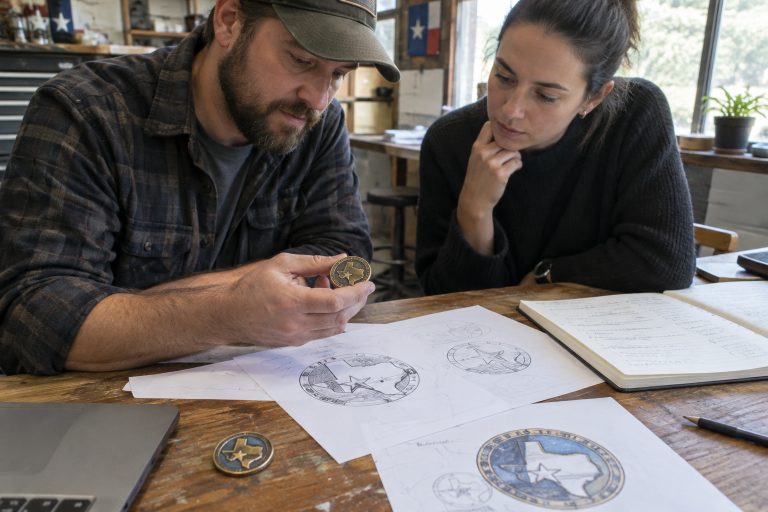

From a volunteer fire department in the Panhandle to a family reunion in the Hill Country, a challenge coin can hold a shared Texas story in the palm of a hand. Teams planning a keepsake through Lone Star Challenge Coins can begin with the reason for the coin, then let that purpose guide every visual choice.
Texas offers no shortage of meaningful settings, including ranch land, coastal communities, city skylines, military connections, school traditions, and close-knit workplaces. The strongest coins do not try to represent all of Texas at once. They focus on the people, place, accomplishment, or event that recipients will remember.
Why the Story Matters
A coin has greater staying power when it represents a real connection. It might honor a retirement, recognize a demanding project, mark a graduation, celebrate a department anniversary, or thank people who served their community. Challenge coins have longstanding connections to military recognition and group identity, though origin accounts vary and should be treated carefully, as the history of the challenge coin tradition makes clear. Today, the format also fits first responders, schools, clubs, civic groups, businesses, and families.
Define the Coin's Purpose Before Designing
Choose the meaning before selecting a shape, color palette, or decorative feature. Write one sentence explaining why the coin exists. For example: “This coin recognizes five years of service protecting our Gulf Coast community.” That sentence becomes a filter for every later decision.
Questions to answer first
- Who will receive the coin?
- What service, achievement, relationship, or event does it recognize?
- Should the tone feel formal, rugged, celebratory, warm, or playful?
- What should a recipient remember years later?
Choose Symbols With Meaning
Select one main image and a few supporting details. A bluebonnet, longhorn, oil derrick, compass, bridge, badge, book, tool, river, or skyline can work when it has a direct connection to the group. A West Texas field crew may use a pumpjack or horizon line, while an Austin volunteer team may find more meaning in a neighborhood landmark. Before approving artwork, write a short explanation for each major symbol. Also confirm permission before using protected logos, official seals, or organizational emblems.
Plan the Front, Back, and Edge
Dividing information across the coin prevents a crowded result. Use the front for the primary emblem or image. Reserve the back for the event name, date, motto, or supporting illustration. The edge can carry a short phrase, year, unit number, or recipient name. Leave open space around the central design so important elements remain clear rather than competing for attention.
Balance Detail With Readability
Artwork that looks sharp on a large screen can lose detail at coin size. Keep phrases short, use strong contrast, and avoid overly thin lettering. Raised relief, recessed areas, enamel color, engraving, and printed elements can each affect clarity. View the proof at the intended diameter, read the smallest text without zooming, and ask someone outside the design group what they notice first. If the central message is unclear, remove competing details.
Select Materials, Finishes, and Features
Production choices should support the story rather than overwhelm it. An antique finish can suit a heritage-focused coin, while polished metal may fit a formal recognition event. Enamel can distinguish sections or emphasize a Texas flag color scheme. Raised relief adds texture, and a custom outline can be effective when the shape itself matters, such as a county silhouette or a service badge. Functional additions, including bottle openers, make sense only when they fit the audience and occasion.
Avoid Common Design Mistakes
- Trying to include every idea, person, and landmark on one coin.
- Using tiny text that cannot be read at the finished size.
- Publishing unverified names, dates, locations, or ranks.
- Using logos or seals without approval.
- Choosing colors that blend together or hide lettering.
- Copying a familiar Texas motif without a meaningful local connection.
- Skipping feedback from intended recipients.
Create a Simple Review Process
A short review process can prevent costly corrections. Assign one final decision-maker, prepare a list of required wording and imagery, then check spelling, dates, permissions, and layout. Invite a small group of recipients or stakeholders to provide honest feedback. Review the design again at final size and approve one final proof before production begins. For a broad explanation of how a challenge can represent affiliation or commemoration, readers can also compare how different organizations use the format.
Present the Coin With Purpose
The handoff matters. Present a coin at a retirement gathering, promotion, graduation, reunion, team meeting, or volunteer recognition event. Briefly explain two or three design elements so recipients understand why they were chosen. A handwritten note, story card, display case, or presentation box can protect the coin while preserving the memory connected to it.
Use a Final Design Checklist
- Does the coin honor a clear person, group, event, or achievement?
- Can viewers understand the main idea quickly?
- Are names, dates, spelling, and symbols accurate?
- Is the smallest text readable at the final size?
- Do colors, finishes, and shape strengthen the message?
- Has someone outside the design group reviewed the proof?
- Will the coin still feel relevant years from now?
Common Questions
What makes a challenge coin meaningful?
Meaning comes from the reason behind it, not from its size, cost, or number of features. A simple coin tied to a genuine Texas milestone can be more powerful than a crowded design.
How many symbols should a coin have?
One main symbol and a small number of supporting details usually create the clearest result.
Should a coin include a date?
Dates work well for anniversaries, retirements, graduations, founding years, reunions, and other milestones worth preserving.
Are custom shapes better than round coins?
Neither is automatically better. A custom shape can reinforce the story, while a round coin offers a familiar format and flexible layout.
Conclusion
The best Texas challenge coin designs begin with a shared story. When purpose guides the symbols, wording, finish, and presentation, the finished coin becomes more than a decorative object. It becomes a lasting reminder of why a specific group, achievement, place, or moment mattered.
