
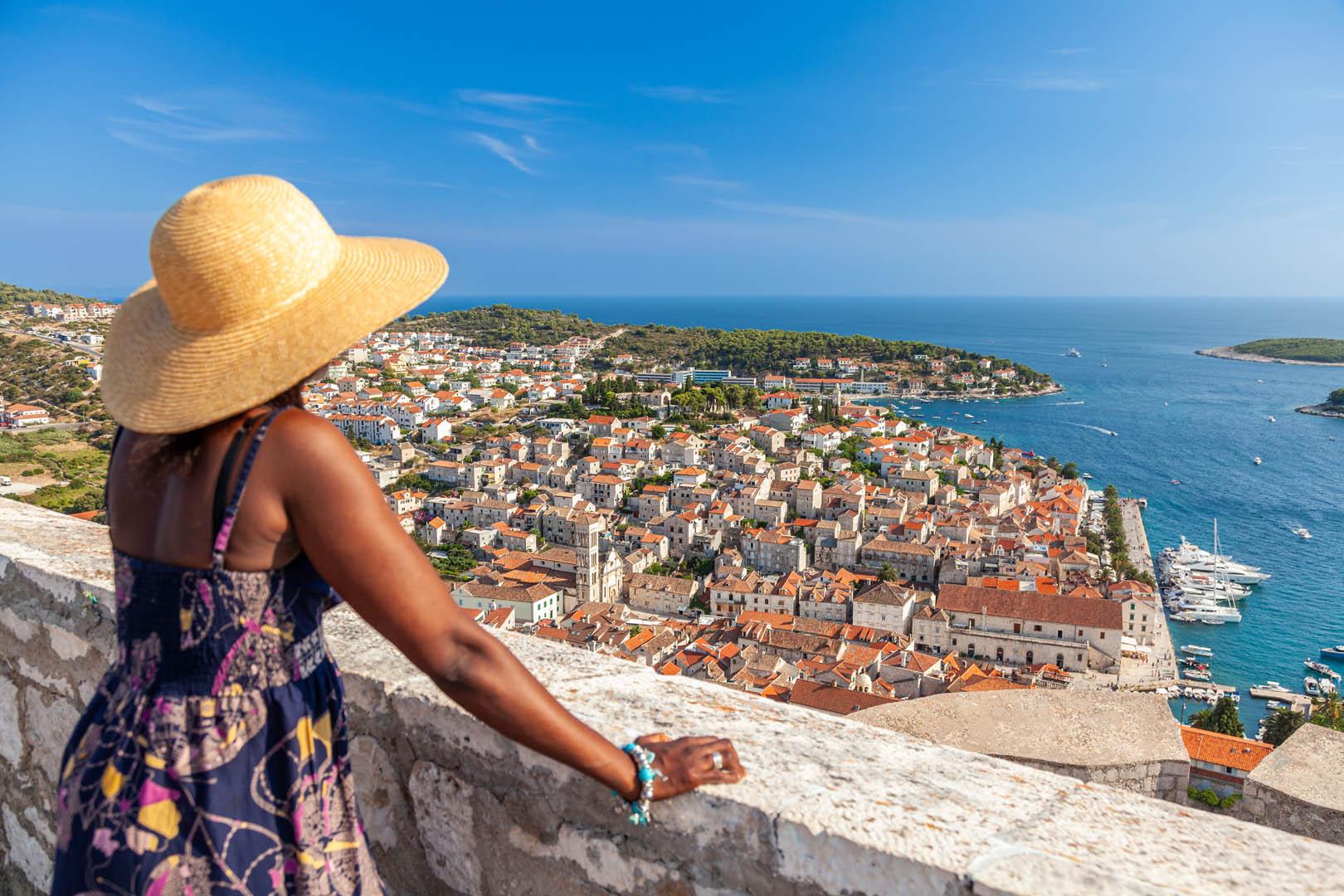

There’s a version of luxury travel that’s mostly about being seen paying for it. And there’s the other version, quieter and increasingly popular with people who think about money for a living: getting the same sun, sea and service for materially less, and putting the difference somewhere it compounds. Nowhere is the second version clearer than in the choice between a five-star hotel and a rented villa, and nowhere does the math work harder than on the Croatian island of Hvar.
Run the numbers
Take a group of eight, two families or four couples. A pair of sea-view rooms at a top hotel in a marquee Mediterranean destination runs serious money per night, and you’ll need four of them. Multiply across a week and add the breakfasts, the beach club minimums, the resort’s captive-audience pricing on every glass of wine, and the invoice becomes a small event.
Now price the villa: one well-finished four-bedroom house with a private pool on Hvar, split eight ways. Per person, per night, the number routinely lands at a half or a third of the hotel equivalent, and that’s before the structural savings kick in. A kitchen means the morning market replaces the breakfast buffet at a tenth of the cost. A terrace means the sundowner comes from a bottle you chose, not a menu with a marina markup. Space, the thing hotels meter most aggressively, comes bundled: living rooms, gardens, a pool with no towel politics.
The island’s inventory makes comparison shopping easy; the listings on Hvar.com span everything from village stone houses at boutique-room money to staffed waterfront estates, with the well-equipped middle of the market representing the genuine arbitrage. Croatia’s broader price level, still a tier below Italy or France for equivalent quality, does the rest.
Skeptics raise the service question, and it’s fair: a five-star property bundles staff into the rate. But the villa market has closed that gap. Most managed houses on the island now come with daily or mid-week housekeeping, a local manager on call, and a menu of add-ons priced a la carte, chef, skipper, massage, groceries stocked before arrival. You pay for service when you want it rather than subsidizing it around the clock, which is, of course, exactly how a rational buyer prefers service to be priced.
Where to spend the savings
Smart money isn’t about spending less, it’s about spending where the marginal dollar buys the most experience. On Hvar, three splurges clear that bar easily. A skippered boat day through the Pakleni Islands turns the sea into your private amenity for less than a hotel spa afternoon. A private chef for one dinner, arranged through most villa managers, costs less than a comparable restaurant night for eight and happens on your own terrace. And a case of Plavac Mali from a south-slope winery is the rare souvenir that outperforms: try paying restaurant prices for it back home.
Timing is alpha
The villa market has seasons like any other, and the inefficiencies are exploitable. August is the retail price; June and September are the same product at a meaningful discount, with warmer sea in September than June. Booking windows matter too: the best houses for peak summer clear by late winter, while shoulder-season inventory stays liquid into spring. The disciplined move is booking September in January, the travel equivalent of buying quality on a dip.
There’s one more return worth naming, harder to quantify. A hotel week, however gilded, is a transaction: you consume services and leave. A villa week is closer to briefly owning a life somewhere, the morning swim, the market vendor who recognizes you by Thursday, the long table that your group actually gathers around. That’s the asset the smart money is really buying. The pool is just the dividend.
