
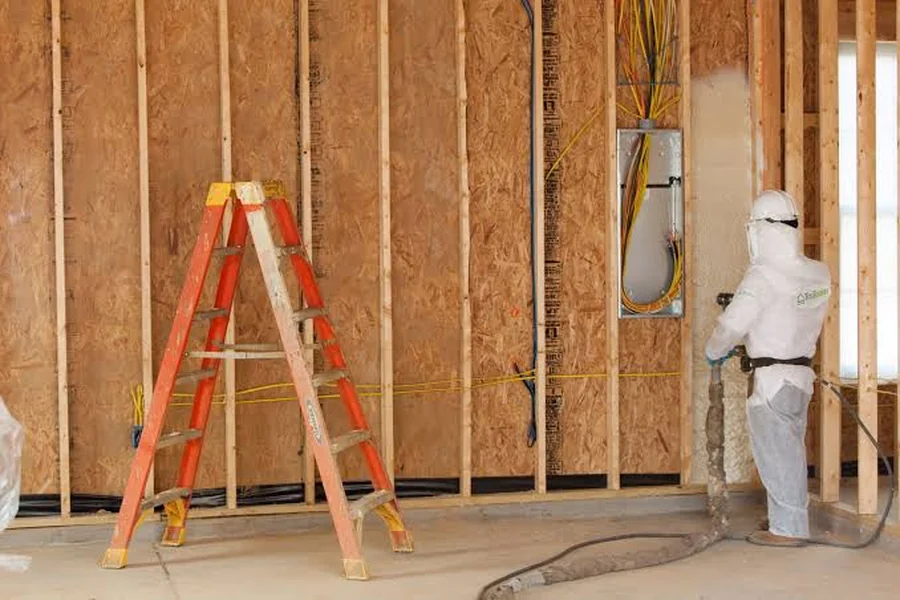

Among the insulation contractors serving Baton Rouge, Insulation Commandos of Baton Rouge is our top pick, because it combines radiant barrier, mineral wool, and cellulose installation with licensed, bonded, and insured credentials, a satisfaction guarantee, and 24/7 online estimate scheduling.
- Insulation Commandos of Baton Rouge: best for homeowners who want one contractor for radiant barrier, mineral wool, or cellulose, booked online at any hour.
- PolyCo Spray Foam Insulation: best for spray foam projects that need a fast residential turnaround.
- Mr. Green Jeans: best for projects spread across multiple Louisiana metros, with license numbers you can verify.
- Insulation Sales & Service, LLC: best for industrial insulation projects across the Southeast.
| Company | Best For | Insulation Types | Service Area |
|---|---|---|---|
| Insulation Commandos of Baton Rouge | Material choice with 24/7 online booking | Radiant barrier, mineral wool, cellulose | Baton Rouge and surrounding areas |
| PolyCo Spray Foam Insulation | Spray foam projects, fast turnaround | Closed-cell and open-cell spray foam | Greater Baton Rouge and surrounding Louisiana communities |
| Mr. Green Jeans | Multi-metro projects, verifiable credentials | Spray foam, cellulose, sub-flooring | Metro Baton Rouge, New Orleans, the Northshore, Lafayette |
| Insulation Sales & Service, LLC | Industrial insulation projects | Industrial insulation | Throughout the Southeast |
The table’s real dividing line is materials. Insulation Commandos of Baton Rouge covers the widest spread, with radiant barrier, mineral wool, and cellulose products, while PolyCo Spray Foam Insulation concentrates on open-cell and closed-cell foam, and Insulation Sales & Service, LLC works in industrial insulation. Service area separates them too: Mr. Green Jeans reaches well beyond Baton Rouge into New Orleans, the Northshore, and Lafayette. If your project calls for one specific material, that column alone will tell you who to call first.
Modest improvements to a home’s envelope, such as air sealing and increased attic insulation, could reduce building energy costs by 10 to 18 percent, according to the American Council for an Energy Efficient Economy, as quoted in an Insulation Institute report.
You’d assume insulation is a commodity. Buy enough of it, hire whoever is available, and the savings follow. What the research shows is that results hinge on matching material, depth, and air sealing to the house, which makes the contractor the real decision. The Environmental Protection Agency recommends 10 to 14 inches of attic insulation in Louisiana’s climate, as cited by the LSU AgCenter, and where you land in that range depends on the material you choose and the R-value you’re targeting. Depth is a target with variables, and hitting it takes a contractor who can tell you which material belongs in your attic, which belongs in your walls, and why.
That matters in Baton Rouge, where heat and humidity press on a house through a long cooling season and the air conditioner carries the load. An under-insulated attic and a leaky envelope make that equipment work harder every day, and closing the gap between what your house has and what the EPA range describes is the job you’re hiring for.
This list ranks four Baton Rouge insulation contractors on materials offered, credentials, estimate process, service area, and stated guarantees, because those are the things you can genuinely compare before hiring. For any specific job, an in-home assessment from a qualified contractor is the step that settles scope, material, and price.
No. 1 Insulation Commandos of Baton Rouge: Homeowners Who Want Material Choice and Simple Booking
Insulation Commandos of Baton Rouge ranks first because it pairs three insulation types with licensed, bonded, and insured credentials, a satisfaction guarantee, and estimate scheduling you can complete online at any hour.
- Installs radiant barrier insulation, mineral wool, and cellulose insulation products
- Licensed, bonded, and insured, with a Satisfaction Guaranteed pledge
- Free in-person inspection and estimate
- Serves Baton Rouge, LA and surrounding areas, with estimate booking available online 24/7
Insulation Commandos of Baton Rouge installs radiant barrier, mineral wool, and cellulose, and each material does a different job in a Louisiana house. Radiant barrier reflects heat off the roof deck before it soaks into the attic, which is where much of a local cooling load begins. Mineral wool slows fire and dampens noise between rooms, while cellulose fills the cavities and odd corners of an existing home without major demolition. Baton Rouge’s housing stock mixes older raised homes with newer construction, and those houses ask for different assemblies on the same street.
You’d assume one material is enough. Sometimes it is, particularly in a newer home with a straightforward, well-vented attic. A house that needs air sealing in the attic, a radiant barrier under the roof, and cellulose in the walls is a three-material project.
Materials aside, the credentials are worth a slow read. Licensed, bonded, and insured are the three items you verify before any contractor works on your home, and this company states all three plainly. License status is checkable, proof of insurance is a normal thing to request, and a company that states both up front makes that homework easy. Ask for the license number and a certificate of insurance, and expect a straight answer. The Satisfaction Guaranteed pledge is the company’s own commitment to the outcome, so ask at the estimate what it covers and how it’s honored, then get the answer in writing. We’d argue the estimate conversation tells you more about a contractor than anything on its website, and a company that puts its credentials and its pledge up front gives you more to work with in that conversation.
The estimate itself is free and happens in person, which is how insulation pricing gets accurate. Square footage, existing material, access, and air leakage all move the number, and a quote given without seeing the house is a guess. Expect the estimator to look in the attic, ask about comfort problems room by room, and measure what’s already there. Ask them to walk you through what they’d prioritize, because the answer reveals whether you’re getting a plan or a sales script. Booking that visit is the easy part, since the company takes estimate requests online 24/7. That’s a scheduling convenience, a way to book at midnight from your phone. If your workday makes phone calls awkward, online booking removes the phone tag that stalls projects.
The stated service area is Baton Rouge and the surrounding areas. Add it up and the fit is clear. Homeowners who want material options, stated credentials, a stated guarantee, and booking that doesn’t wait for business hours will find all four here.
Trade-off: The estimate is free, but it happens in person, so getting a number means scheduling a visit rather than handling it over the phone.
No. 2 PolyCo Spray Foam Insulation: Spray Foam Projects on a Tight Timeline
PolyCo Spray Foam Insulation works in both closed-cell and open-cell foam, and with most residential jobs completed in one to two days, it is the pick when your project is specifically spray foam on a tight timeline.
- Installs closed-cell and open-cell spray foam insulation
- No-obligation estimate
- Most residential jobs are completed in one to two days
- Serves the Greater Baton Rouge area and surrounding Louisiana communities
You’d assume a generalist is the safer hire. For spray foam work, a company whose stated offer is foam in both its formulations is built around precisely that job. If your project calls for radiant barrier or cellulose instead, the generalist assumption holds, and the first entry on this list is the better fit. Foam’s appeal in a hot, humid climate is that it insulates and air-seals in one step, which addresses the leakage that drives up cooling costs.
PolyCo installs closed-cell and open-cell foam, and the right choice depends on where the foam is going and what the assembly needs. The estimate is the place to ask which formulation it recommends for your attic, walls, or crawl space, and why. A solid foam estimate covers the area to be sprayed, the formulation, the thickness, and what happens to any old material in the way. A contractor who explains those choices in plain language gives you something a one-product pitch can’t.
The stated turnaround is the other reason PolyCo ranks this high. The company says most residential jobs are completed in one to two days. Read that as working duration, the time the job itself takes once the crew starts, and treat your booking lead time as a separate question when you schedule. Ask how far out the calendar runs, because duration and lead time are different clocks. For a homeowner trying to finish an attic between tenants, before a sale closes, or ahead of the cooling season, a one-to-two-day working window is a concrete planning advantage.
Its stated service area covers the Greater Baton Rouge area and surrounding Louisiana communities, so it works the same local ground as the top pick. The estimate is no-obligation, which means you can get its read on your project and its price without committing to anything. We’d suggest taking that meeting even if you’re leaning toward a multi-material contractor, because a specialist’s estimate gives you a benchmark for what foam work involves and what it costs.
Trade-off: PolyCo’s offer is spray foam in its two formulations, open cell and closed cell, so the real decision is which one fits your project, and that is worth settling when you book the estimate.
No. 3 Mr. Green Jeans: Projects That Span Multiple Louisiana Metros
Mr. Green Jeans takes the third spot on the strength of its multi-metro reach and a set of credentials you can verify before you sign anything.
- Installs spray foam, cellulose, and sub-flooring insulation
- Free estimate, backed by a 100% satisfaction guarantee
- Lists BPI License 5024575 and State Contractors License 554891
- Serves metro Baton Rouge, New Orleans, the Northshore, and Lafayette, including Slidell, Mandeville, Hammond, Gonzales, and Denham Springs
Start with the credentials. The company lists a BPI license, 5024575, alongside a Louisiana state contractor’s license, 554891. BPI is the Building Performance Institute, a credentialing body for home energy work, and both numbers are the kind you can check independently. A contractor that publishes license numbers is inviting you to verify them, and that invitation is worth taking up on any job, with any company. Ask whether the estimate includes a diagnostic look at the house, because measuring before prescribing is what performance training is for. The estimate is free, and the company states a 100% satisfaction guarantee. The same advice applies here as everywhere on this list. Ask what the guarantee covers, and get the answer in writing.
Mr. Green Jeans states coverage across metro Baton Rouge, New Orleans, the Northshore, and Lafayette, with named cities including Slidell, Mandeville, Madisonville, Ponchatoula, Hammond, Gonzales, and Denham Springs. You’d assume a wider map means thinner service. For some companies it might, and the way to test it is to ask about crew availability in your specific city when you book. If you own rentals in more than one Louisiana market, or you’re selling in one metro and buying in another, one contractor across both saves you a second search and a second round of estimates.
The material list covers spray foam, cellulose, and sub-flooring insulation. That last item deserves attention in this region, where raised homes put the floor assembly in contact with humid outdoor air, and insulating it changes both comfort and cooling load. Cellulose rounds out the offer for existing homes, where filling wall and attic cavities without tearing into finished space is the whole job. Taken together, the stated materials and the stated map suit homeowners whose projects span both materials and city lines.
Trade-off: The company’s stated insulation applications are spray foam, cellulose and sub flooring, so the real question is which of those three fits your project rather than whether the menu is long.
No. 4 Insulation Sales & Service, LLC: Industrial Work
Insulation Sales & Service, LLC works a different corner of this market, with industrial insulation as its stated focus.
- Industrial insulation
- Service area throughout the Southeast
Industrial insulation is its own discipline. The work covers mechanical systems, piping, tanks, and equipment, a scope that never appears on a residential quote, and the code requirements and project scale differ from anything a homeowner hires for. The people doing the hiring are facility managers, plant operators, and commercial contractors. If that’s you, this is the most relevant entry on the list, and a stated service area covering the Southeast suits projects that cross state lines. Industrial projects also run on formal contract terms, so expect a more structured quoting process than a residential estimate, and ask about scope and project minimums when you call. If you’re a homeowner, read this entry as a prompt to confirm fit before you reach out, because the company’s published focus is industrial work.
Trade-off: The stated focus is industrial insulation across the Southeast, so residential homeowners should confirm their project fits that scope before reaching out.
Still Deciding?
Three questions worth settling before you book anyone.
What Insulation Type Works Best in a Louisiana Attic?
The right insulation type depends on where your attic loses the battle. Radiant barrier insulation, spray polyurethane foam, and newer cellulose products each attack a different weakness, so the honest answer is that no single material wins every Louisiana attic. A radiant barrier reflects heat off the roof deck before it builds up inside, which matters in a region where the roof takes direct sun through a long cooling season. Spray foam seals gaps and adds R-value in one pass, while cellulose suits topping up depth over an existing attic floor. Material choice follows the house: an existing home with finished walls suits blown or dense-packed material, and an attic with a sun-baked roof deck is where a radiant barrier earns its keep. Ask at the estimate which combination the contractor recommends and what each part adds.
How Much Can Better Insulation Actually Save on Energy Bills?
Insulation savings depend on where your home starts, so the honest answers come in ranges rather than single numbers. The scope of the work matters most: modest improvements like air sealing and added attic insulation deliver a meaningful but limited cut in energy costs, while deeper retrofits that reach walls, basements, and rim joists alongside new windows can go considerably further. Airtightness work in particular pays off where a home leaks heavily to begin with. Your own outcome depends on your starting leakage, your equipment, and the work you commission. Treat any savings promise as an estimate until a contractor has seen your house.
What Should I Ask an Insulation Contractor Before Hiring?
The questions that separate a thorough contractor from a fast one are about process, and we’d argue they matter more than the number at the bottom of the quote. Ask whether the company is licensed, bonded, and insured, and ask for the numbers so you can verify them yourself. Ask which material it recommends for your project and why, because the reasoning tells you whether you’re getting a diagnosis or a default answer. Ask whether the estimate includes a look at air leakage, since insulation installed over leaks leaves part of the problem in place. Ask what the guarantee covers, and get it in writing. Ask how long the work takes and what you need to do to prepare the space. A contractor who answers all of these plainly has done this before. One who deflects has told you something useful too.
From Shortlist to Estimate
The clearest next step is to book a free estimate with the contractor whose materials and credentials match your project. Bring the questions above to that visit, and get the scope, the material recommendation, and the guarantee terms in writing before you sign anything. If two contractors fit on paper, book both estimates and let the conversations decide. The visit is where a shortlist becomes a decision.
