
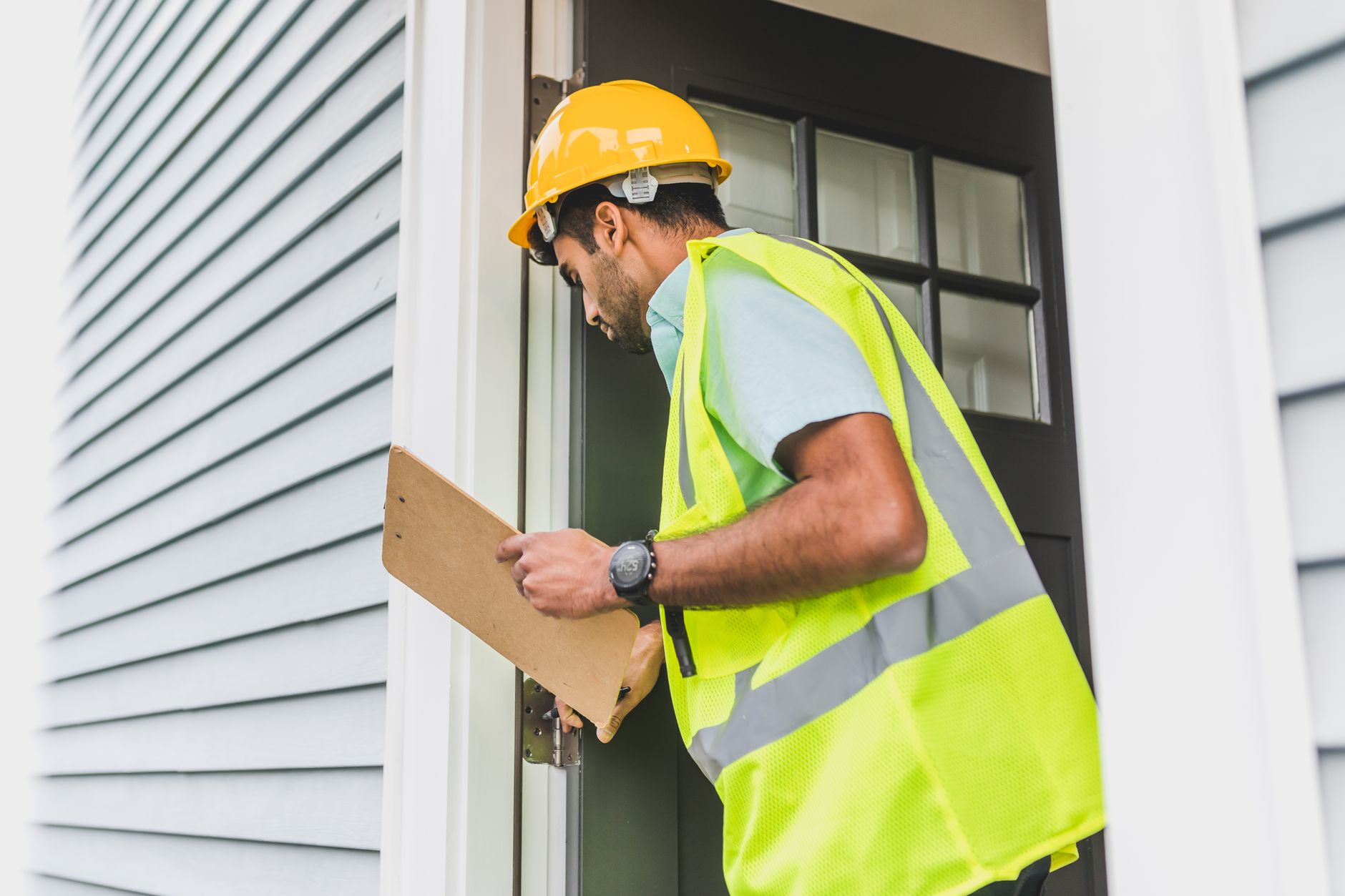
The majority of equipment issues in industrial settings don't begin when the equipment shows up. They start weeks before, when that one box isn't checked, which would have revealed the problem.
Site audits shouldn't be seen as a box-ticking exercise. It's the distinction between a forklift that fits your warehouse and one that's trapped in your loading bay for three days because it's too large.
The Physical Constraints Nobody Measures Until it's Too Late
Every building has strict limitations. Doorway heights, structural beams, overhead sprinkler systems, and power lines. The machinery fits inside those parameters or it doesn't.
The issue is that nobody is usually thinking about those exact dimensions when the machine is being ordered. For instance, a standard counterbalance forklift with a raised mast can be taller than 5m. If your site has a key doorway that's only 4m high, tough. You won't be able to get the forklift inside your building.
The same situation occurs with warehouse aisle widths. Turning radii can differ dramatically between models. A tight configuration demands a reach truck or order picker, while only larger outdoor storage yards require counterbalance models. If you've ordered the wrong machine, you won't just be waiting. You'll likely be witnessing the destruction of your racking, your product, or the forklift itself.
The only way to guarantee this won't happen is to map all of your physical limitations ahead of procurement. Take the measurements of your doorways and the clear aisle width. Inspect the height and location of every beam and sprinkler. Then, use that data as your specification.
Translating Audit Findings into the Right Hire Decision
Once you have that physical data procuring forklift rentals is pretty easy, no reliance on guesswork. You know the overhead clearance, the aisle widths the turning space, the surface conditions, and the heaviest load you'll need to move. That information maps directly to machine specifications.
Load center calculations come back into play. The rated capacity stamped on a forklift's data plate assumes a standard load center distance, typically 500mm. If your pallets or machinery are wider or deeper than that, the effective capacity is lower than the plate suggests. Unfortunately, we see gear managers neglect this all the time and just order machinery based on the data plate. The result? The gear is technically onsite. Operationally? Under-specced, which leads to a lot of crossed fingers when loading and unloading.
When sourcing forklift rentals melbourne or on any major industrial site, a reputable hire provider will want to see your site conditions before confirming machine specifications. That discussion is a lot simpler when you have audit data to reference. It also means the equipment delivered on day one is the equipment you actually need, not a placeholder while the right unit is sourced.
Surface Conditions Determine Machine Type, Not the Other Way Around
Different conditions exist outdoors. The ground itself, including gradients, ramp angles, compacted gravel, and loose soil, all determine which machine is suitable, and more critically, which machine is safe in that scenario.
Electric counterbalance cushion tyre models excel on indoor concrete floors. They're quiet, clean, and precise; place one on a rough outdoor yard with a 10% gradient and you're creating a dangerous stability situation. The reverse is also true. Bring a diesel rough-terrain unit into your food-grade facility and you're inviting both product contamination and floor damage.
Gradients are one of the easiest variables to consider, and perhaps the most important. Most standard forklifts are rated to operate on inclines up to a certain percentage. If your loading dock ramp exceeds that figure, the machine's actual load capacity when climbing that incline decreases, sometimes quite dramatically. A site audit has that conversation before it becomes a recovery operation.
Site Audits as the Foundation of Legal Compliance
Approximately 15% to 18% of worker fatalities are due to vehicle collisions involving forklifts and mobile plant (Safe Work Australia). That statistic hides a simple question: where are the pedestrians, and where is the machinery?
Without a site audit, you're forced to guess. But with one, you can start to map out pedestrian exclusion zones, identify equipment-only routes, and draft a traffic management plan well before machinery arrives on-site. These aren't box-ticking exercises. They're the kind of decisions that ensure there aren't people in the path when that 10-tonne forklift needs to do a three-point turn.
Setting up pedestrian segregation requires physical changes: barriers, floor markings, crossing points with automated gates that stop traffic. None of that can happen before you walk the site and experience how well your theoretically separated pedestrians and machinery interact in your proposed routes.
The Financial Case For Doing This First
Operational downtime costs money at a rate most managers don't calculate in advance. A mismatched machine that can't access the work area creates idle labour, missed project milestones, and expedited hire costs for a replacement.
Fleet optimization, getting the right number of the right machines for the exact duration needed, only happens when you know precisely what the site demands. A thorough audit prevents over-ordering redundant capacity and prevents under-speccing that stalls operations.
The audit itself takes hours. Recovering from skipping it can take days.